

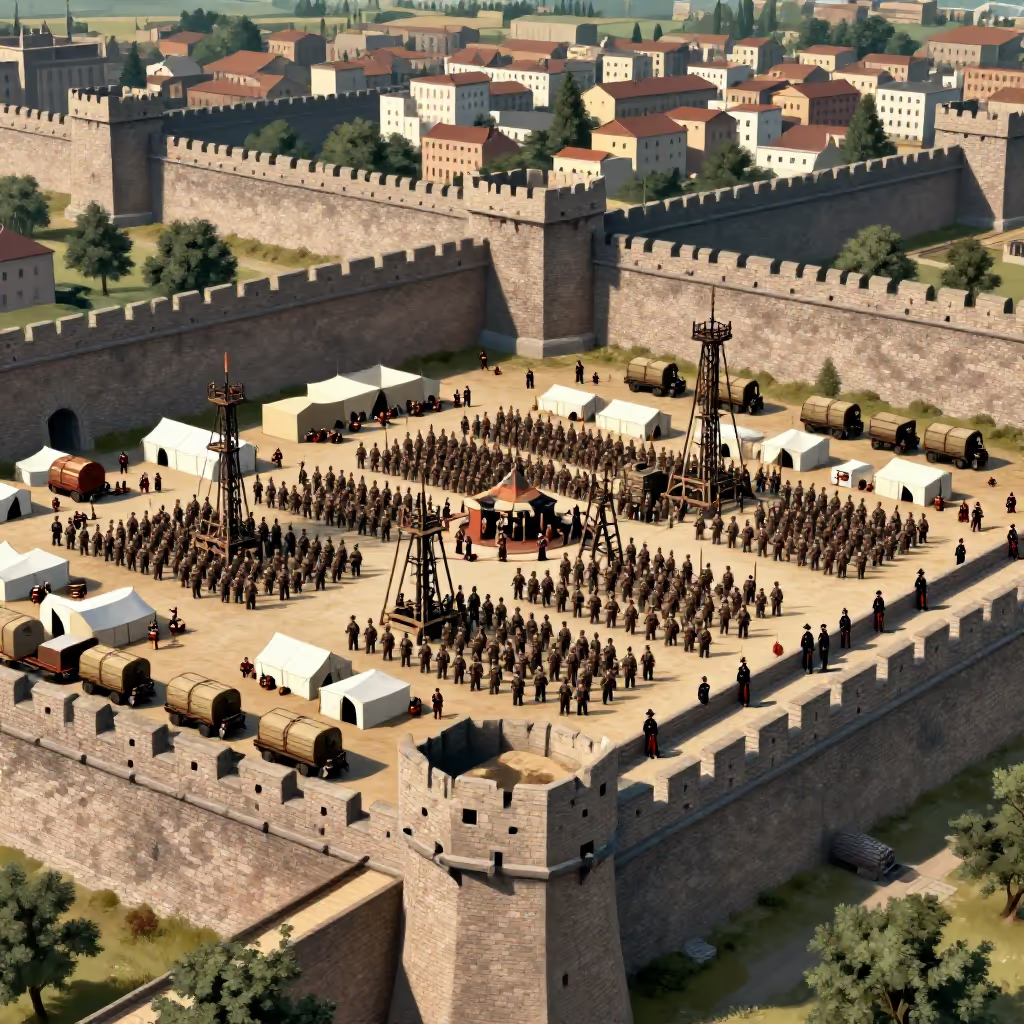
die Belagerung
siege
The military encirclement of a city or fortress with the goal of forcing it to surrender.
EXAMPLE
Die Belagerung der Burg dauerte mehrere Monate.
The siege of the castle lasted several months.
siege
Loading your saved state.
siege
The military encirclement of a city or fortress with the goal of forcing it to surrender.
Die Belagerung der Burg dauerte mehrere Monate.
The siege of the castle lasted several months.
siege
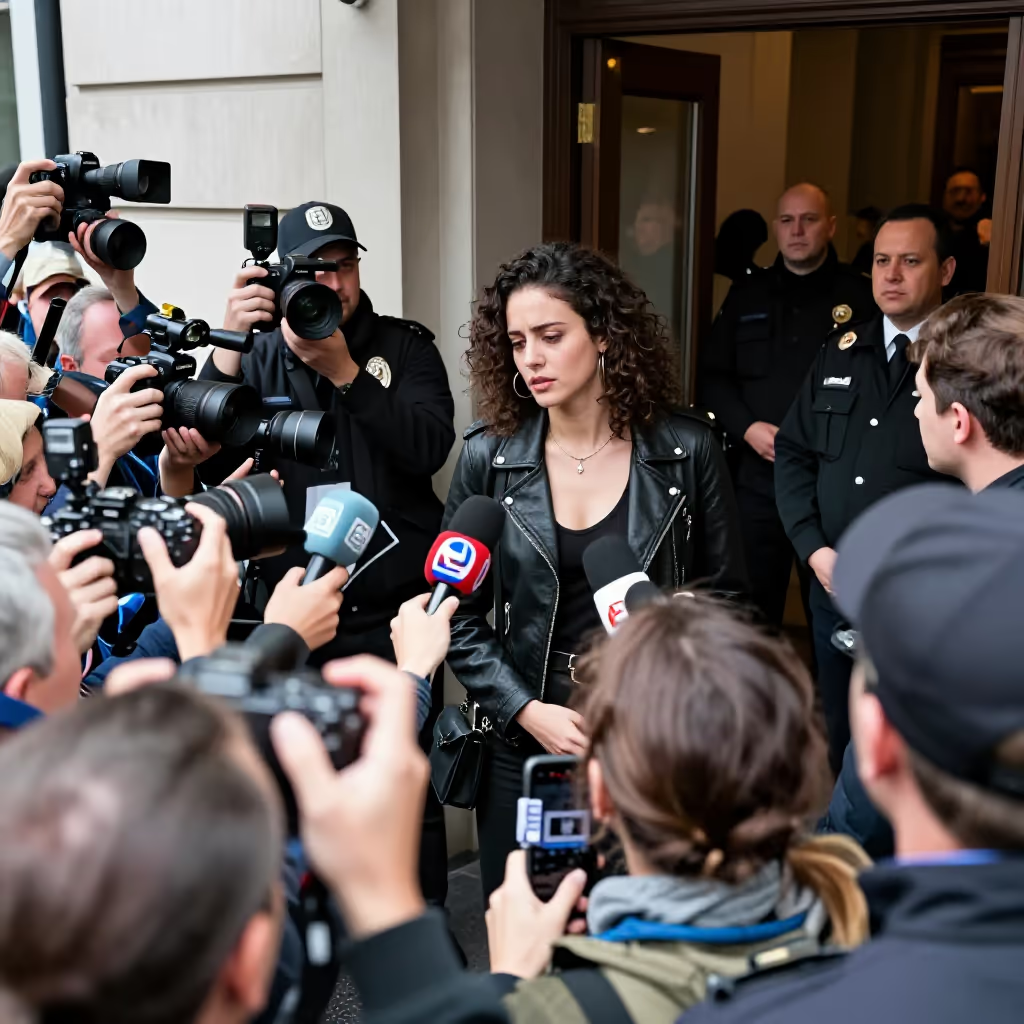
The intrusive and persistent pressuring of a person, often by many people at the same time.
Nach ihrem Auftritt im Fernsehen begann eine regelrechte Belagerung durch die Journalisten.
After her appearance on television, a veritable siege by journalists began.
'Die Belagerung' (siege) comes from the verb 'belagern' (to besiege). This is made up of 'lagern' (to set up camp) and the prefix 'be-'. So it describes how people position themselves 'around' a place or person.
Die Armee belagerte die Stadt für fast ein Jahr.
The army besieged the city for almost a year.
You can recognize the meaning from the context. If it is about 'Städte' (cities), 'Burgen' (castles), or 'Festungen' (fortresses) in a historical or military context, the military action is meant. If it is about 'Journalisten' (journalists), 'Fans' (fans), or 'Fotografen' (photographers) who are crowding around and pressuring a person, the figurative meaning is meant.
Die Belagerung von Konstantinopel im Jahr 1453 war ein historisches Ereignis.
The siege of Constantinople in 1453 was a historic event.
In the figurative meaning, 'Belagerung' (siege) is often intensified with adjectives like 'regelrecht' (veritable/real) or 'förmlich' (almost/literally) to emphasize the intensity of the pressure.
Nach dem Gewinn der Meisterschaft erlebte der Trainer eine regelrechte Belagerung durch die Presse.
After winning the championship, the coach experienced a veritable siege by the press.
blockade / block
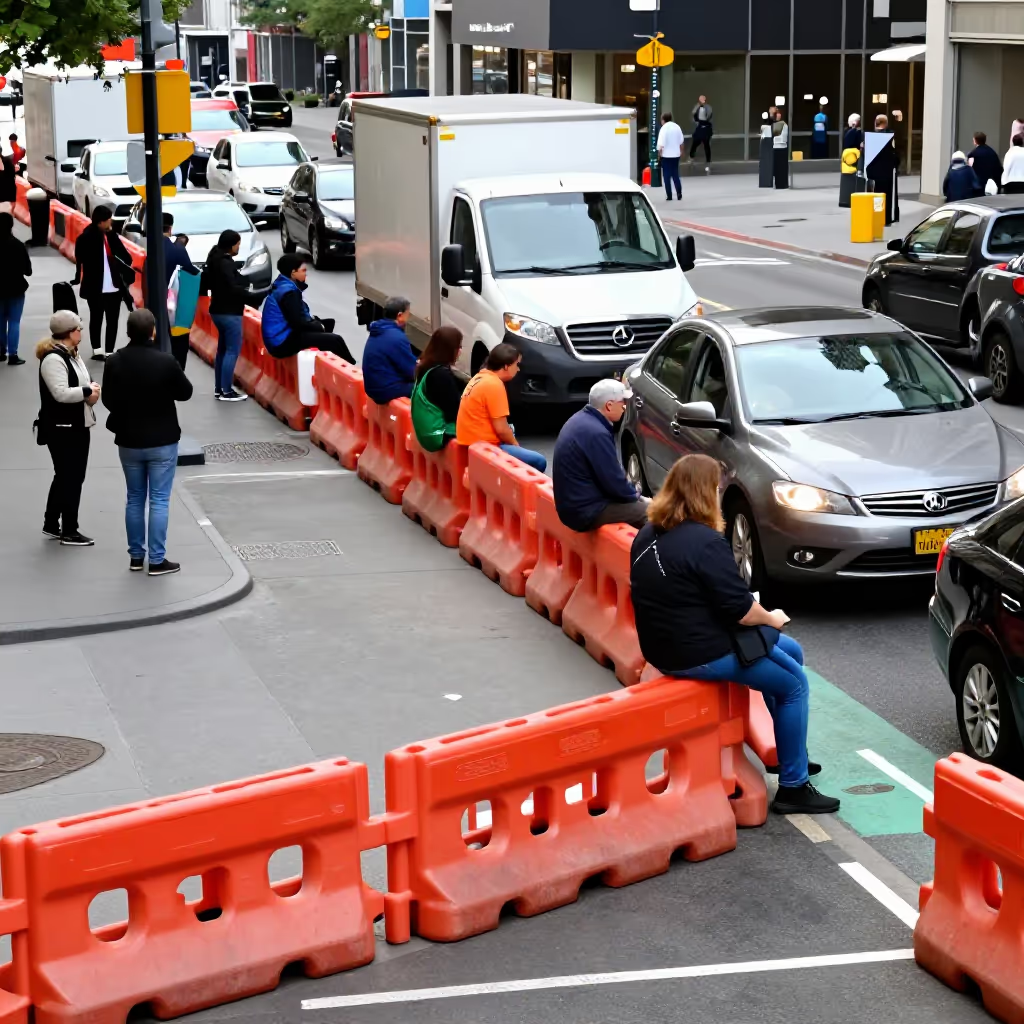
A Blockade deliberately blocks routes or access points and thus prevents the transport of people or goods. A Belagerung is the military encirclement of a city or fortress with the aim of forcing it to surrender; blockades can be part of this strategy.
Die Belagerung schnitt die Stadt vollständig ab und sollte sie zur Übergabe zwingen.
The siege completely cut off the city and was intended to force it to surrender.
Die Blockade der Zufahrtsstraße verhinderte, dass Lebensmittel in die Stadt gelangten.
The blockade of the access road prevented food from reaching the city.