

beordern
to order
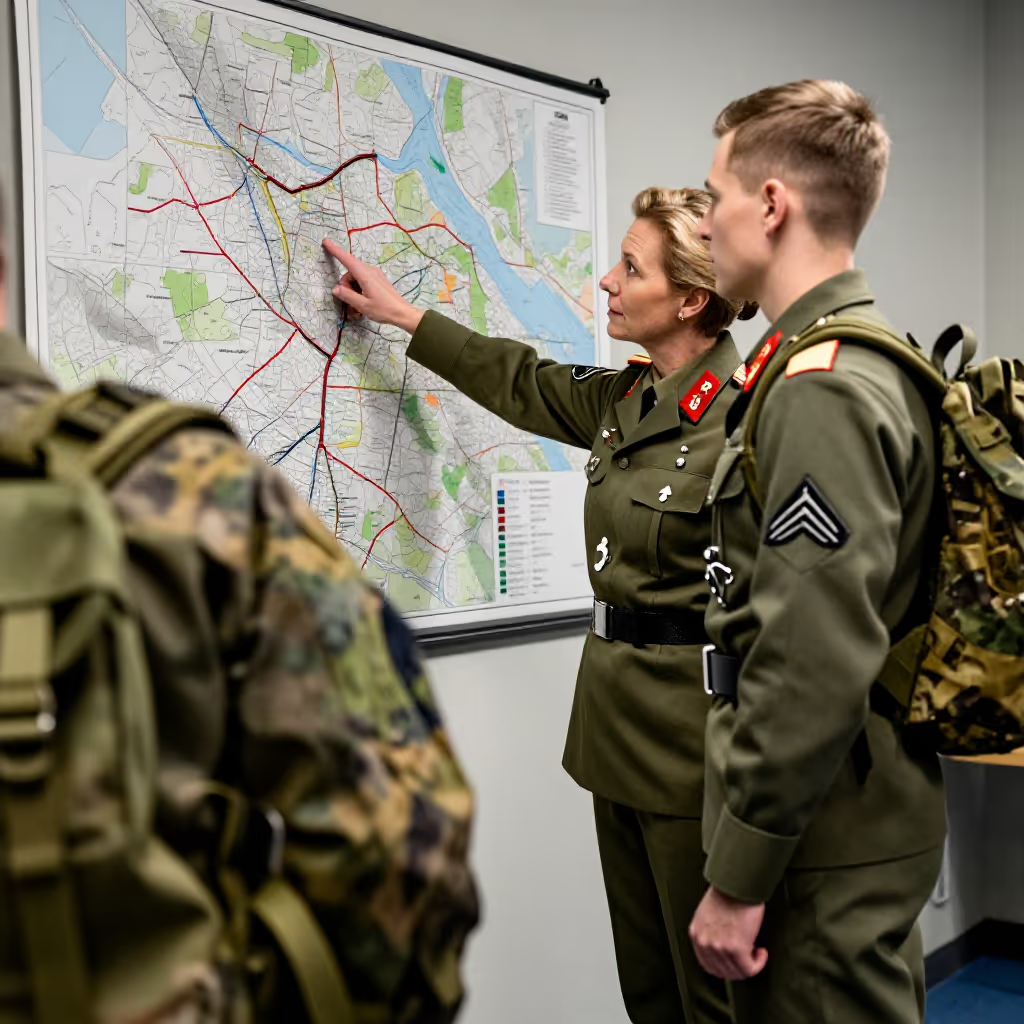
To officially instruct or order someone to go to a specific place. Often used in military or official work-related contexts.
EXAMPLE
Der Soldat wurde an die Front beordert.
The soldier was ordered to the front.
to order / summon
Loading your saved state.
to order
To officially instruct or order someone to go to a specific place. Often used in military or official work-related contexts.
Der Soldat wurde an die Front beordert.
The soldier was ordered to the front.

to summon
To tell someone, often in a commanding or urgent tone, to come to a specific place.
Der Chef beorderte alle Mitarbeiter sofort in sein Büro.
The boss summoned all employees to his office immediately.
The verb 'beordern' (to order/summon) is inseparable. The prefix 'be-' stays firmly attached to the verb stem 'ordern' in all sentence forms and tenses.
Man hat ihn in die Zentrale beordert.
They ordered him to headquarters.
The typical sentence structure is 'jemanden (Akkusativ) + an einen Ort (Richtung) beordern' (to order/summon someone + to a place). The destination of the instruction is usually indicated with a preposition such as 'nach', 'in', 'an', or 'zu'.
Die Polizistin wurde an den Unfallort beordert.
The policewoman was ordered to the scene of the accident.
In this meaning, the word belongs to formal language and is mainly used in military, police, or diplomatic contexts. It expresses an official order.
Die Einheit wurde zu einem Sondereinsatz beordert.
The unit was ordered to a special operation.
Outside an official context, 'beordern' (to order/summon) has a very authoritarian and commanding undertone. It is used to express that someone is being called somewhere in a non-negotiable way.
Nach dem Fehler beorderte der Trainer den Spieler sofort vom Feld.
After the mistake, the coach immediately ordered the player off the field.
to ask / to demand
Auffordern can be a friendly or strict request to come to a particular place. Beordern, by contrast, emphasizes an official, urgent, or commanding instruction to go there. Auffordern fits situations without any particular claim to authority; beordern fits an official work-related order.

Die Vorgesetzte beordert den Mitarbeiter sofort in ihr Büro.
The supervisor orders the employee to report to her office immediately.
Die Vorgesetzte fordert den Mitarbeiter auf, in ihr Büro zu kommen.
The supervisor asks the employee to come to her office.