

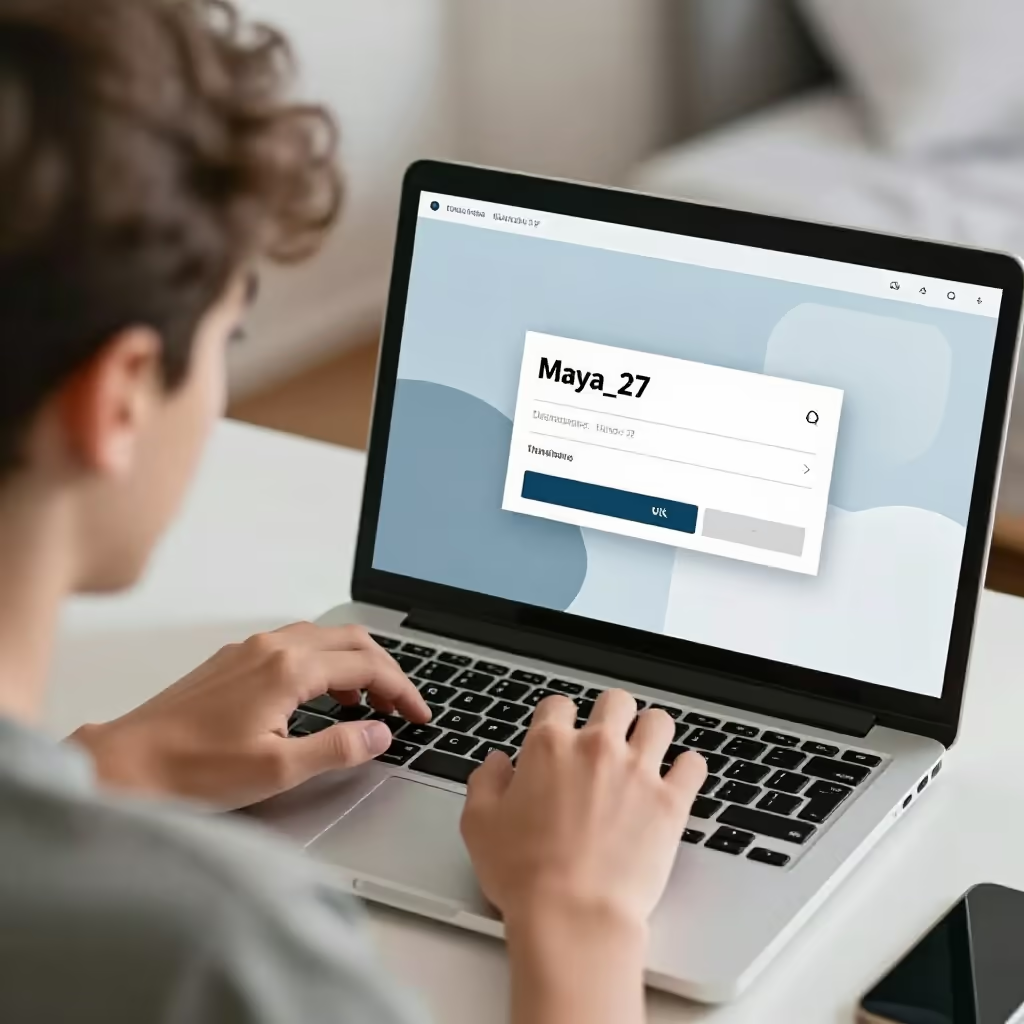
A unique name that a person chooses or is assigned in order to log in to a computer system, website, or online service.
example
Ich habe meinen Benutzernamen für das Online-Banking vergessen.
I forgot my username for online banking.
Usage tips
Word composition
The word is made up of 'Benutzer' (user) and 'Name' (name). A 'Benutzer' is a person who uses something (from the verb 'benutzen' (to use)). So it is literally the name of a user.
EXAMPLE
Jeder neue Benutzer muss sich registrieren.
Every new user has to register.
Usage context
This word is used almost exclusively in the digital sphere. It refers to logging in to computers, websites, apps, or other online services.
EXAMPLE
Bitte geben Sie Ihren Benutzernamen und Ihr Passwort ein.
Please enter your username and password.
Typical collocations
Common verbs in this context are 'wählen' (to choose), 'eingeben' (to enter), 'erstellen' (to create), or 'vergessen' (to forget). It is often mentioned together with 'Passwort' (password).
EXAMPLE
Du kannst dir einen beliebigen Benutzernamen wählen, solange er noch frei ist.
You can choose any username you like, as long as it is still available.
Compare with
confusable
Benutzername vs Passwort
password
'Passwort' and 'Benutzername' are both connected to logging in to an account or service. But they are not the same thing. The username tells the system who wants to log in. The password is secret and shows that this person really is allowed to have access. The words can be confused because they often appear together on the same login page. Remember: the username can often be seen or shared, but the password should remain secret.
Benutzername
Bei der Anmeldung steht der Benutzername im ersten Feld.
When logging in, the username goes in the first field.
Passwort
Ohne das Passwort kann sich die Fahrerin nicht in der App anmelden.
Without the password, the driver cannot log in to the app.