


der Berliner
Berliner
A man or boy who comes from Berlin or lives there.
EXAMPLE
Auf der Party habe ich einen netten Berliner kennengelernt.
At the party, I met a nice Berliner.
Berliner / jelly doughnut
der Berliner, die Berliner
Loading your saved state.
Berliner
A man or boy who comes from Berlin or lives there.
Auf der Party habe ich einen netten Berliner kennengelernt.
At the party, I met a nice Berliner.
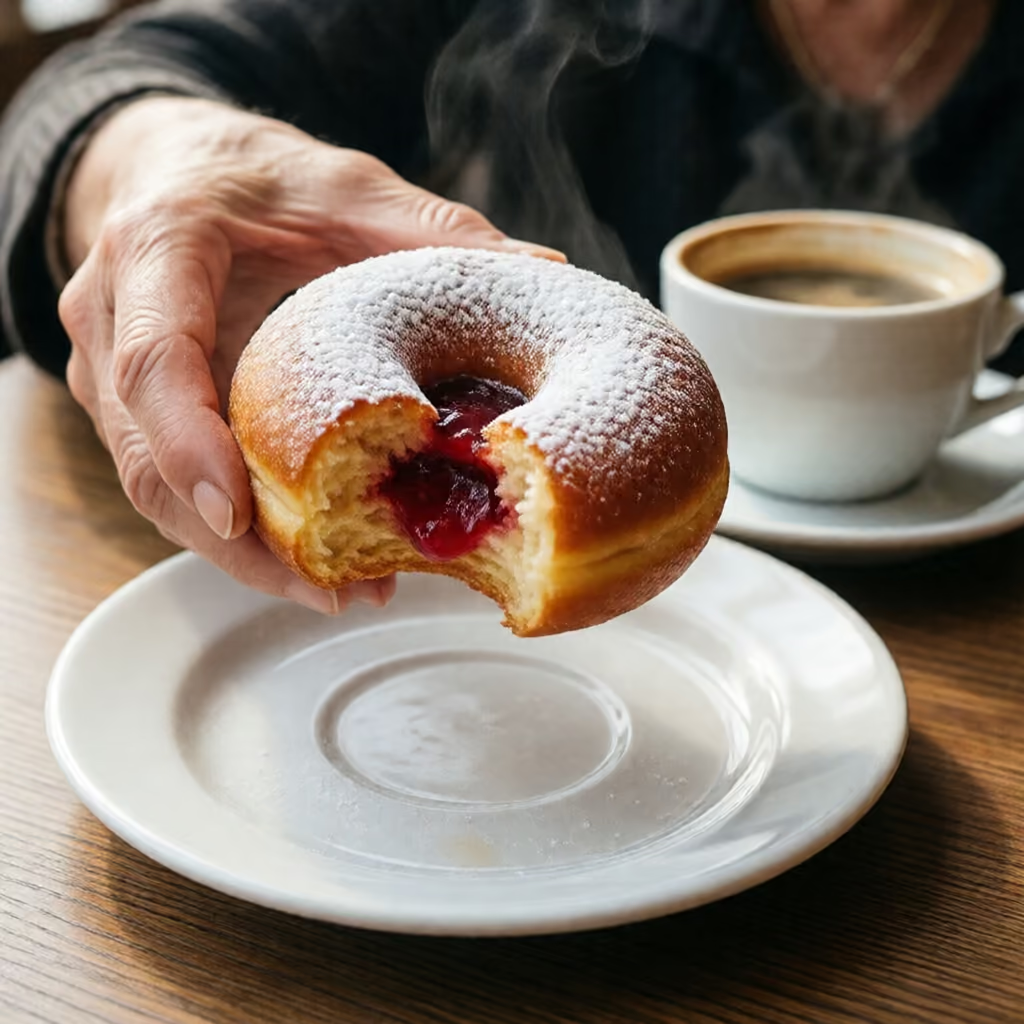
jelly doughnut
A round, sweet pastry made from yeast dough and fried in hot fat. It is usually filled with jam and covered with sugar or icing.
Zum Kaffee aß sie einen mit Erdbeermarmelade gefüllten Berliner.
With her coffee, she ate a jelly doughnut filled with strawberry jam.
| gender | masculine der |
|---|---|
| plural | die Berliner |
| genitive | des Berliners |
| singular | plural | |
|---|---|---|
| nominative | der Berliner | die Berliner |
| accusative | den Berliner | die Berliner |
| dative | dem Berliner | den Berlinern |
| genitive | des Berliners | der Berliner |
The article changes with the case; it is shown in colour.
'Berliner' is made up of 'Berlin' and the ending '-er'. Here, this ending refers to a person who comes from Berlin or lives there.
Viele Berliner fahren jeden Morgen mit der U-Bahn zur Arbeit.
Many Berliners take the subway to work every morning.
Common expressions include 'ein gebürtiger Berliner' (a native Berliner), 'ein echter Berliner' (a true Berliner), and 'ein waschechter Berliner' (a bona fide Berliner). They emphasize that someone really comes from Berlin.
Obwohl er seit Jahren in München wohnt, ist er ein waschechter Berliner.
Although he has lived in Munich for years, he is a bona fide Berliner.
The pastry meaning can usually be recognized from words related to eating and drinking, such as references to filling, sugar, coffee, or baking.
In der Bäckerei lagen frische Berliner mit Puderzucker.
The bakery had fresh jelly doughnuts covered with powdered sugar.