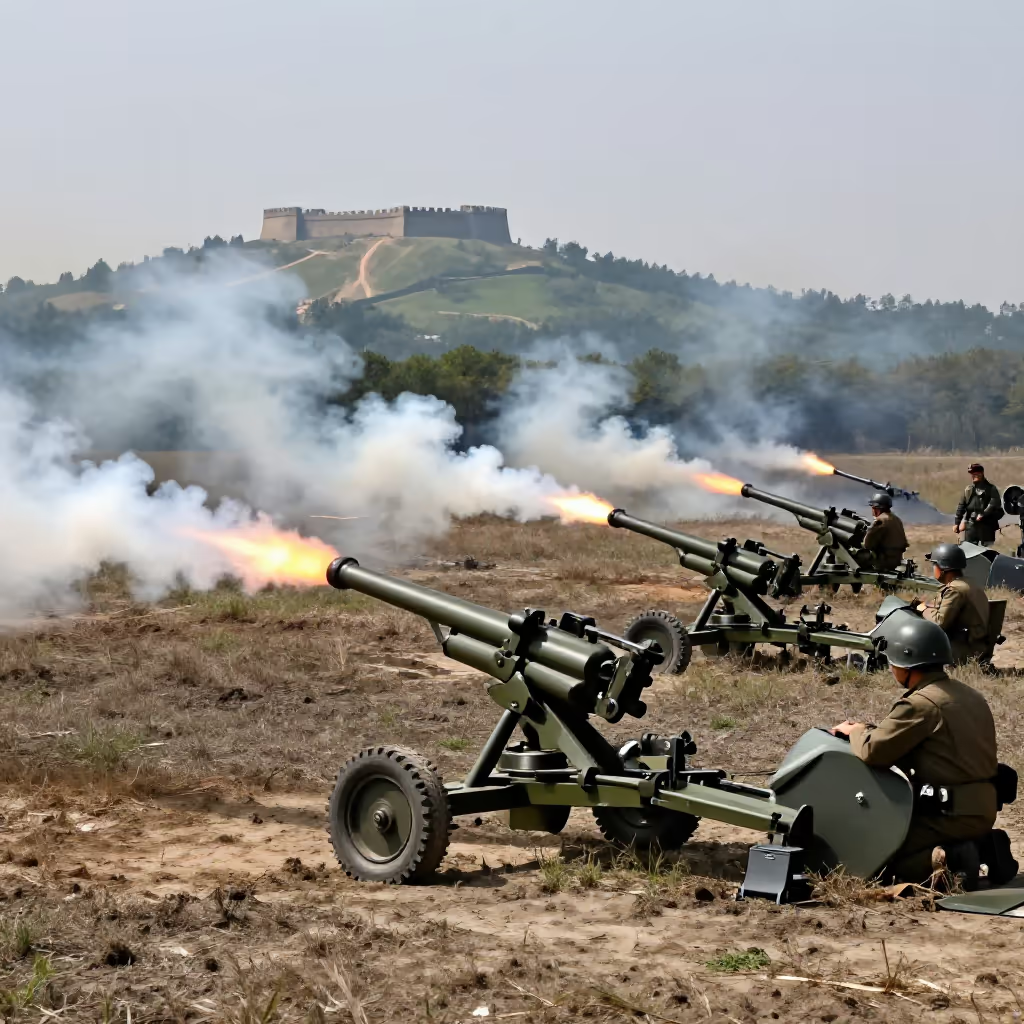
Intensive and repeated firing at a target with firearms, especially with artillery or machine guns.
example
Die Festung geriet unter schweren Beschuss durch die feindliche Armee.
The fortress came under heavy shelling by the enemy army.

Usage tips
Word family
'Der Beschuss' (shelling) is the noun corresponding to the verb 'beschießen' (to fire on/shell). The prefix 'be-' expresses that the action, 'das Schießen' (shooting/firing), is directed at a specific target.
EXAMPLE
Die Soldaten beschossen die feindliche Stellung.
The soldiers fired on the enemy position.
Fixed expression
The figurative meaning is used almost exclusively in the fixed expressions 'unter Beschuss stehen' (to be under fire) or 'unter Beschuss geraten' (to come under fire). These mean that someone is being strongly criticized.
EXAMPLE
Wegen seiner Entscheidung geriet der Minister unter heftigen Beschuss.
Because of his decision, the minister came under heavy fire.
Typical collocations
In a military context, 'Beschuss' (shelling) is often combined with adjectives such as 'schwer' (heavy), 'heftig' (intense), or 'ständig' (constant). A typical preposition is 'unter' (under), as in 'unter Beschuss' (under shelling/fire).
EXAMPLE
Die Stadt lag tagelang unter ständigem Beschuss.
The city was under constant shelling for days.
Compare with
near_synonym · confusable
Beschuss vs Kritik
criticism / review
'die Kritik' and 'der Beschuss' can both mean negative reactions to someone or something in a figurative sense. 'Kritik' is the normal word for negative feedback or objections. 'Beschuss' is mostly used in fixed expressions like 'unter Beschuss geraten' (to come under fire) or 'unter Beschuss stehen' (to be under fire). It then means many fierce attacks, questions, or accusations at once. Learners may confuse the words because 'Beschuss' here also figuratively means criticism. But 'Beschuss' sounds stronger and more dramatic than 'Kritik'.
Beschuss
Der Minister steht wegen seiner Entscheidung weiter unter Beschuss.
The minister is still under fire because of his decision.
Kritik
Nach dem Fehler nahm Elif die Kritik ruhig an.
After the mistake, Elif calmly accepted the criticism.