

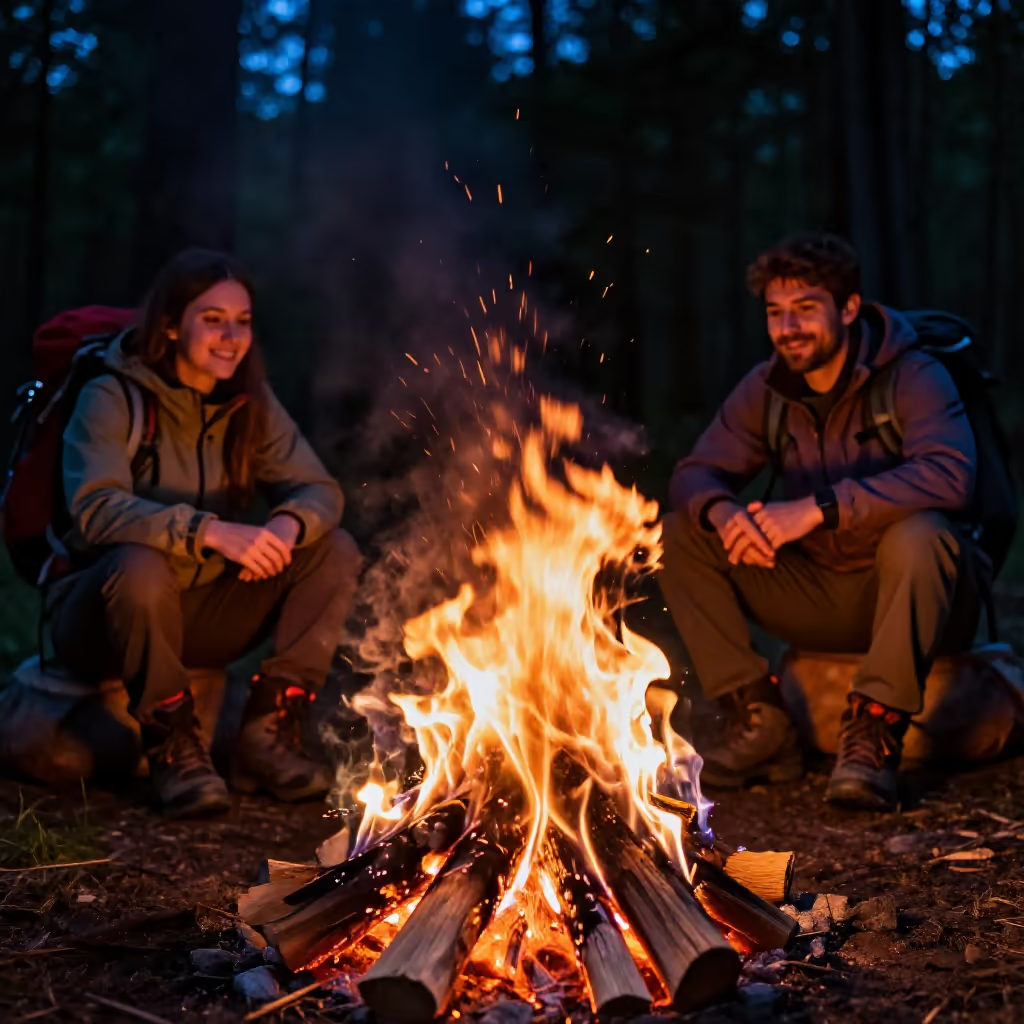
das Feuer
fire
The visible appearance of combustion with flames and heat.
EXAMPLE
Wir machten ein kleines Feuer, um uns zu wärmen.
We made a small fire to warm ourselves.
fire
Loading your saved state.
fire
The visible appearance of combustion with flames and heat.
Wir machten ein kleines Feuer, um uns zu wärmen.
We made a small fire to warm ourselves.
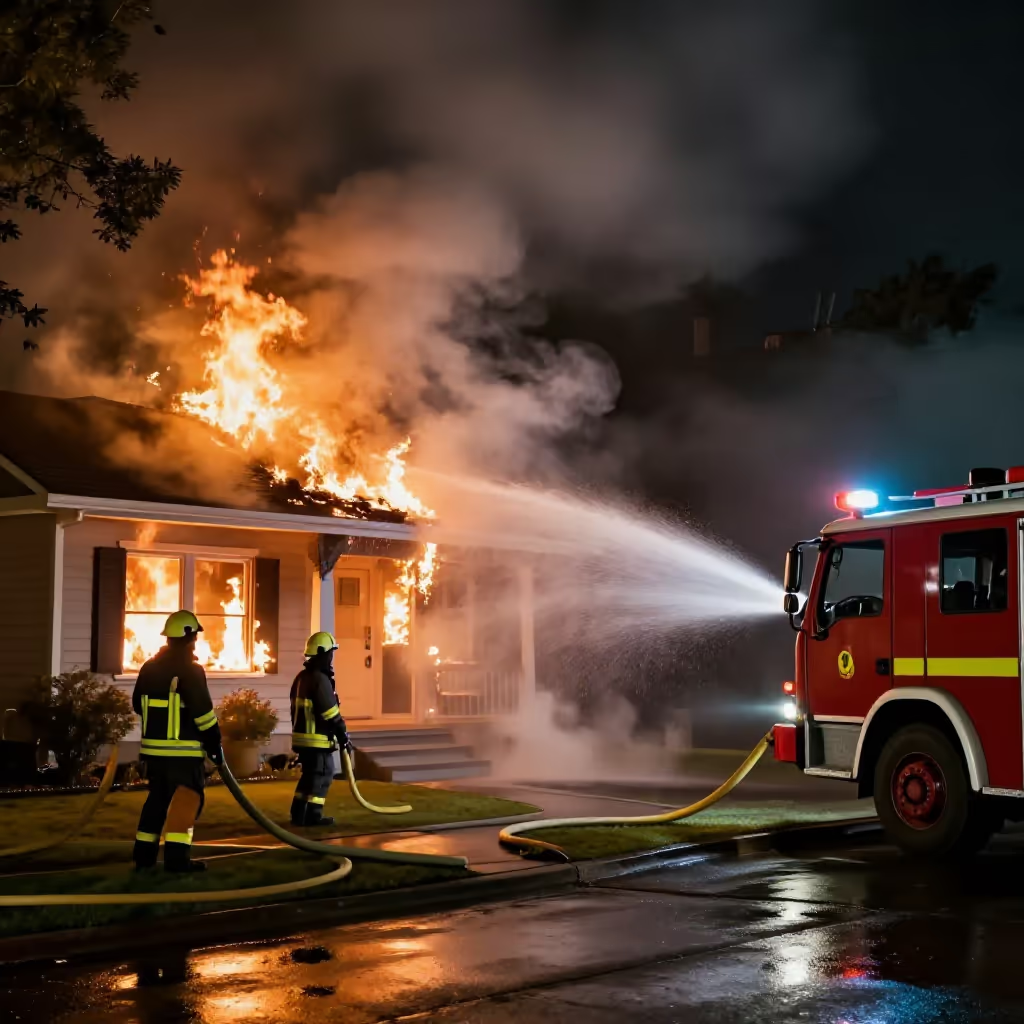
fire
An uncontrolled, destructive blaze.
Die Feuerwehr konnte das Feuer im Dachstuhl schnell löschen.
The fire department was able to quickly put out the fire in the roof structure.
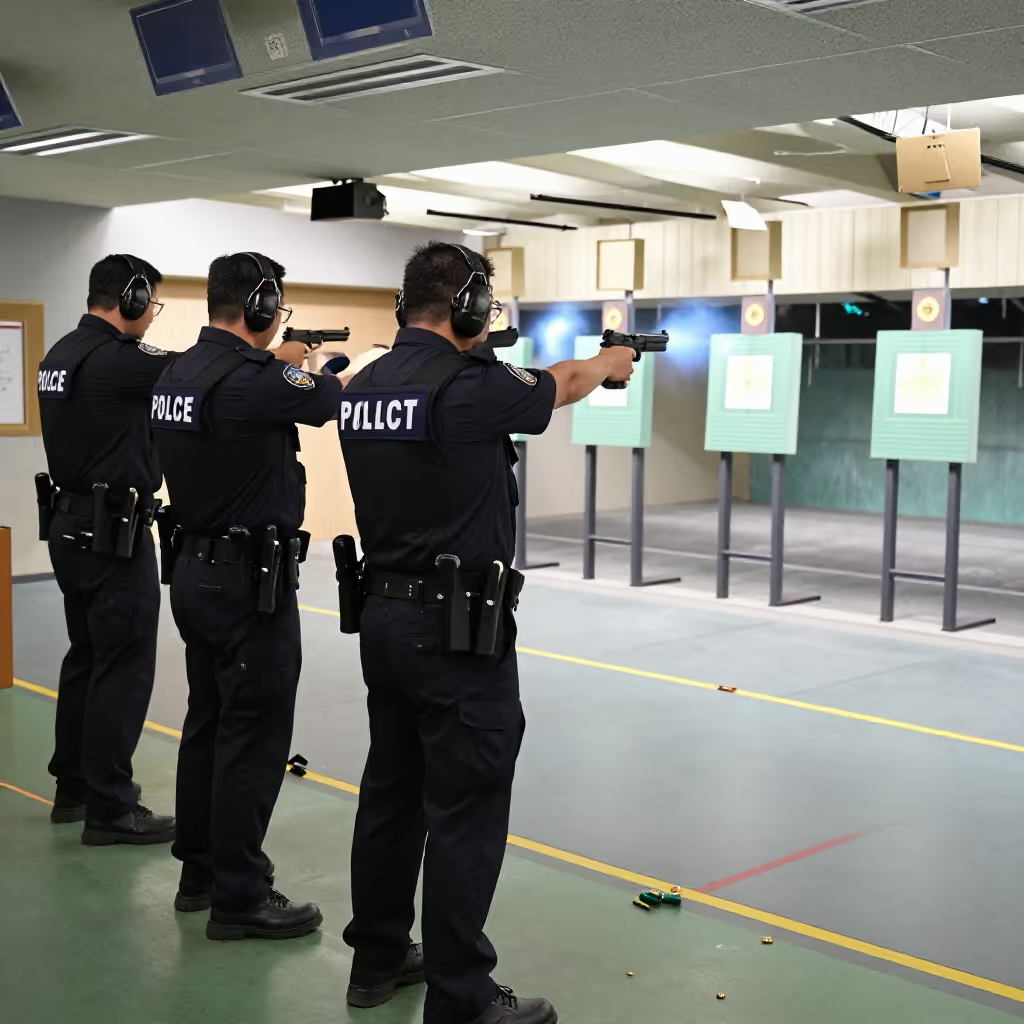
fire
The use of firearms; shooting.
Die Soldaten eröffneten das Feuer auf den Feind.
The soldiers opened fire on the enemy.
fire
A strong passion, enthusiasm, or intense feeling.
Er sprach mit einem inneren Feuer über seine Pläne für die Zukunft.
He spoke with an inner fire about his plans for the future.

to be fired up
To be very excited and enthusiastic about an idea or thing.
Als sie von der Reiseidee hörte, war sie sofort Feuer und Flamme.
When she heard about the travel idea, she was immediately fired up.
'Feuer' (fire) is the basis for many everyday words. These include 'die Feuerwehr' (fire department), 'das Feuerzeug' (lighter), and 'das Feuerwerk' (fireworks).
Hast du ein Feuerzeug für die Kerzen?
Do you have a lighter for the candles?
When it is about an intentional, controlled fire, the typical verb is 'Feuer machen' (to make a fire). You can then sit comfortably 'am Feuer' (by the fire).
Die Kinder haben am Strand ein kleines Feuer gemacht.
The children made a small fire on the beach.
For an unwanted fire, other verbs are used. A building can 'Feuer fangen' (catch fire), a blaze can 'ausbrechen' (break out), and the fire department has to 'Feuer löschen' (put out the fire).
Das trockene Holz hat sofort Feuer gefangen.
The dry wood caught fire immediately.
In a military or police context, 'Feuer' (fire) means shooting with weapons. The most important fixed expression for this is 'das Feuer eröffnen' (to open fire).
Der General gab den Befehl, das Feuer zu eröffnen.
The general gave the order to open fire.
As a metaphor, 'Feuer' (fire) describes strong passion or enthusiasm. You can speak of an 'inneres Feuer' (inner fire) or say that someone is involved in something 'mit Feuer' (with fire).
Sie hat mit Feuer in den Augen von ihrem Projekt erzählt.
She talked about her project with fire in her eyes.
The idiom 'Feuer und Flamme sein' means that you are extremely enthusiastic about something. It is used with the verb 'sein' (to be) and often the preposition 'für' (+ accusative).
Mein Sohn ist Feuer und Flamme für die Idee, in den Freizeitpark zu fahren.
My son is fired up about the idea of going to the amusement park.
fire / brandy
Feuer and Brand can both refer to destructive burning. Feuer can also mean the flames or a controlled source of fire, while Brand specifically emphasizes an uncontrolled, damaging event. When talking about damage to a building, „Brand“ is therefore usually the better choice; „Feuer“ can also be used for the flames in general.
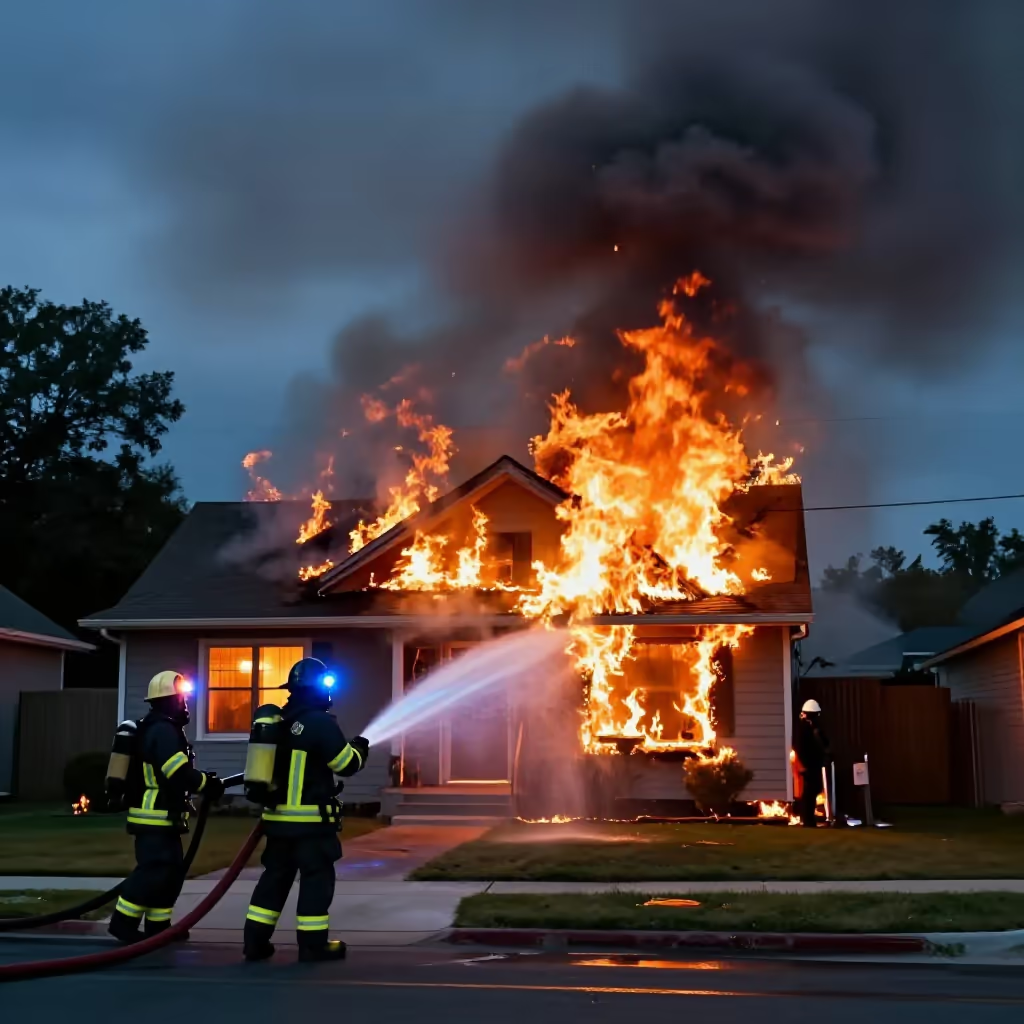
Das Feuer im alten Gebäude breitete sich schnell auf das Dach aus.
The fire in the old building quickly spread to the roof.
Der Brand im alten Gebäude zerstörte das Dach und mehrere Räume.
The blaze in the old building destroyed the roof and several rooms.