

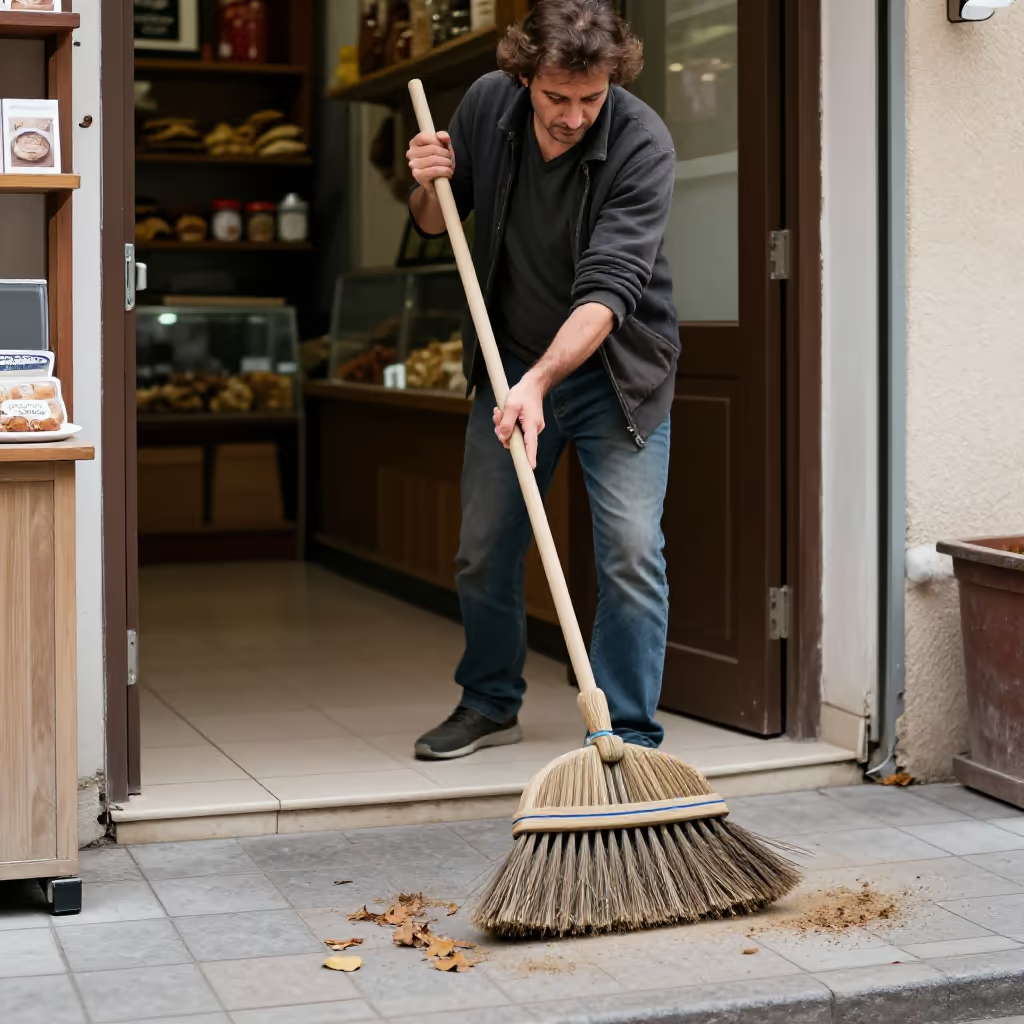
der Besen
broom
A cleaning tool with a long handle and bristles at the lower end, used for sweeping floors or surfaces.
EXAMPLE
Nimm bitte den Besen und kehre die Küche.
Please take the broom and sweep the kitchen.
broom
Loading your saved state.
broom
A cleaning tool with a long handle and bristles at the lower end, used for sweeping floors or surfaces.
Nimm bitte den Besen und kehre die Küche.
Please take the broom and sweep the kitchen.

old hag
An outdated and derogatory colloquial term for a woman who is perceived as unpleasant or quarrelsome.
Früher wurde eine zänkische Frau manchmal als „alter Besen“ beschimpft.
In the past, a quarrelsome woman was sometimes insulted as an “old hag.”
In connection with the cleaning tool 'Besen' (broom), the verbs 'kehren' (to sweep) or 'fegen' (to sweep) are typically used. You can say 'mit dem Besen kehren' (to sweep with the broom) or 'den Schmutz zusammenfegen' (to sweep the dirt together).
Kannst du bitte mit dem Besen die Krümel in der Küche zusammenkehren?
Could you please use the broom to sweep up the crumbs in the kitchen?
There is the idiom 'einen Besen fressen' (literally: to eat a broom). You say 'Ich fresse einen Besen, wenn ...' to express that you consider something absolutely impossible or extremely unlikely.
Ich fresse einen Besen, wenn diese Mannschaft das Spiel noch gewinnt.
I'll eat my hat if this team still wins the game.
Using 'Besen' (old hag) as a term for a woman is very outdated and a highly derogatory insult. This usage should definitely be avoided.
Im Streit beschimpfte er sie als „alten Besen“.
During the argument, he insulted her by calling her an “old hag.”
In fairy tales and legends, the broom is the classic means of transportation for witches. People then often speak of a 'Hexenbesen' (witch's broom).
An Fasching flog die Hexe auf ihrem Besen durch die Turnhalle.
At carnival, the witch flew through the gym on her broom.
bitch / nanny goat
Both words can be used derogatorily to refer to a woman perceived as unpleasant or quarrelsome. „Zicke“ is the usual colloquial term for moody, stubborn, or quarrelsome behavior. „Besen“ can also have this meaning, but sounds outdated and particularly insulting; in everyday speech today, „Zicke“ is usually more appropriate.

In dem alten Roman nennt der Mann seine streitsüchtige Nachbarin einen Besen.
In the old novel, the man calls his quarrelsome neighbor an old hag.
Nach dem Streit nennt der Mann seine launische Nachbarin eine Zicke.
After the argument, the man calls his moody neighbor a bitch.