
A colloquial, derogatory term for a woman or girl who is perceived as moody, stubborn, or quarrelsome.
example
Sei doch nicht so eine Zicke, nur weil du deinen Willen nicht bekommst!
Don't be such a bitch just because you're not getting your way!
Usage tips
Word family
The noun 'die Zicke' (bitch / nanny goat) belongs to a word family that describes moody behavior. The related adjective is 'zickig' (bitchy, moody), and the colloquial verb is 'herumzicken' (to act bitchy / be difficult).
EXAMPLE
Hör auf, so zickig zu sein!
Stop being so bitchy!
Context clue
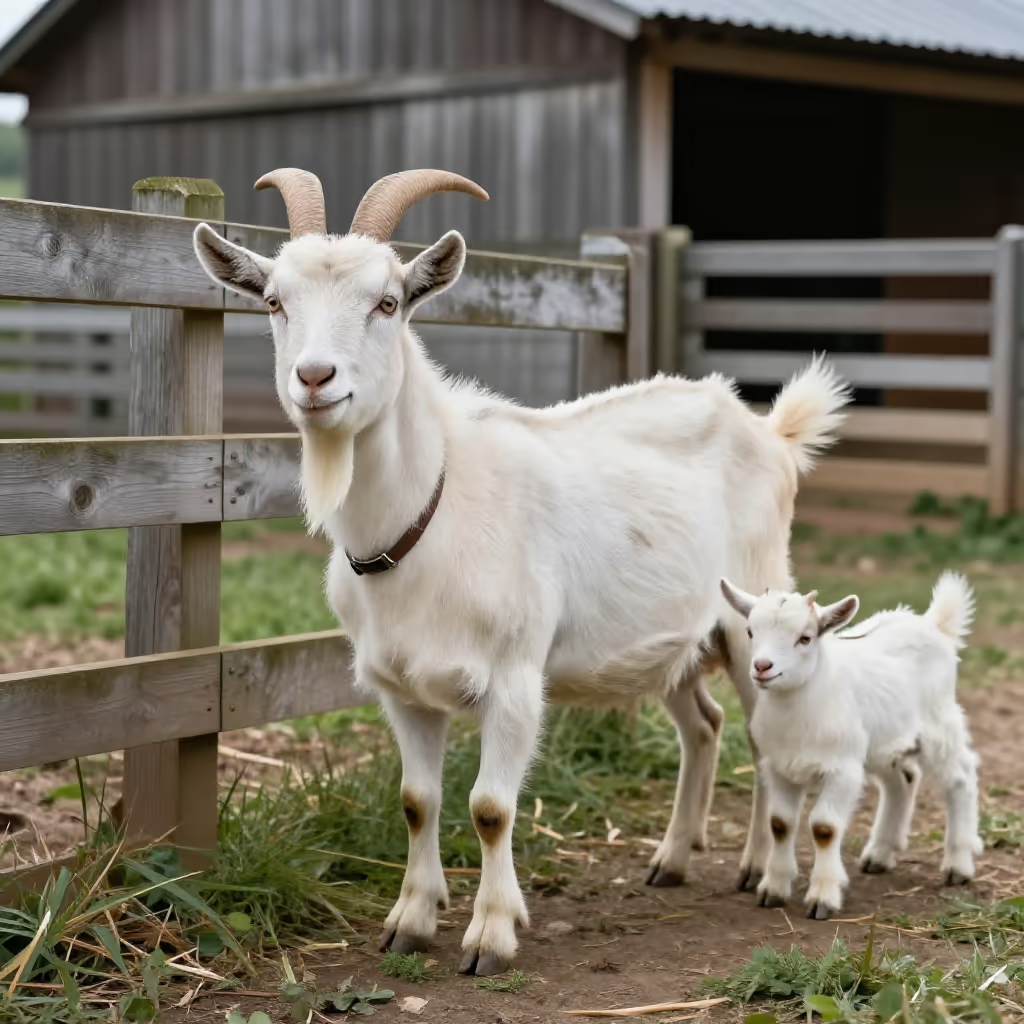
You can easily recognize the meaning from the context. If people are talking about animals, it means a female goat. If people are talking about humans, it is almost always the colloquial, negative term for a person.
EXAMPLE
Auf dem Bauernhof gibt es eine Zicke mit zwei kleinen Zicklein.
There is a nanny goat with two little kids on the farm.
Colloquial & derogatory
When 'Zicke' (bitch) is used for a person, it is always colloquial and has a negative, derogatory meaning. You should avoid this word in formal or polite conversations.
EXAMPLE
Nenn deine Schwester nicht Zicke, das ist nicht nett.
Don't call your sister a bitch; that's not nice.
Compare with
near_synonym
Zicke vs Prinzessin
princess
'die Prinzessin' and 'die Zicke' can both be used colloquially and derogatorily for a woman or girl. 'Prinzessin' then more often means that someone seems spoiled, sensitive, or very demanding. 'Zicke' is harsher and more often means that someone is moody, stubborn, or quarrelsome. Both words can be hurtful. 'Prinzessin' fits better with exaggerated wishes, while 'Zicke' fits better with arguments and bad moods.
Zicke
Nach dem Streit sagte Paul wütend, seine Schwester sei heute eine richtige Zicke.
After the argument, Paul angrily said that his sister was being a real bitch today.
Prinzessin
Im Hotel wollte sie das größte Zimmer und wurde von ihren Freunden Prinzessin genannt.
At the hotel, she wanted the biggest room and was called a princess by her friends.