

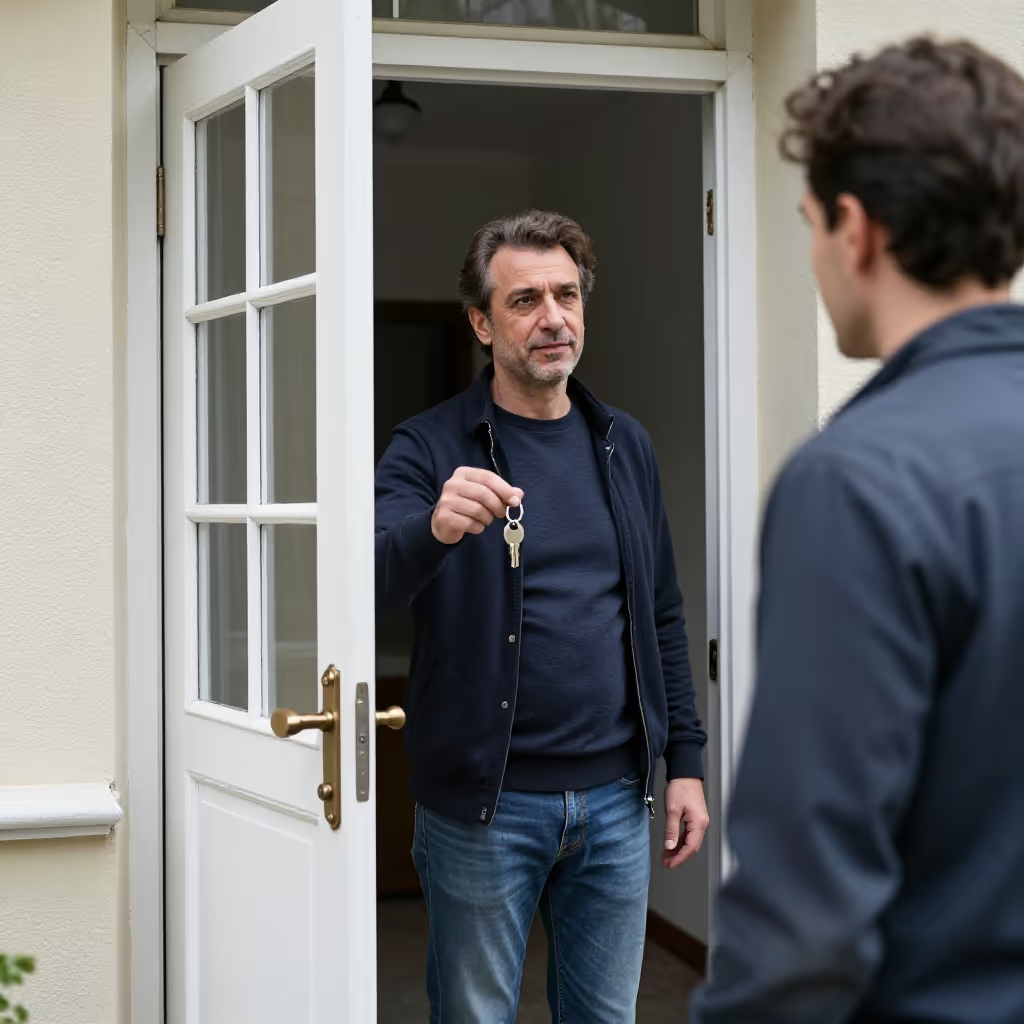
der Besitzer
owner
The person to whom an object, an animal, or a property belongs.
EXAMPLE
Der Besitzer des Restaurants begrüßte die Gäste persönlich.
The owner of the restaurant personally greeted the guests.
owner
Loading your saved state.
owner
The person to whom an object, an animal, or a property belongs.
Der Besitzer des Restaurants begrüßte die Gäste persönlich.
The owner of the restaurant personally greeted the guests.
'Der Besitzer' (the owner) is the person who 'besitzt' (owns) something. Both words belong to the same word family and are derived from the verb 'besitzen' (to own).
Er besitzt ein altes Auto, also ist er der Besitzer des Autos.
He owns an old car, so he is the owner of the car.
To express who something belongs to, after 'Besitzer' (owner) you usually use the genitive or the preposition 'von' with the dative. The genitive is somewhat more formal.
Der Besitzer des Hundes wartete im Park.
The owner of the dog was waiting in the park.
Common expressions are 'den Besitzer wechseln' (to change owners) when something is sold, or the description 'stolzer Besitzer' (proud owner) when someone is very happy about what they own.
Das Haus hat vor kurzem den Besitzer gewechselt.
The house recently changed owners.
owner
Besitzer generally refers to the person who owns a thing. Eigentümer explicitly emphasizes who legally owns it and who can dispose of it. Besitzer is often suitable in everyday contexts; when the legal ownership matters, Eigentümer is more precise.

Paul ist der Besitzer des Fahrrads, das vor dem Haus steht.
Paul is the owner of the bicycle standing in front of the house.
Im Kaufvertrag wird Paul als Eigentümer des Fahrrads genannt.
The sales contract names Paul as the legal owner of the bicycle.