


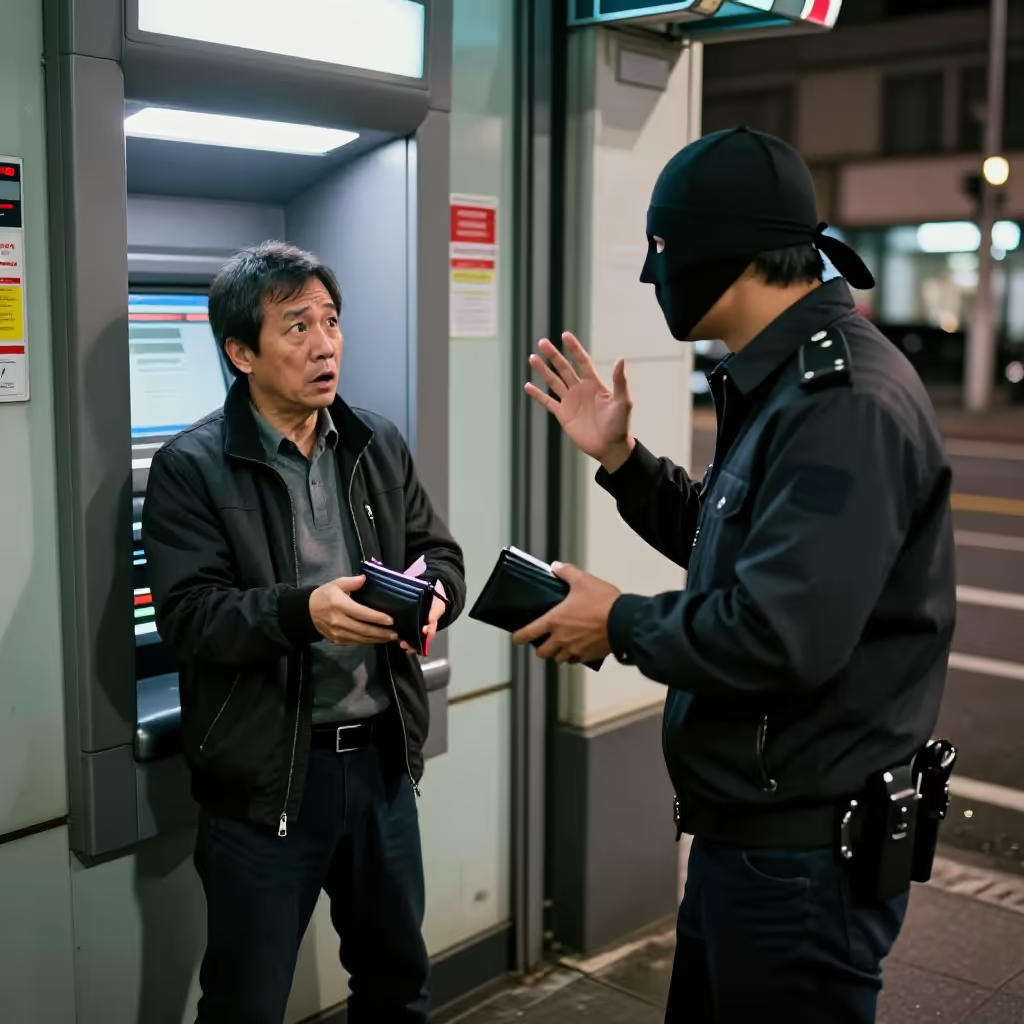
To secretly take something from a person that belongs to them; to make someone the victim of a theft. In contrast to 'stehlen' (to steal), the focus here is on the person who is robbed.
example
Sie wurde im Gedränge auf dem Markt bestohlen.
She was stolen from in the crowd at the market.
Usage tips
Focus on the person
'Bestehlen' (to steal from) is an inseparable verb derived from the verb 'stehlen' (to steal). The prefix 'be-' shifts the focus from the stolen object to the person who becomes the victim of the theft.
EXAMPLE
Pass auf deine Tasche auf, damit dich niemand bestiehlt.
Watch your bag so that no one steals from you.
Sentence structure with accusative
With this verb, the person something is stolen from is always the direct object in the accusative. The stolen object is usually not mentioned.
EXAMPLE
Ein Taschendieb hat den Touristen im Bus bestohlen.
A pickpocket stole from the tourist on the bus.
Common use in the passive
This verb is very often used in the passive to express that someone became the victim of a theft. The typical formulation is: 'Ich wurde bestohlen.' (I was stolen from / I was robbed.)
EXAMPLE
Mir wurde meine Brieftasche geklaut, ich wurde also bestohlen.
My wallet was stolen, so I was robbed.
Compare with
near_synonym · confusable
bestehlen vs stehlen
to steal
'stehlen' and 'bestehlen' both describe theft, but they have a different focus. With 'stehlen', the stolen thing is usually the focus: someone steals a phone, money, or a bicycle. With 'bestehlen', the affected person is the focus: someone steals from a customer, a friend, or a colleague. That is why 'bestehlen' normally needs a person as its object. Learners easily confuse the words because both belong to the same action. Memory tip: You steal something, but you 'bestehlen' someone.
bestehlen
Der Mann bestiehlt ältere Menschen auf dem Markt.
The man steals from elderly people at the market.
stehlen
Im Zug wurde meiner Kollegin der Laptop gestohlen.