

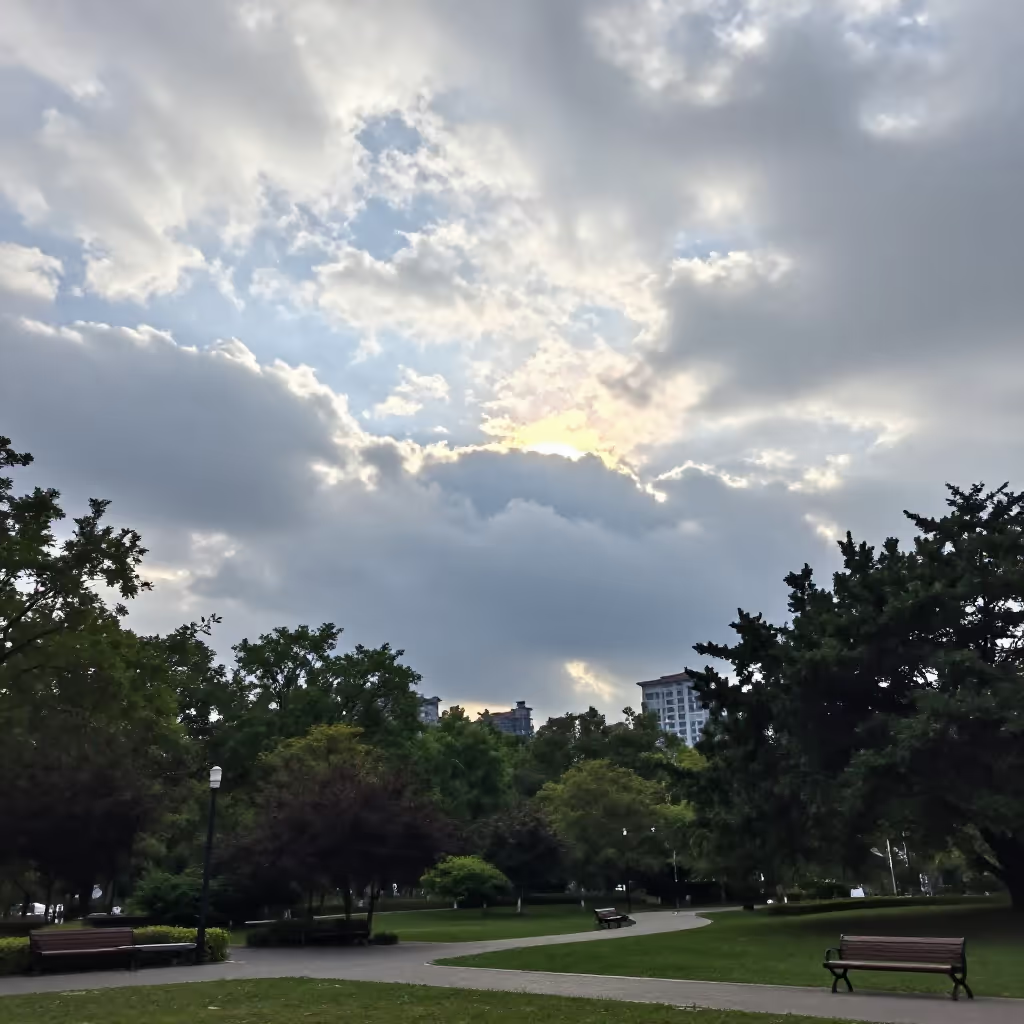
die Bewölkung
cloud cover
The covering of the sky with clouds.
EXAMPLE
Am Morgen war die Bewölkung noch dicht, aber gegen Mittag klarte es auf.
In the morning, the cloud cover was still dense, but around midday it cleared up.
cloud cover
Loading your saved state.
cloud cover
The covering of the sky with clouds.
Am Morgen war die Bewölkung noch dicht, aber gegen Mittag klarte es auf.
In the morning, the cloud cover was still dense, but around midday it cleared up.
'Die Bewölkung' (cloud cover) belongs to the word family of 'die Wolke' (the cloud). The prefix 'be-' and the ending '-ung' turn it into a noun that describes the state of being covered with clouds.
Der Himmel ist heute komplett ohne Wolken.
The sky is completely without clouds today.
'Bewölkung' (cloud cover) is used as an uncountable noun. It describes the state of the sky as a whole and therefore normally has no plural and is not used with the indefinite article 'eine' (a/an).
Wegen starker Bewölkung konnte man die Sterne nicht sehen.
Because of heavy cloud cover, you couldn't see the stars.
In weather reports, you often hear typical combinations. Adjectives like 'dichte' (dense), 'leichte' (light), or 'wechselnde' (variable) describe the type of cloud cover, while verbs like 'auflockern' (to break up) or 'zunehmen' (to increase) describe a change.
Für morgen ist wechselnde Bewölkung mit sonnigen Abschnitten gemeldet.
Variable cloud cover with sunny intervals is forecast for tomorrow.
'Bewölkung' (cloud cover) is the official and neutral term used in meteorology and in weather forecasts to describe the degree of cloud coverage.
Laut Wetterbericht bleibt die dichte Bewölkung den ganzen Tag bestehen.
According to the weather report, the dense cloud cover will remain all day.