

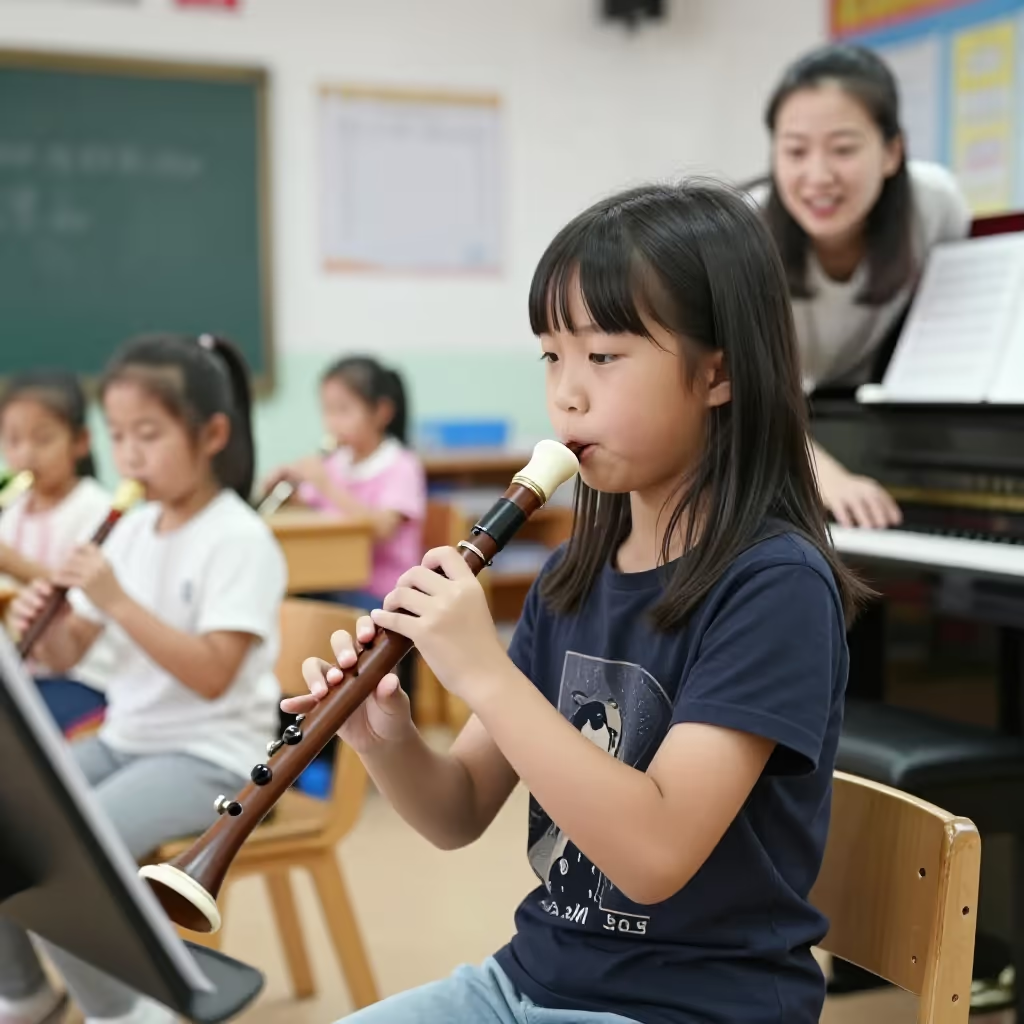
A woodwind instrument from the family of duct flutes with a beak-shaped mouthpiece, often used as a beginner instrument for children and in early music.
example
In der dritten Klasse lernen bei uns alle Kinder Blockflöte spielen.
In third grade, all the children at our school learn to play the recorder.
Usage tips
Compound structure
The word is made up of 'Block' (block) and 'Flöte' (flute). The 'Block' refers to the wooden mouthpiece inside the head of the flute, which shapes the airflow.
EXAMPLE
Die Reinigung einer Blockflöte ist wichtig, damit der Block nicht aufquillt.
Cleaning a recorder is important so that the block does not swell.
Sentence structure without an article
When talking about playing an instrument as an activity, no article is often used in German. So you say 'Blockflöte spielen' (to play recorder) or 'Blockflöte lernen' (to learn recorder).
EXAMPLE
Mein Sohn möchte gerne Blockflöte lernen.
My son would like to learn recorder.
Typical verbs
In connection with the recorder, the verbs 'spielen' (to play), 'üben' (to practice), and 'lernen' (to learn) are frequently used.
EXAMPLE
Sie übt jeden Tag eine Stunde Blockflöte.
She practices recorder for an hour every day.
Compare with
near_synonym · confusable
Blockflöte vs Flöte
flute
'Flöte' and 'Blockflöte' both refer to wind instruments. 'Flöte' is the more general term and can mean different instruments, for example a recorder or a transverse flute. 'Blockflöte' is a specific type of flute with a beak-shaped mouthpiece, which many children learn first. Learners may confuse the words because every 'Blockflöte' is a 'Flöte', but not every 'Flöte' is a 'Blockflöte'. If the exact type of instrument is important, you say 'Blockflöte'.
Blockflöte
In der Musikschule lernen die Kinder zuerst Blockflöte.
At the music school, the children learn the recorder first.
Flöte
Im Orchester spielt Lena Flöte, aber nicht Blockflöte, sondern Querflöte.
Lena plays the flute in the orchestra, but not the recorder; she plays the transverse flute.