

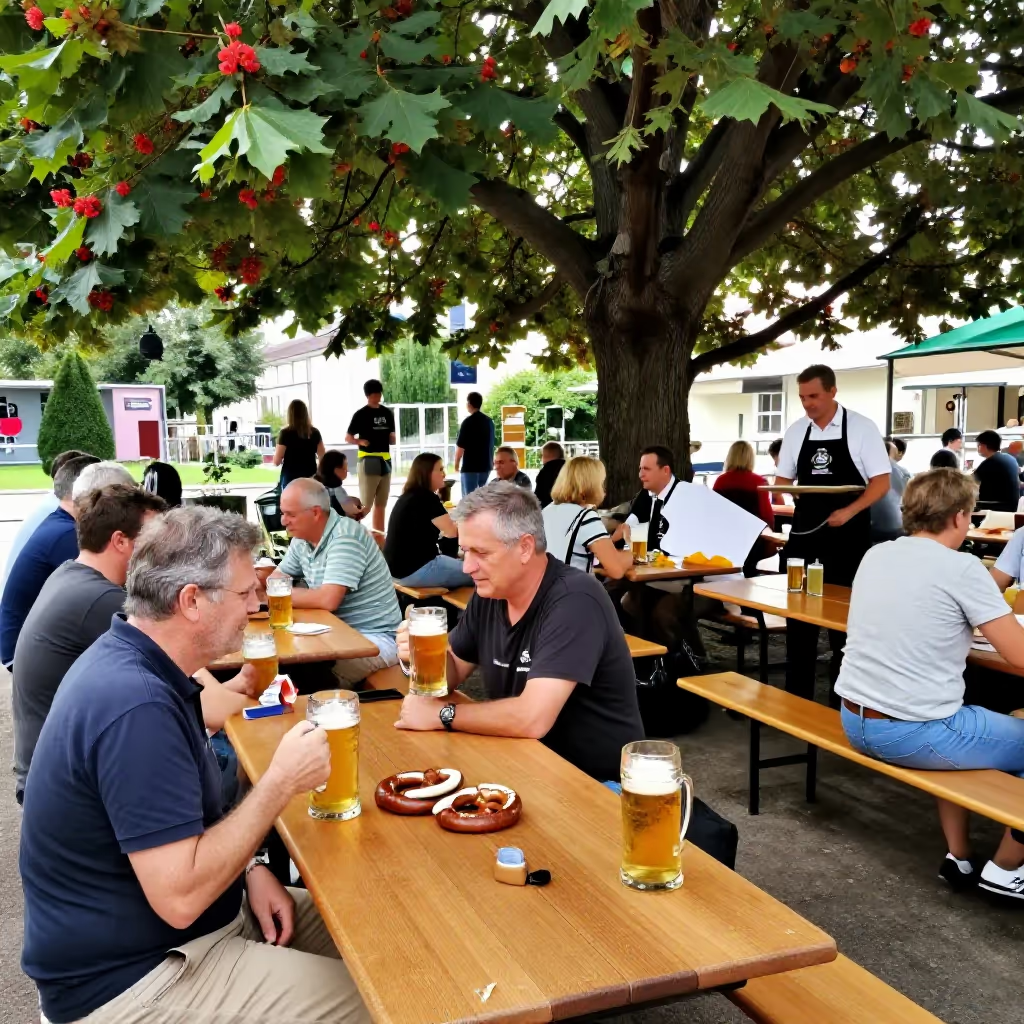
An outdoor restaurant or pub, often under shade-giving trees, where mainly beer and traditional food are served at simple tables and benches.
example
An einem warmen Sommerabend gibt es nichts Schöneres als im Biergarten zu sitzen.
On a warm summer evening, there is nothing nicer than sitting in a beer garden.
Usage tips
Compound word
The word is made up simply and logically of 'Bier' (beer) and 'Garten' (garden). So it literally describes a garden where you can drink beer.
EXAMPLE
Lass uns heute Abend in den neuen Biergarten am Fluss gehen.
Let's go to the new beer garden by the river tonight.
Movement and location
Pay attention to the difference in prepositions: you go 'in den Biergarten' (to the beer garden; accusative, direction), but you sit 'im Biergarten' (in the beer garden; dative, location).
EXAMPLE
Wir gehen heute in den Biergarten.
We're going to the beer garden today.
Cultural context
Beer gardens are an important part of German culture, especially Bavarian culture. In traditional beer gardens, it is often allowed to bring your own food, as long as you buy the drinks on site.
EXAMPLE
Viele Familien packen einen Picknickkorb für den Besuch im Biergarten.
Many families pack a picnic basket for a visit to the beer garden.
Compare with
confusable
Biergarten vs Terrasse
terrace / patio
'die Terrasse' and 'der Biergarten' both have to do with sitting outdoors. A 'Terrasse' (terrace / patio) usually belongs to a house or a building and is an area directly next to it. A 'Biergarten' (beer garden) is an outdoor restaurant or pub, often with simple tables, benches, drinks, and food. They can be confused because in both cases you sit outside. If you mean the private area next to a house, 'Terrasse' fits. If you are drinking or eating outside at a hospitality venue, 'Biergarten' fits.
Biergarten
Nach der Arbeit trifft sich das Team im Biergarten.
After work, the team meets at the beer garden.
Terrasse
Im Sommer frühstückt die Familie oft auf der Terrasse.
In summer, the family often has breakfast on the terrace.