

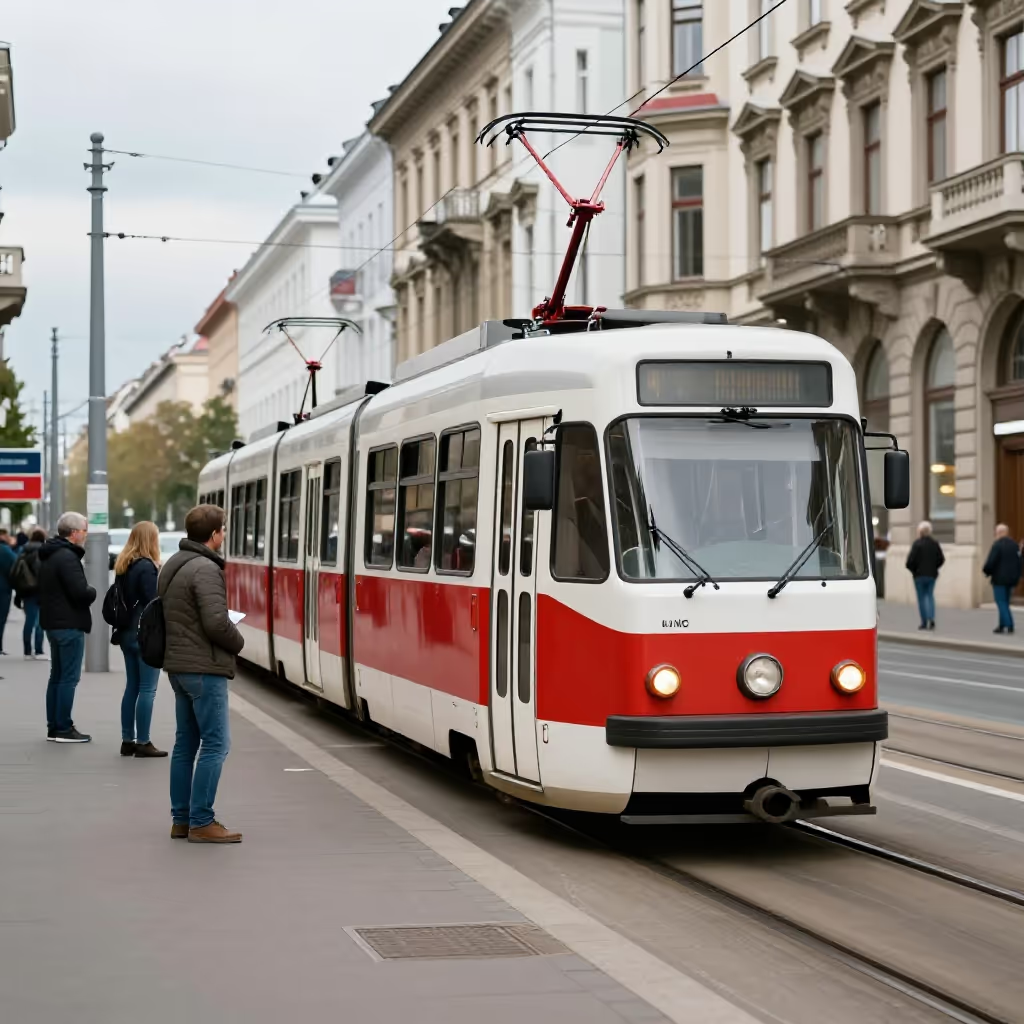
die Bim
tram
(colloquial, especially in Austria and parts of Bavaria) A tram.
EXAMPLE
In Wien fahre ich jeden Tag mit der Bim in die Arbeit.
In Vienna, I take the tram to work every day.
tram
Loading your saved state.
tram
(colloquial, especially in Austria and parts of Bavaria) A tram.
In Wien fahre ich jeden Tag mit der Bim in die Arbeit.
In Vienna, I take the tram to work every day.
'Bim' (tram) is a colloquial word for a tram. It is used mainly in Austria, especially in Vienna, and in parts of southern Germany, e.g. Munich and Augsburg.
In Graz kommt man mit der Bim fast überall hin.
In Graz, you can get almost everywhere by tram.
The word 'Bim' (tram) is onomatopoeic. It imitates the sound of the bell ('bim-bim') that old trams used to warn people with.
Hörst du die Bim klingeln? Sie kommt gleich.
Do you hear the tram bell ringing? It's coming in a moment.
You use 'Bim' (tram) like any other word for a means of transport. Typical verbs are 'mit der Bim fahren' (to ride/take the tram), 'die Bim nehmen' (to take the tram), or 'in die Bim einsteigen' (to get on the tram).
Ich nehme lieber die Bim, dann muss ich keinen Parkplatz suchen.
I'd rather take the tram; then I don't have to look for a parking space.
tram
“Tram” and “Bim” both refer to a streetcar or tram. “Tram” is a generally understood term, while “Bim” is used colloquially mainly in Austria and parts of Bavaria. “Tram” is more suitable in a nationwide or neutral text, while “Bim” can sound natural in regional conversation.
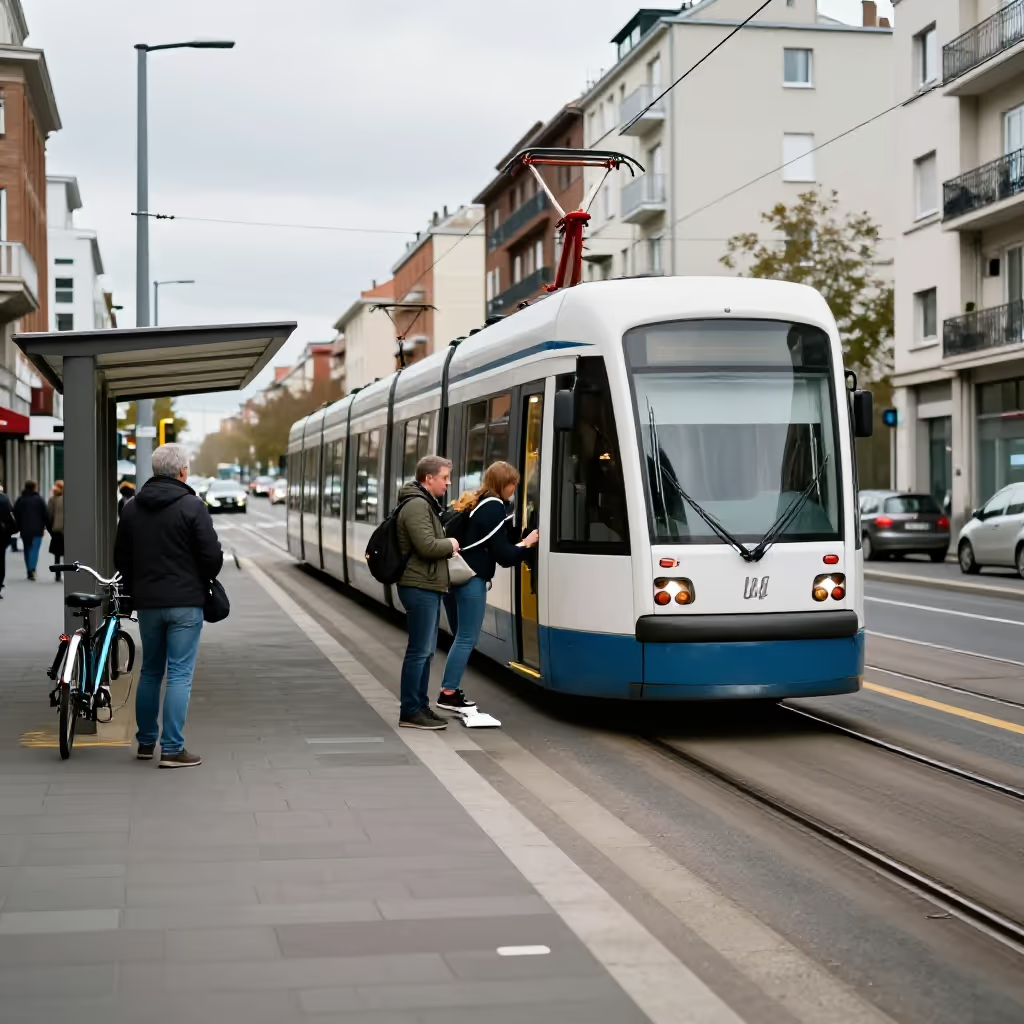
In Wien fahren wir mit der Bim bis zum Hauptbahnhof.
In Vienna, we’re taking the tram to the main station.
In Berlin nehmen wir die Tram bis zum Hauptbahnhof.
In Berlin, we’re taking the tram to the main station.