

blanco
blank
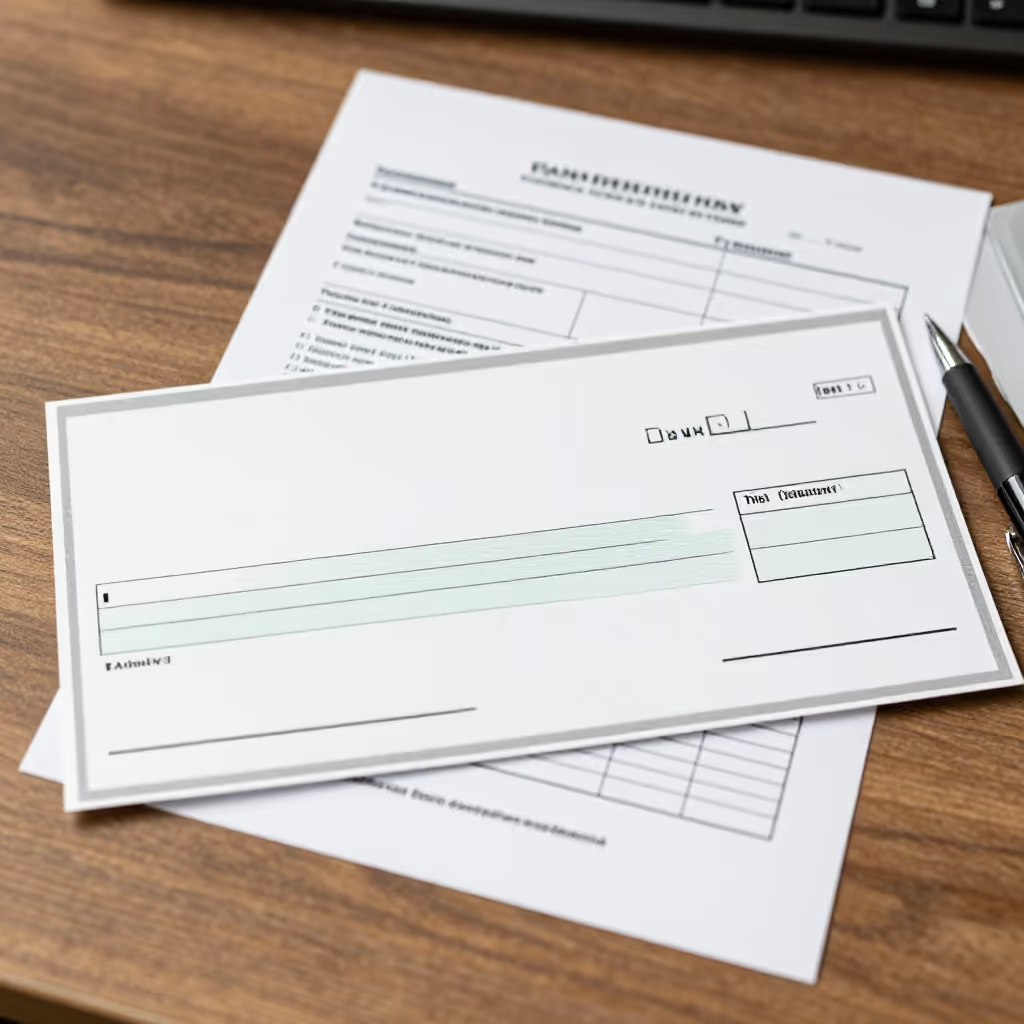
Not filled in or unwritten, especially for forms, checks, or documents.
Bitte unterschreiben Sie das Formular nicht blanko, sondern füllen Sie es erst vollständig aus.
Please do not sign the form blank; fill it out completely first.

blank / singleton
Loading your saved state.
blank
Not filled in or unwritten, especially for forms, checks, or documents.
Bitte unterschreiben Sie das Formular nicht blanko, sondern füllen Sie es erst vollständig aus.
Please do not sign the form blank; fill it out completely first.

The adjective 'blanko' (blank) is often not declined and stands like an adverb after the noun. This usage is especially common in the meaning of 'unfilled-in'.
Man sollte niemals einen Scheck blanko unterschreiben.
You should never sign a check blank.
'Blanko' comes from the Italian word 'bianco' or the Spanish 'blanco', both of which mean 'white'. The meaning 'unwritten' is derived from an empty, white sheet of paper.
Er gab mir eine Blankovollmacht, um in seinem Namen zu handeln.
He gave me a blank authorization to act on his behalf.
In connection with documents, 'blanko' (blank) is often used in fixed expressions. Typical examples are 'ein Blankoscheck' (a blank check), 'eine Blankovollmacht' (a blank authorization), or 'blanko unterschreiben' (to sign blank).
Eine Blankovollmacht gibt einer anderen Person sehr viel Macht.
A blank authorization gives another person a great deal of power.
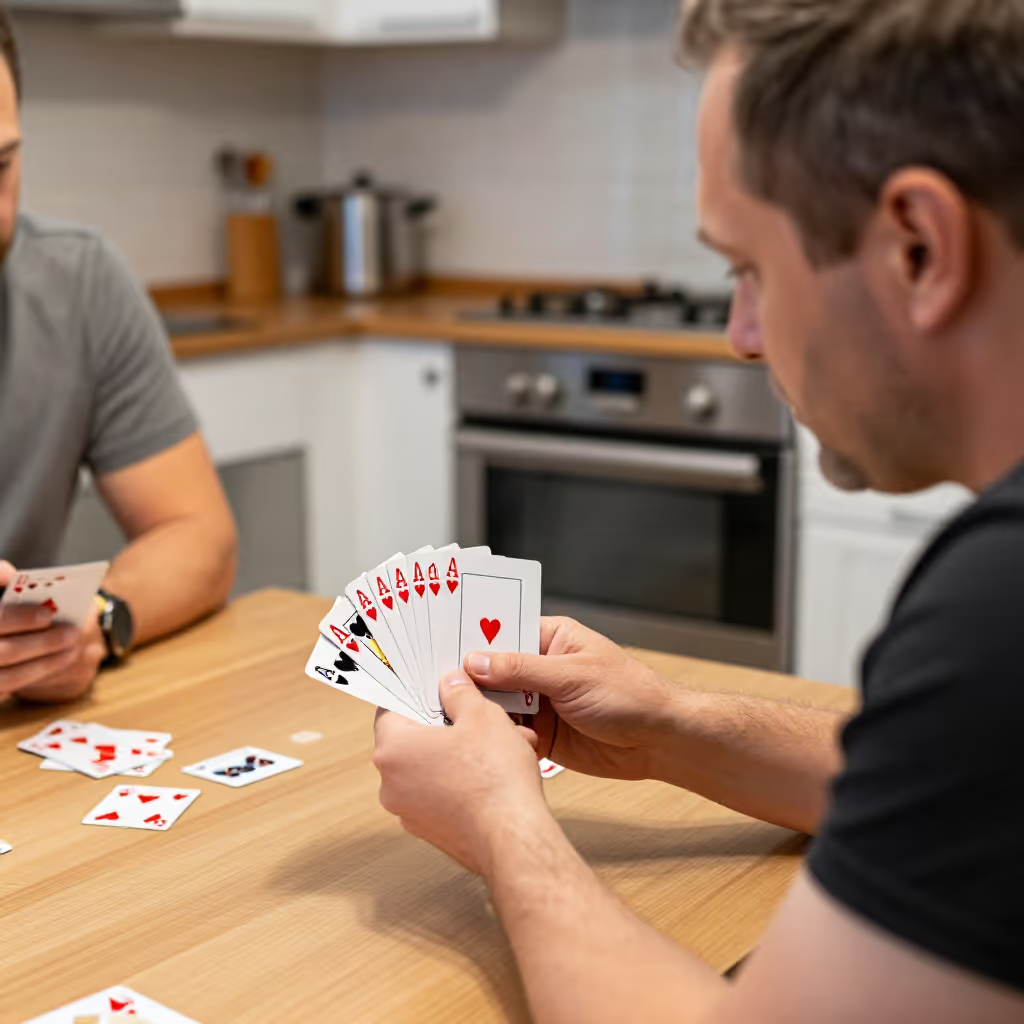
This special meaning of 'blanko' (singleton) is used almost exclusively in card games. If you hear the word in the context of 'Karten' (cards), 'Farbe' (suit), or games like 'Skat', this is the meaning intended.
Ich konnte den Stich nicht machen, weil ich die Trumpf-Dame blanko hatte.
I couldn't take the trick because I had the queen of trumps as a singleton.
empty
'leer' and 'blanco' can both mean that nothing has been written on or in something yet. 'leer' is more general and fits many things: 'ein leeres Glas' (an empty glass), 'ein leerer Raum' (an empty room), or 'ein leeres Blatt' (a blank sheet of paper). 'blanco' is used mainly for forms, checks, or documents when nothing has been filled in yet. Learners may confuse the words because a 'blanco Formular' (blank form) can also look empty. In practice: for things without contents, you usually say 'leer'; for documents that have not been filled in, 'blanco' is more likely.

Meine Kollegin unterschreibt keinen blanco Scheck.
My colleague does not sign blank checks.
Auf dem Tisch liegt ein leeres Blatt Papier.
There is a blank sheet of paper lying on the table.