

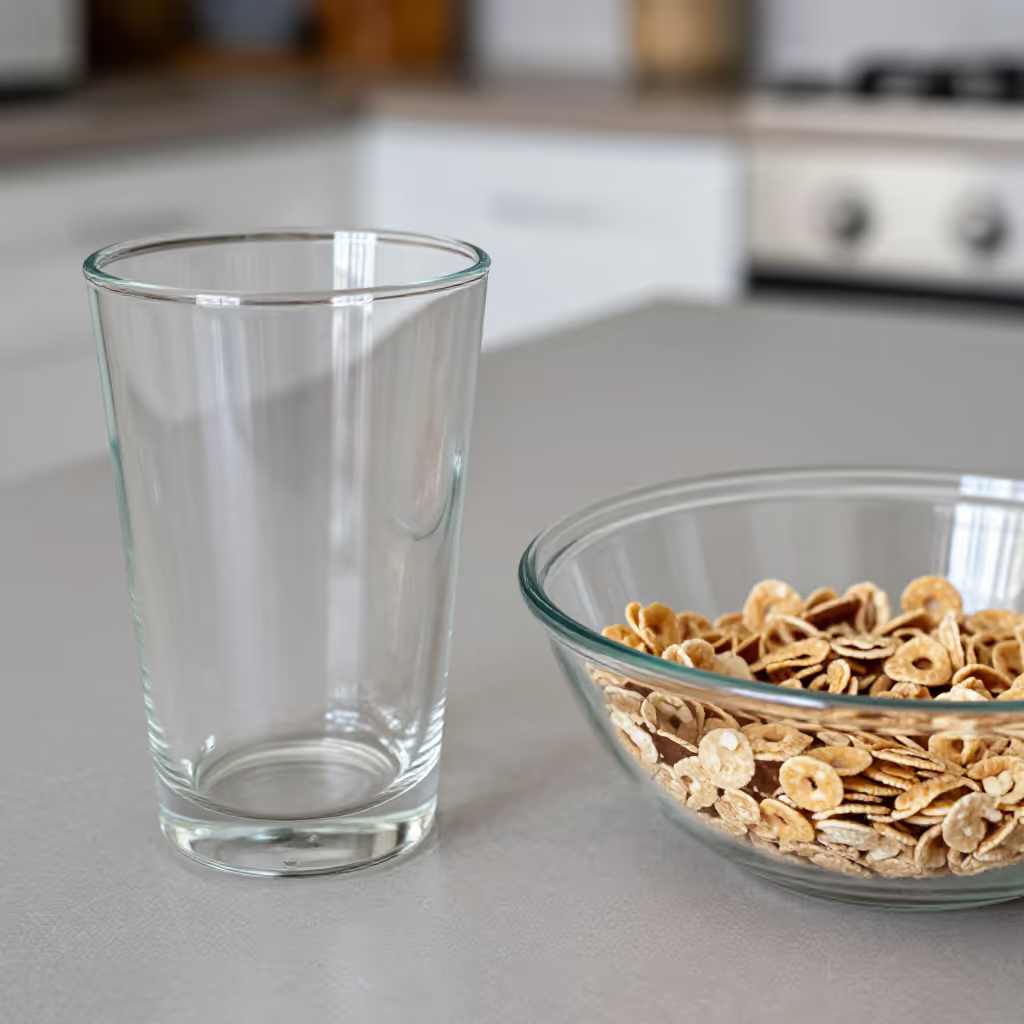
leer
empty
Not filled with anything; without contents.
EXAMPLE
Das Glas ist leer, könntest du mir bitte noch etwas Wasser einschenken?
The glass is empty; could you please pour me some more water?
empty
Loading your saved state.
empty
Not filled with anything; without contents.
Das Glas ist leer, könntest du mir bitte noch etwas Wasser einschenken?
The glass is empty; could you please pour me some more water?

blank
An expression or look that shows no emotions or thoughts.
Er starrte mich mit leeren Augen an, als hätte er mich nicht verstanden.
He stared at me with blank eyes, as if he hadn't understood me.
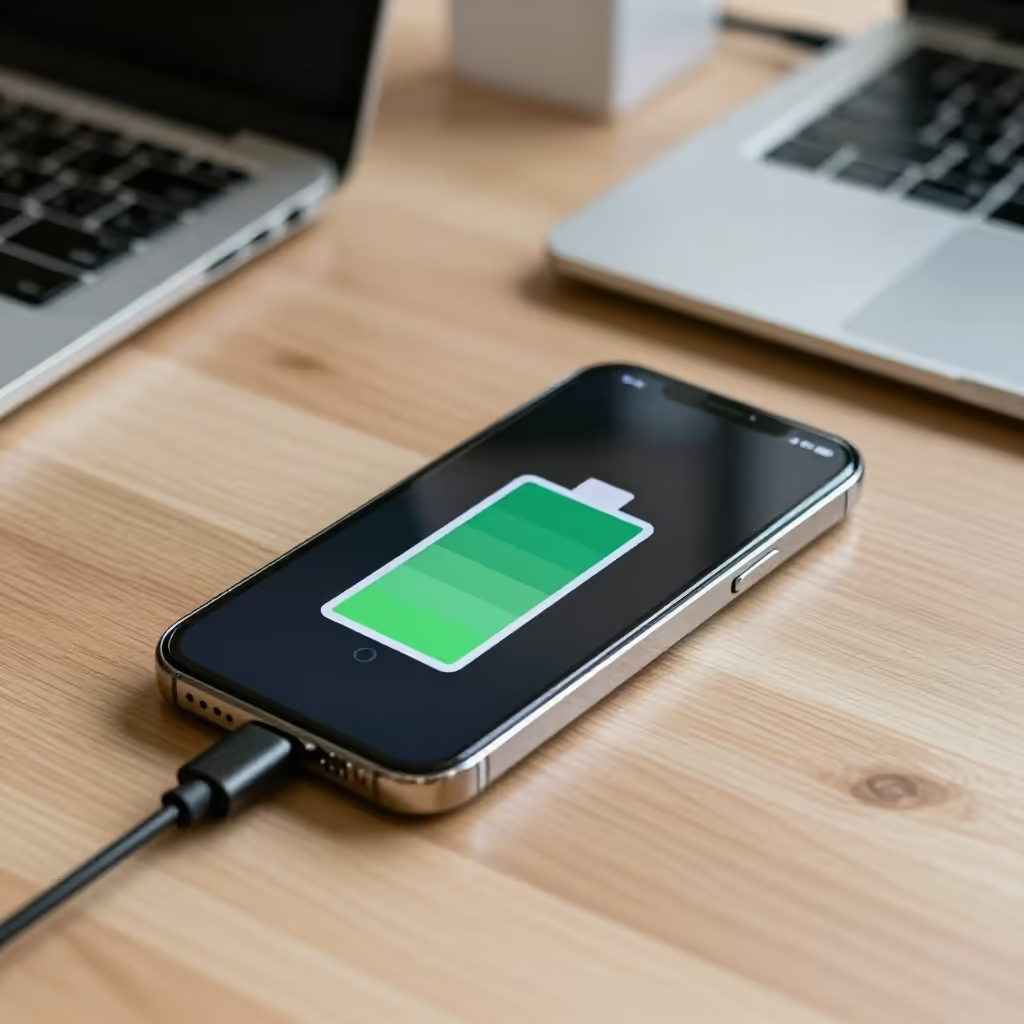
dead
Refers to a battery or rechargeable battery that no longer has any electrical charge.
Mist, der Akku von meinem Handy ist schon wieder leer.
Damn, my phone battery is dead again.

empty
A feeling of inner emptiness, lack of energy, or burnout.
Nach der anstrengenden Woche fühlte sie sich innerlich völlig leer.
After the exhausting week, she felt completely empty inside.
The adjective 'leer' (empty) belongs to a word family. The corresponding noun is 'die Leere' (emptiness/the void), and the verb is 'leeren' (to empty something).
Er blickte in die Leere.
He stared into the void.
In the meaning 'ohne Inhalt' (without contents), 'leer' (empty) is often used for containers, rooms, or places. Typical combinations are 'eine leere Flasche' (an empty bottle), 'ein leeres Zimmer' (an empty room), or 'leere Straßen' (empty streets).
Am Sonntagmorgen sind die Straßen in der Innenstadt oft wie leer gefegt.
On Sunday mornings, the streets in the city center often look completely deserted.
When 'leer' (blank/empty) describes an expressionless facial expression, it is almost always used together with words like 'Blick' (look/gaze), 'Augen' (eyes), or 'Gesicht' (face).
Sie gab mir nur einen leeren Blick und sagte nichts.
She just gave me a blank look and said nothing.
In colloquial language, the word 'alle' (dead/used up) is often used instead of 'leer' when talking about rechargeable batteries or batteries. Both formulations are correct and common.
Mein Akku ist schon wieder alle, ich muss das Handy laden.
My battery is dead again; I have to charge the phone.
To express a feeling of inner emptiness, 'leer' (empty) is often combined with the reflexive verb 'sich fühlen' (to feel). The construction is 'sich leer fühlen' (to feel empty).
Nach dem Ende des Projekts fühlte er sich plötzlich ganz leer.
After the end of the project, he suddenly felt completely empty.
free
For an unoccupied seat, both frei and leer are possible. Frei shows that the seat is available and can be taken. Leer, by contrast, emphasizes that there is currently no person or object there.
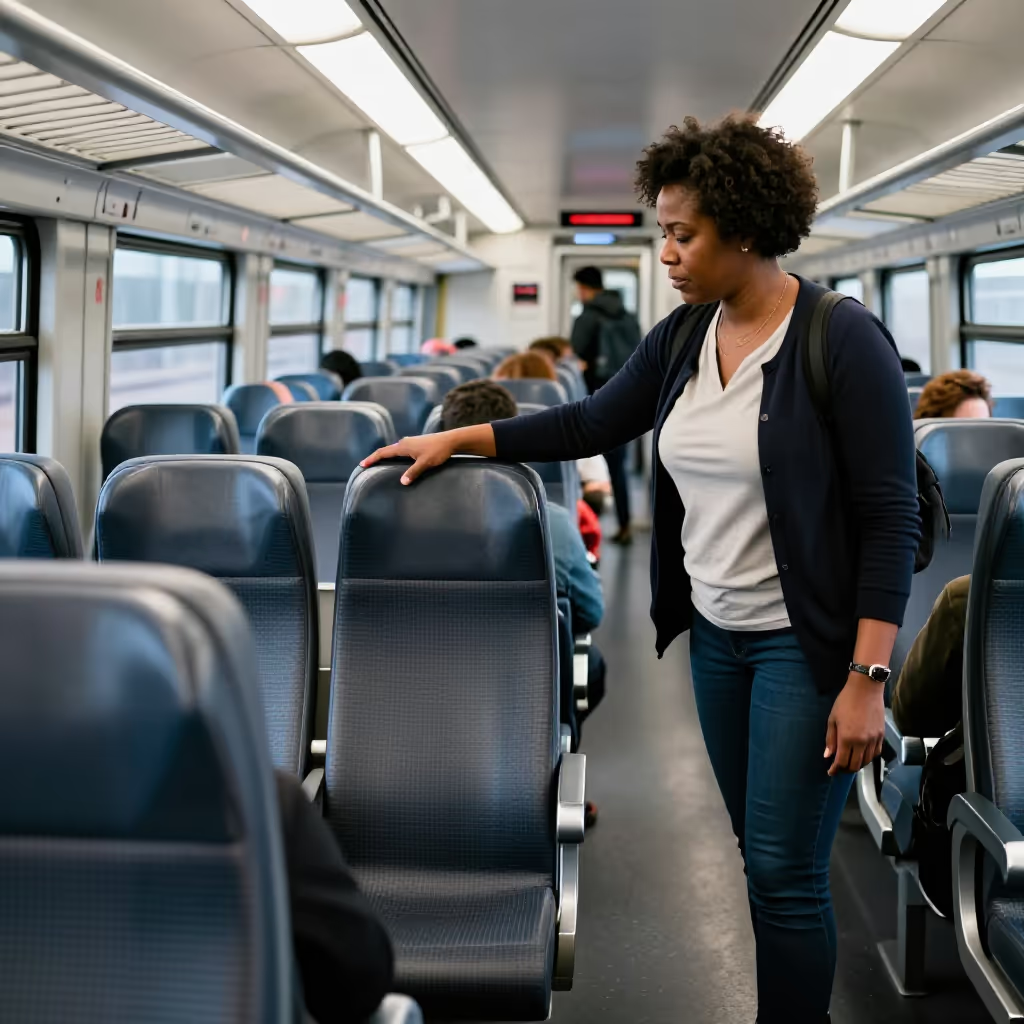
Der Platz neben mir ist leer, weil dort gerade niemand sitzt.
The seat next to me is empty because no one is sitting there right now.
Der Platz neben mir ist frei, du kannst dich hier setzen.
The seat next to me is free; you can sit here.