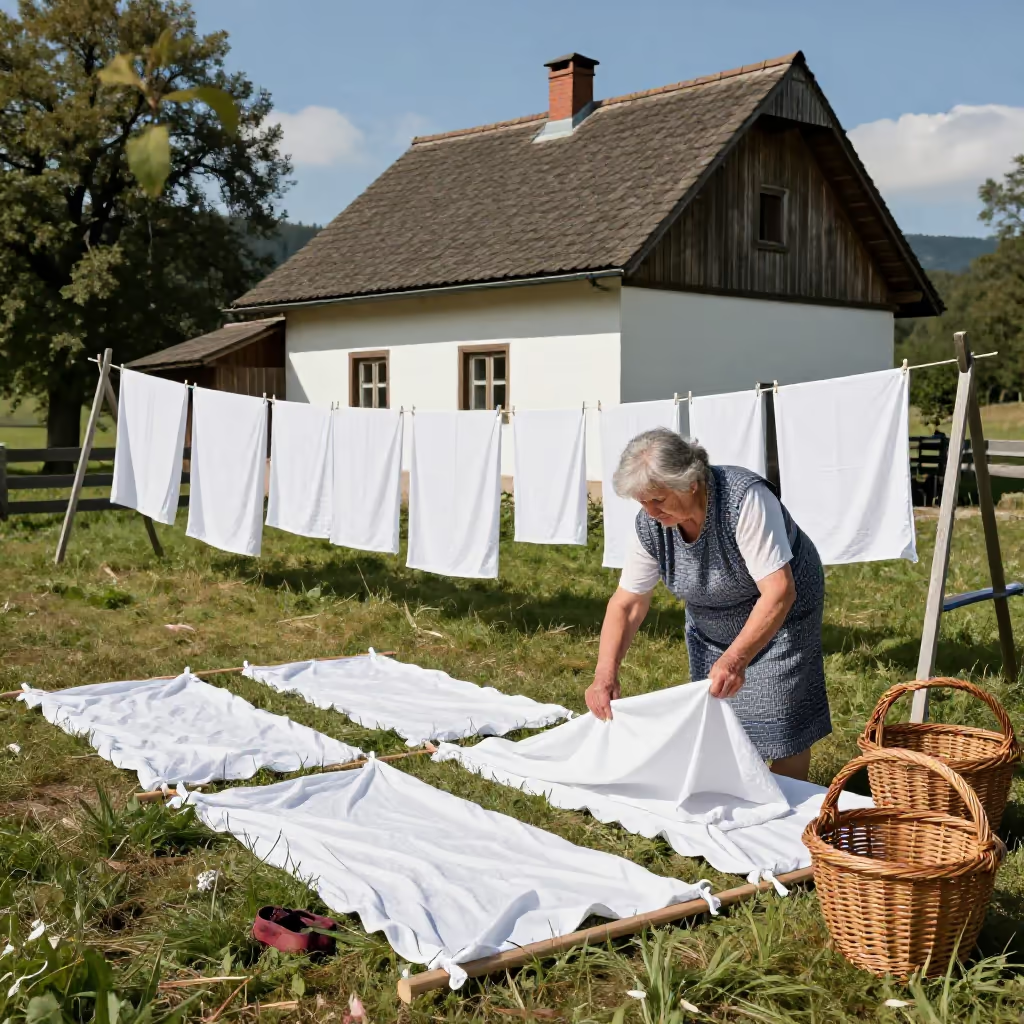
A place, usually a meadow or facility, where laundry is laid out in the sun to be bleached.
example
Früher brachten die Frauen ihre Wäsche auf die Bleiche am Rande des Dorfes.
In the past, the women took their laundry to the bleaching ground at the edge of the village.
Usage tips
Word family
The noun 'die Bleiche' is derived directly from the verb 'bleichen' (to make or become lighter). The adjective 'bleich' (pale) also belongs to this word family. Understanding the verb helps you work out all the meanings of the noun.
EXAMPLE
Seine Haut hatte eine ungesunde Bleiche, weil er nie an die Sonne kam.
His skin had an unhealthy pallor because he never went out in the sun.
Context clues
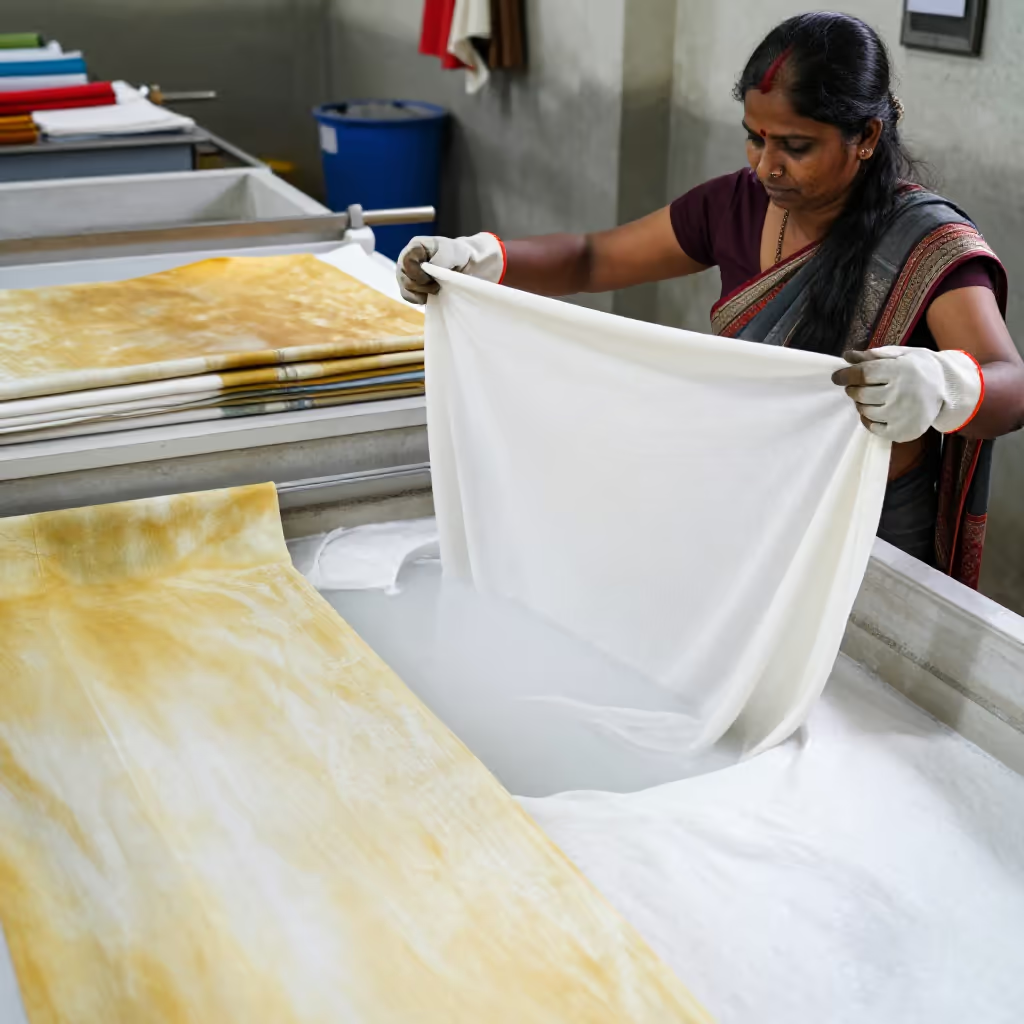
The three meanings can be distinguished well from context. If the word refers to a place, often with the preposition 'auf' (on), it means the meadow. If it is about a technical process, it means making something lighter. If it refers to the skin, it means paleness.
EXAMPLE
Die Wäsche lag zum Trocknen auf der Bleiche.
The laundry was lying on the bleaching ground to dry.
Historical use
The meaning as a place for bleaching laundry is now more historical. You find it in old texts, in village or street names, such as 'Auf der Bleiche' (On the Bleaching Ground), or when people talk about earlier times.
EXAMPLE
Der alte Dorfplan zeigt noch die öffentliche Bleiche am Fluss.
The old village map still shows the public bleaching ground by the river.
Typical collocations
When referring to paleness in the face, 'Bleiche' (pallor) is often combined with adjectives such as 'ungesund' (unhealthy), 'tödlich' (deathly), or 'krankhaft' (sickly) to describe the condition more precisely.
EXAMPLE
Nach der langen Krankheit hatte er eine fast tödliche Bleiche im Gesicht.
After the long illness, he had an almost deathly pallor in his face.