


bleichen
to bleach
To make something lighter or remove its color, often with the help of chemicals or sunlight. This verb is transitive.
EXAMPLE
Sie hat sich die Haare blond bleichen lassen.
She had her hair bleached blond.
to bleach
Loading your saved state.
to bleach
To make something lighter or remove its color, often with the help of chemicals or sunlight. This verb is transitive.
Sie hat sich die Haare blond bleichen lassen.
She had her hair bleached blond.
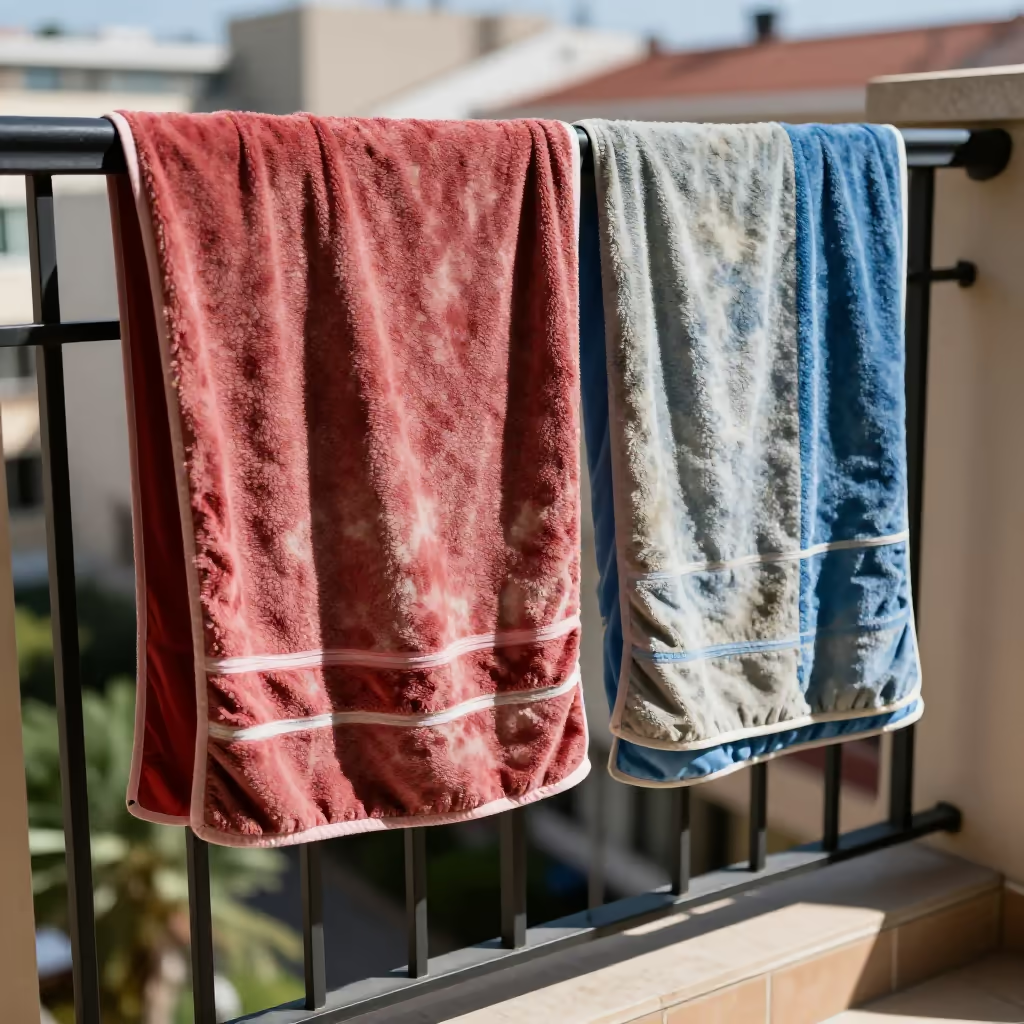
to fade
To become lighter or lose color on its own, usually through the effect of light. This verb is intransitive.
Die alten Fotos an der Wand sind über die Jahre stark gebleicht.
The old photos on the wall have faded badly over the years.

to turn pale
To become very pale in the face, usually as a reaction to shock, fear, or nausea.
Als er die Nachricht hörte, bleichte sein Gesicht sichtlich.
When he heard the news, his face visibly turned pale.
This verb has two different past-tense forms depending on the meaning. The transitive meaning (to make something lighter) is weak: bleichen – bleichte – hat gebleicht. The intransitive meanings (to become lighter on its own) are strong: bleichen – blich – ist geblichen.
Der Friseur bleichte ihre Haare mit einer chemischen Lösung.
The hairdresser bleached her hair with a chemical solution.
When a person or force actively makes something lighter, the verb needs an accusative object. When something loses its color on its own or a face turns pale, it is used without an object.
Ich lasse meine Jeans bleichen, damit sie heller wird.
I'm having my jeans bleached so they become lighter.
In the transitive meaning (actively making something lighter), 'bleichen' (to bleach) is often used for hair, teeth, textiles, or even paper.
Viele Leute lassen sich professionell die Zähne bleichen.
Many people have their teeth professionally bleached.
In this meaning, the verb describes a physical reaction to a strong emotion such as shock or fear. The subject is the person or their face.
Er bleichte sichtlich, als er die schlechte Nachricht erhielt.
He visibly turned pale when he received the bad news.
to fade
“Verblassen” generally describes a color losing intensity. “Bleichen” also refers to becoming lighter, but usually suggests an outside influence such as strong light. When this cause is important, “bleichen” is more appropriate; otherwise, “verblassen” is often sufficient.

Der blaue Vorhang bleichte in der starken Sonne.
The blue curtain faded in the strong sunlight.
Die blaue Farbe des Vorhangs verblasste mit der Zeit.
The curtain’s blue color faded over time.