

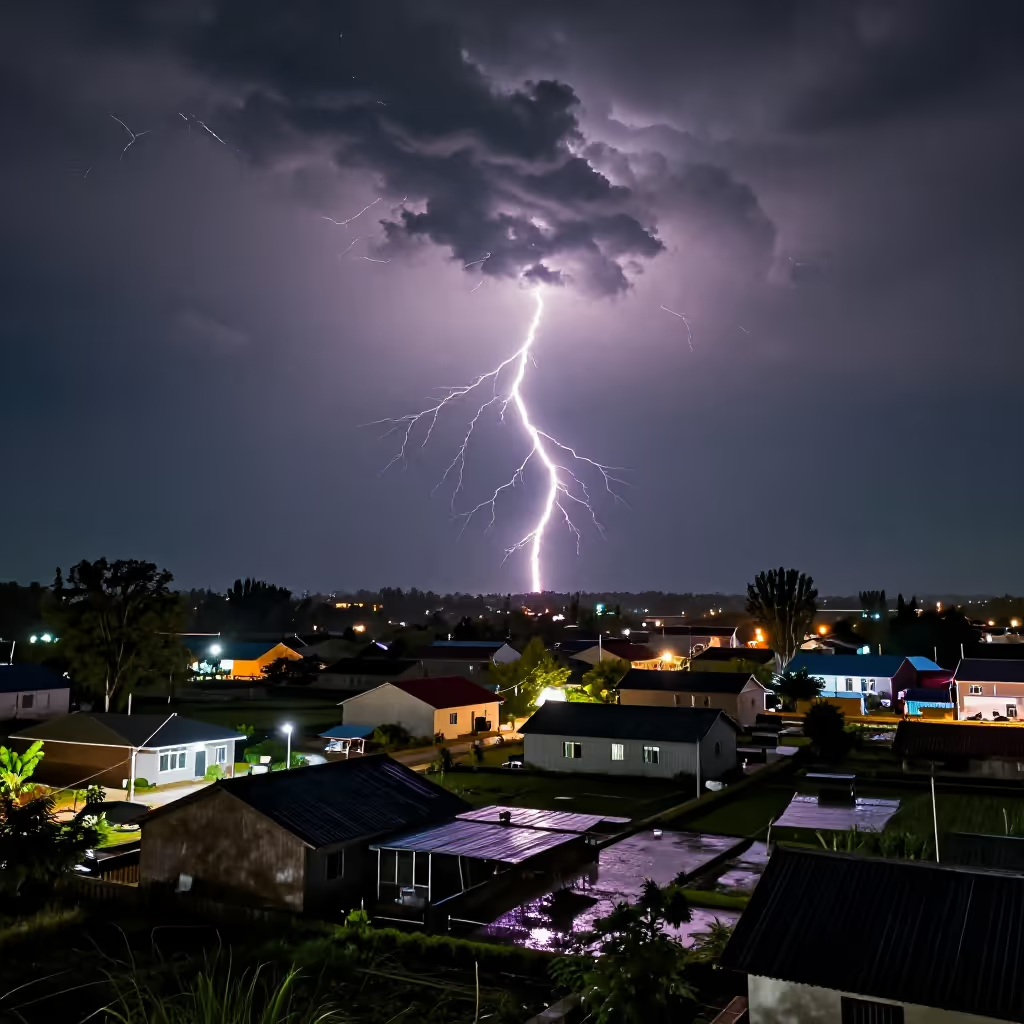
blitzen
to flash
To emit a short, bright light, as happens during a thunderstorm.
EXAMPLE
Es donnerte laut und am Himmel begann es zu blitzen.
There was loud thunder, and lightning began to flash in the sky.
to flash
Loading your saved state.
to flash
To emit a short, bright light, as happens during a thunderstorm.
Es donnerte laut und am Himmel begann es zu blitzen.
There was loud thunder, and lightning began to flash in the sky.
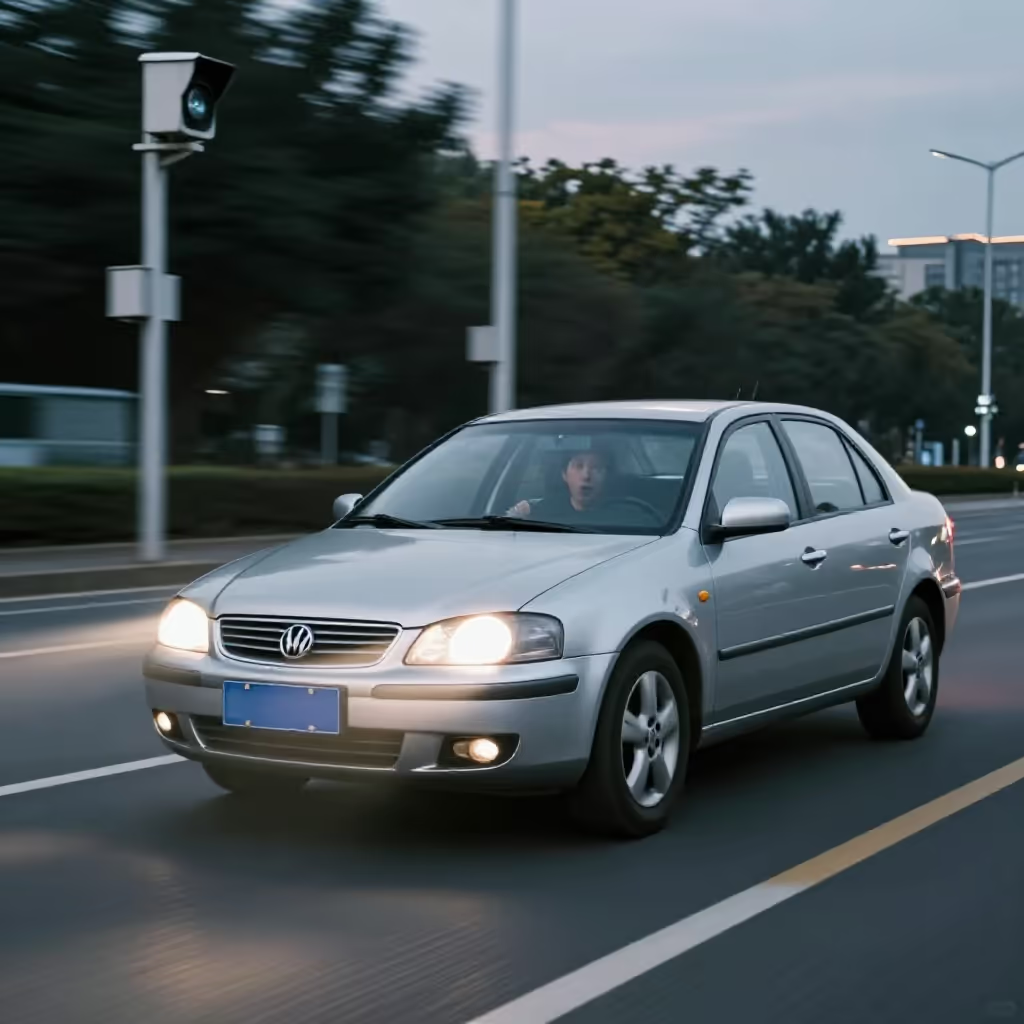
to be flashed
To be photographed by a speed camera because of excessive speed.
Ich bin in der 30er-Zone zu schnell gefahren und wurde geblitzt.
I was driving too fast in the 30 zone and got flashed.
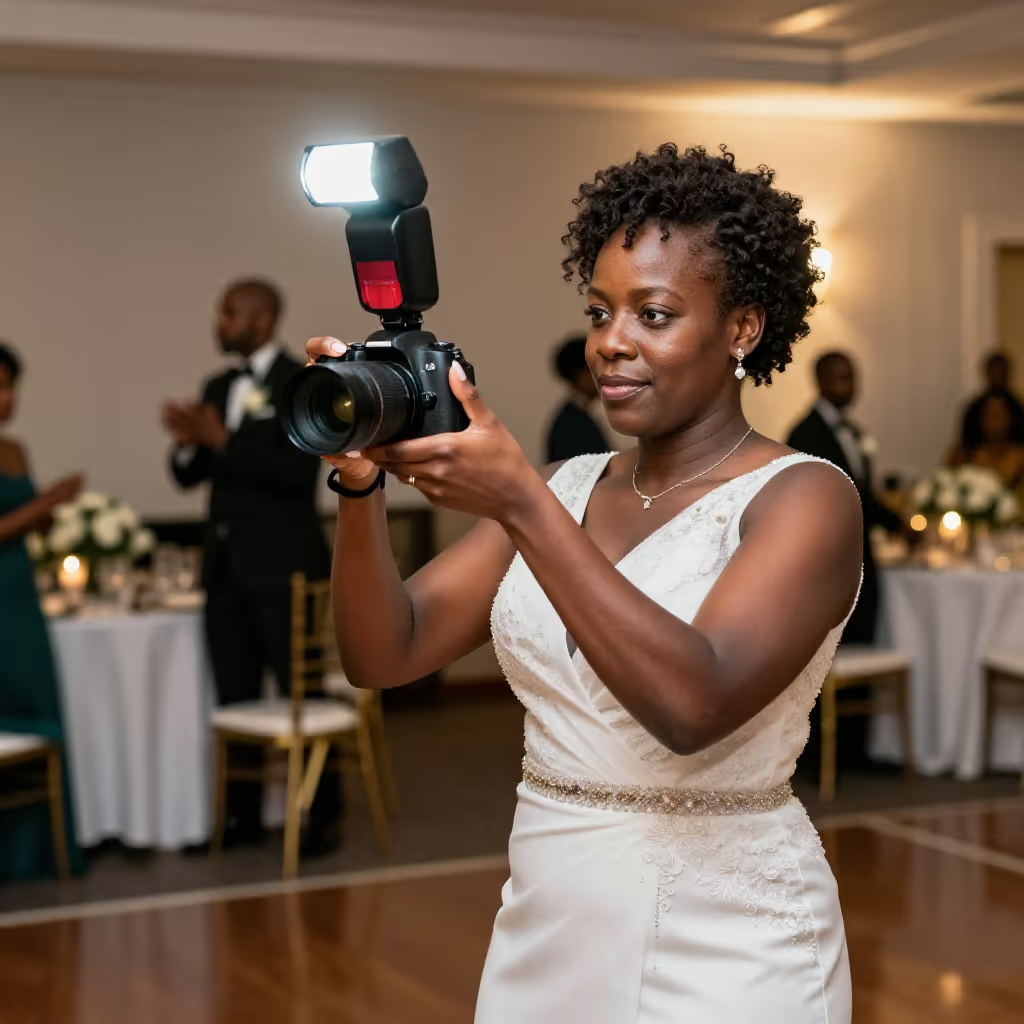
to use a flash
To use a flash when taking photos in order to light a scene.
In diesem dunklen Raum musst du blitzen, sonst wird das Foto zu unscharf.
In this dark room, you need to use a flash, otherwise the photo will be too blurry.

to shine / sparkle
To shine or sparkle very strongly, often to describe a state of cleanliness or an emotional expression.
Nach dem Putzen blitzte die ganze Küche vor Sauberkeit.
After the cleaning, the whole kitchen shone with cleanliness.
The verb 'blitzen' (to flash) is derived from the noun 'der Blitz' (lightning/flash). All meanings describe a very short, bright flash of light or a quick sparkle.
Der laute Donner folgte direkt auf den hellen Blitz.
The loud thunder followed directly after the bright flash of lightning.
When referring to a thunderstorm, 'blitzen' (to flash) is almost always used with 'es' (it) as an impersonal subject. It often appears together with 'donnern' (to thunder).
Schau mal, draußen blitzt und donnert es.
Look, there’s lightning and thunder outside.
In connection with a speed camera, the passive construction 'geblitzt werden' (to be flashed) is usually used. The subject is the person who was driving too fast.
Er ist gestern auf der Autobahn mit 140 km/h geblitzt worden.
He was flashed yesterday on the autobahn doing 140 km/h.
When you use a flash unit while taking photos, you use the verb actively. You, as the photographer, are the subject of the sentence.
In diesem Museum darf man nicht blitzen.
You are not allowed to use a flash in this museum.
'Blitzen' (to shine/sparkle) can also be used figuratively for strong shining or gleaming. It is often used to describe extreme cleanliness or an intense expression in the eyes.
Nach dem Frühjahrsputz blitzte das ganze Haus.
After the spring cleaning, the whole house shone.
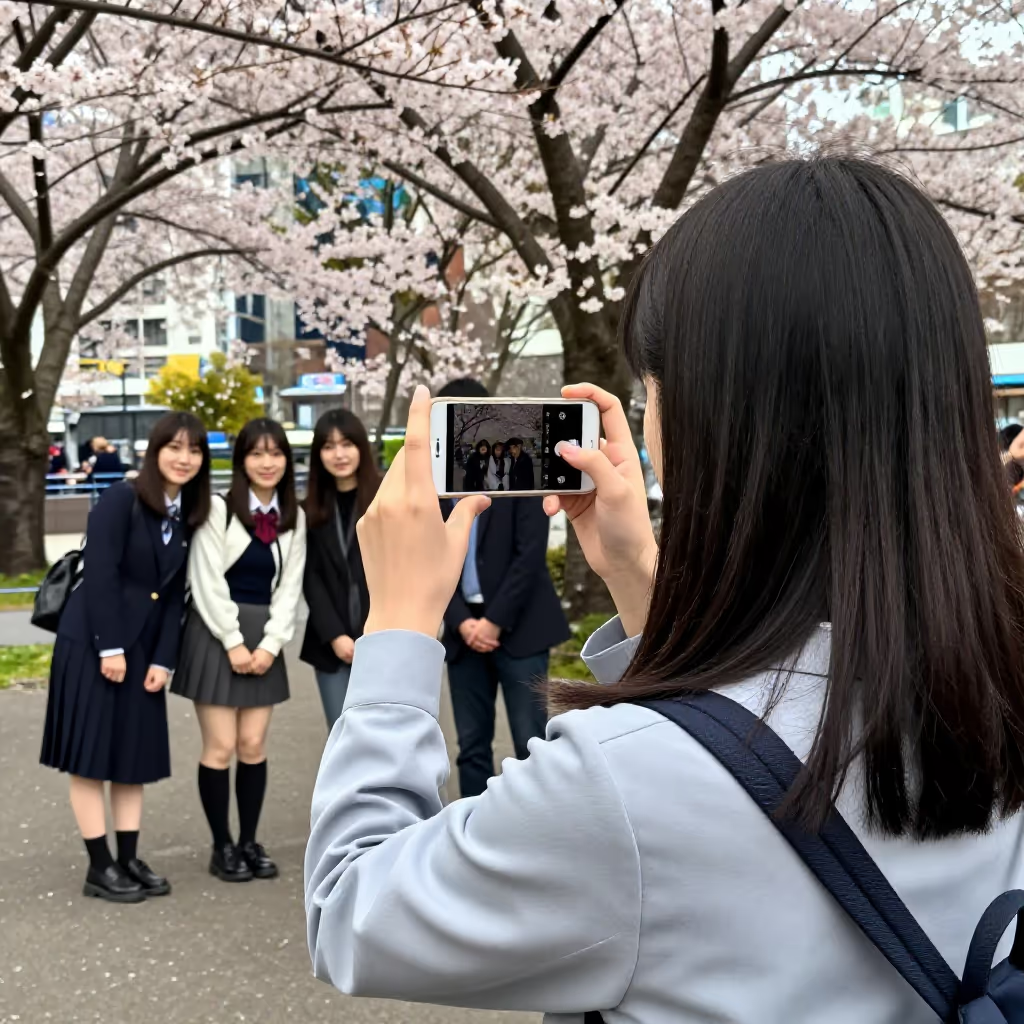
to photograph
Fotografieren generally means taking a picture with a camera. In traffic-related language, blitzen is used specifically when a speed camera photographs a vehicle for exceeding the speed limit. Use fotografieren for an ordinary picture; with a speed camera, blitzen is the established term.
Auf der Landstraße wurde er wegen überhöhter Geschwindigkeit geblitzt.
He was caught by a speed camera for speeding on the country road.
Die Radarfalle fotografierte den Wagen, der deutlich zu schnell fuhr.
The speed camera photographed the car, which was traveling well over the speed limit.