

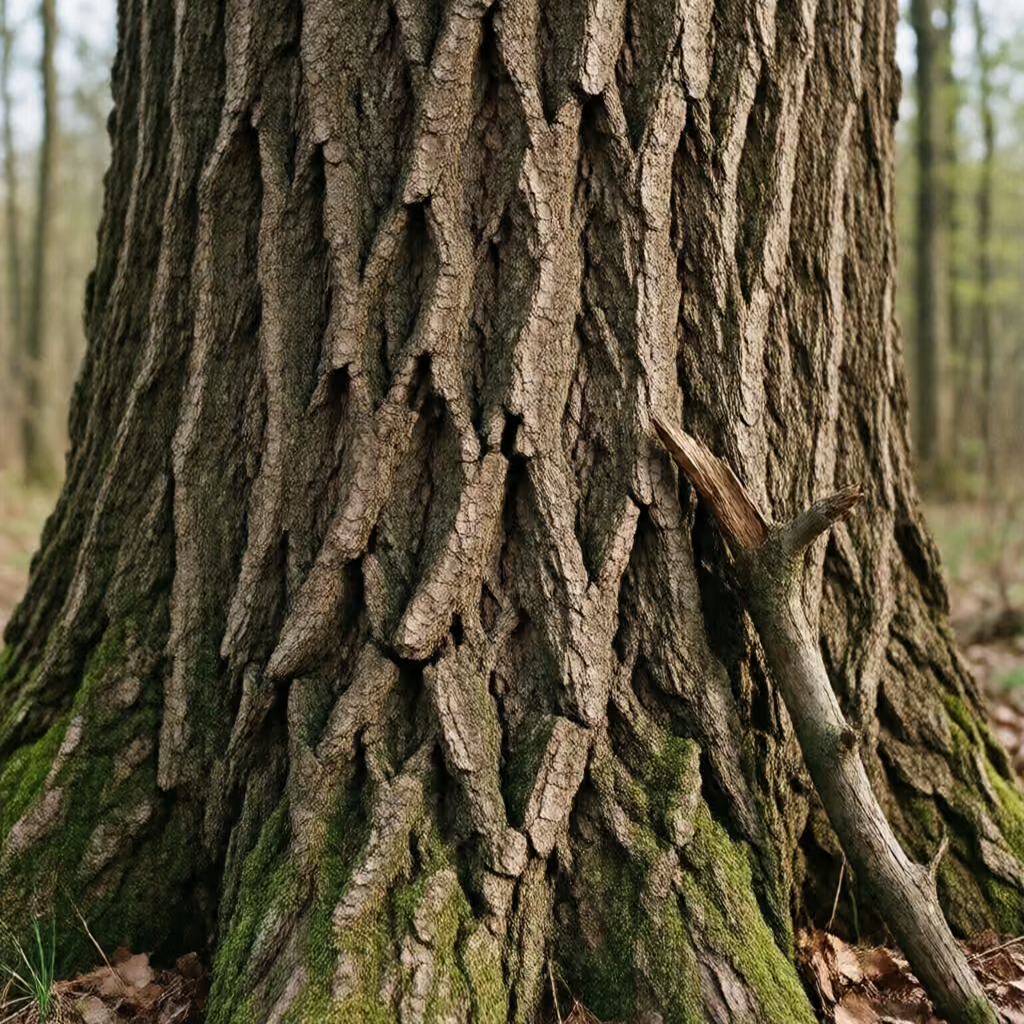
die Borke
bark
The hard outer layer of a tree trunk or branch.
EXAMPLE
Die Borke des alten Baumes ist tief eingerissen.
The bark of the old tree is deeply cracked.
bark / scab
die Borke, die Borken
Loading your saved state.
bark
The hard outer layer of a tree trunk or branch.
Die Borke des alten Baumes ist tief eingerissen.
The bark of the old tree is deeply cracked.
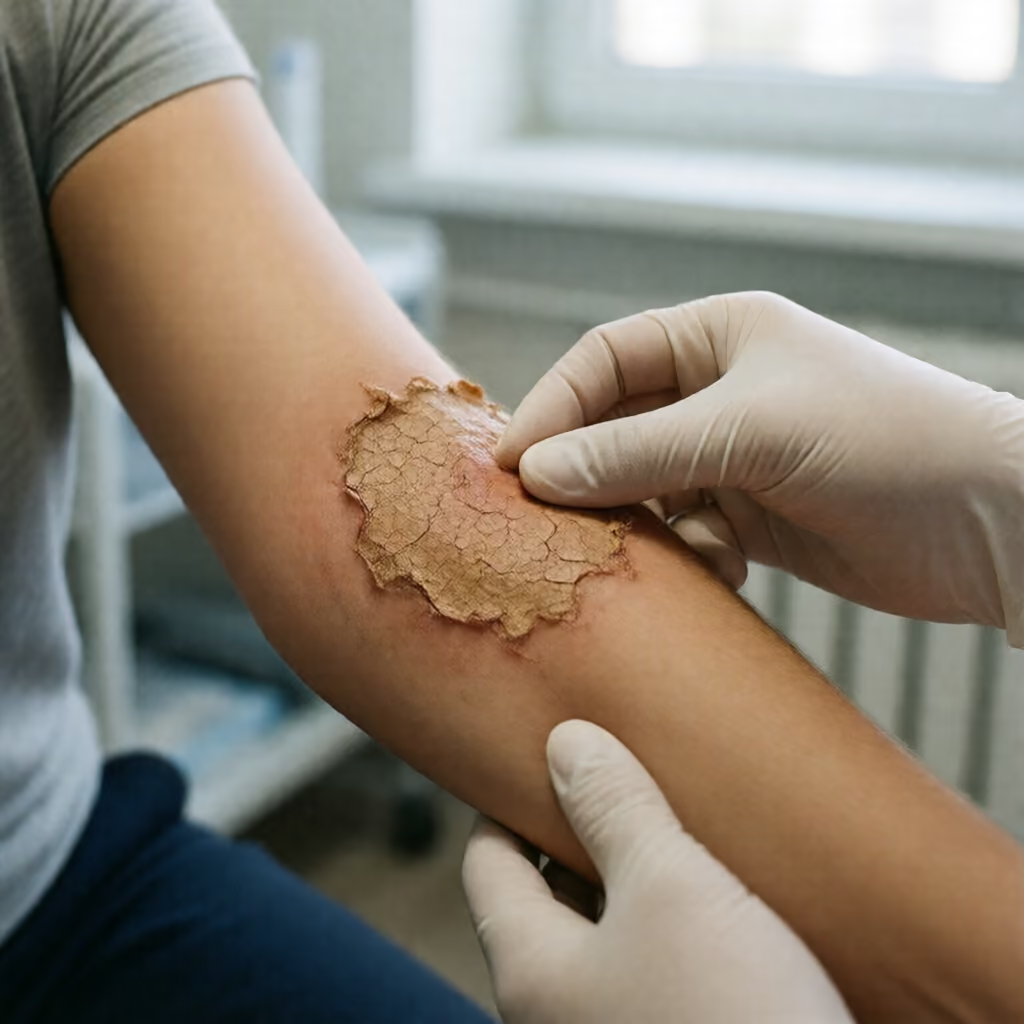
scab
A hard, dry, and often cracked layer that forms on the skin or a wound.
Nach einigen Tagen löste sich die Borke von der Wunde.
After a few days, the scab came off the wound.
| gender | feminine die |
|---|---|
| plural | die Borken |
| genitive | der Borke |
| singular | plural | |
|---|---|---|
| nominative | die Borke | die Borken |
| accusative | die Borke | die Borken |
| dative | der Borke | den Borken |
| genitive | der Borke | der Borken |
The article changes with the case; it is shown in colour.
For trees, the collocations „raue Borke“ (rough bark), „rissige Borke“ (cracked bark), and „dicke Borke“ (thick bark) are typical. These adjectives describe the surface or thickness of the outer layer.
An der rauen Borke der Eiche wächst Moos.
Moss grows on the rough bark of the oak.
For wounds, „eine Borke bildet sich“ (a scab forms) and „eine Borke ablösen“ (to remove a scab) are typical collocations. With „bildet sich“ (forms), you describe how it develops, and the scab is the subject; when a person removes it, the scab is the accusative object.
Auf der verletzten Haut hat sich eine Borke gebildet.
A scab has formed on the injured skin.
Das Kind hat die Borke von der Wunde abgelöst.
The child removed the scab from the wound.
For skin changes, „Borke“ (scab) is used especially in medical descriptions. You may therefore encounter the word in a medical report, for example.
Die Ärztin beschrieb die gelblichen Borken an seiner Nase.
The doctor described the yellowish scabs on his nose.