

brasilianisch
Brazilian
Relating to the country of Brazil, its inhabitants, its culture, or its language.
EXAMPLE
Brasilianischer Kaffee ist für sein kräftiges Aroma bekannt.
Brazilian coffee is known for its strong aroma.
Brazilian
Loading your saved state.
Brazilian
Relating to the country of Brazil, its inhabitants, its culture, or its language.
Brasilianischer Kaffee ist für sein kräftiges Aroma bekannt.
Brazilian coffee is known for its strong aroma.
The adjective 'brasilianisch' (Brazilian) is derived from the country name 'Brasilien' (Brazil) with the ending '-ianisch'. This pattern is also found with other countries that end in '-ien'.
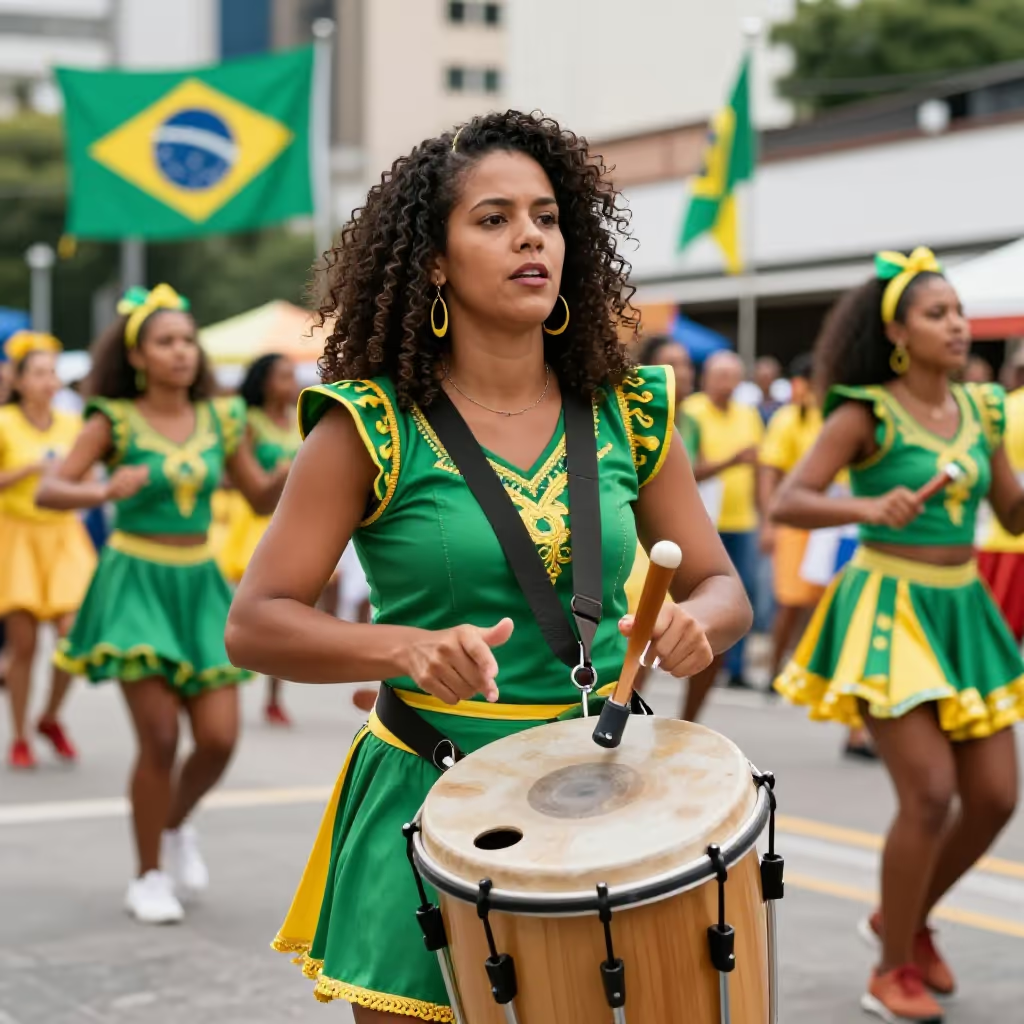
Die brasilianische Flagge ist grün, gelb und blau.
The Brazilian flag is green, yellow, and blue.
Like other adjectives derived from geographical names, 'brasilianisch' (Brazilian) is written in lowercase in German. So it is 'brasilianische Musik' (Brazilian music), not 'Brasilianische Musik'.
Am Strand lief den ganzen Tag brasilianische Musik.
Brazilian music was playing on the beach all day.
'Brasilianisch' (Brazilian) is often associated with culture, food, and nature. Typical combinations are 'brasilianischer Karneval' (Brazilian carnival), 'brasilianische Küche' (Brazilian cuisine), or 'der brasilianische Regenwald' (the Brazilian rainforest).
Der brasilianische Karneval in Rio ist weltberühmt.
The Brazilian carnival in Rio is world-famous.
Portuguese
Portugiesisch refers to the language that is also spoken in Brazil. Brasilianisch, on the other hand, refers to Brazil and can identify the Brazilian variety or pronunciation of this language. portugiesisch is therefore appropriate for the name of the language, while brasilianisch is appropriate for its Brazilian character.
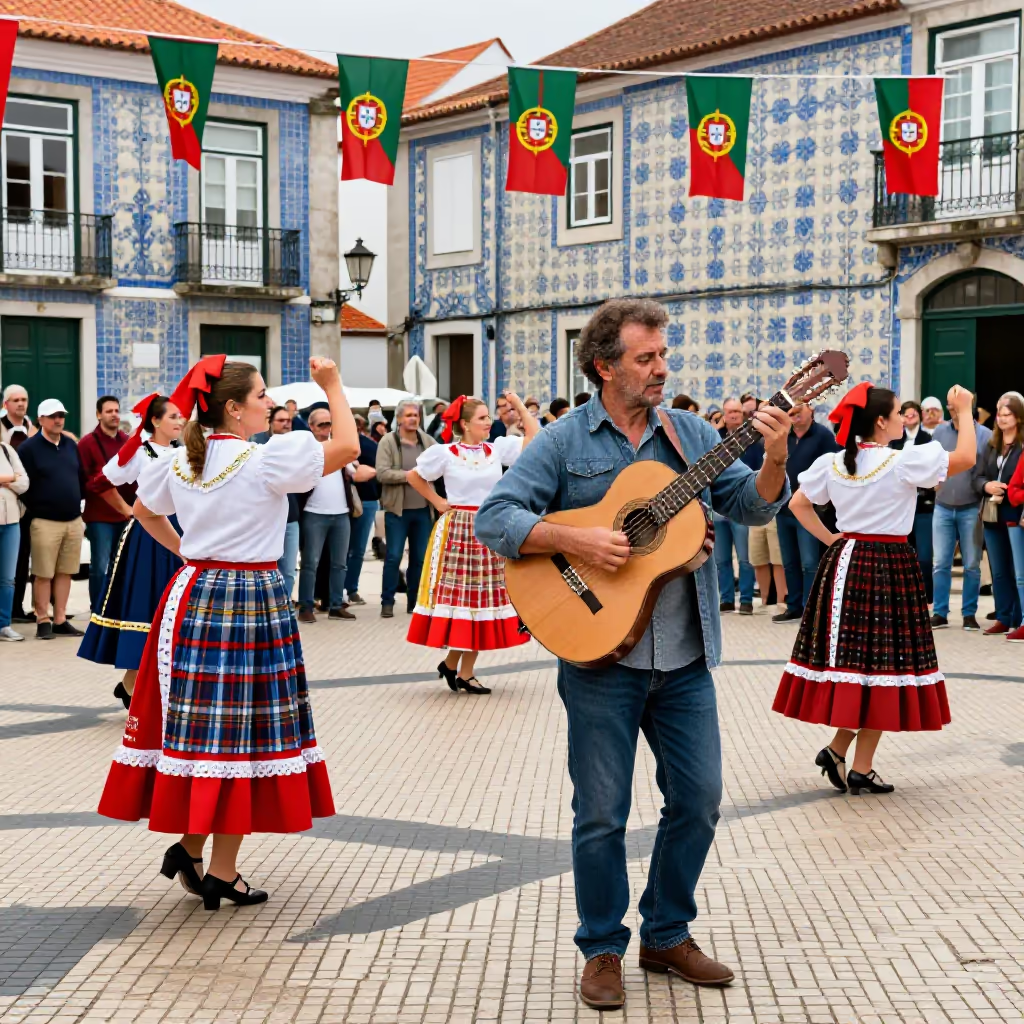
Die Lehrerin erklärt die typisch brasilianische Aussprache des Portugiesischen.
The teacher explains the typically Brazilian pronunciation of Portuguese.
Die Lehrerin erklärt, dass man in Brasilien portugiesisch spricht.
The teacher explains that Portuguese is spoken in Brazil.