

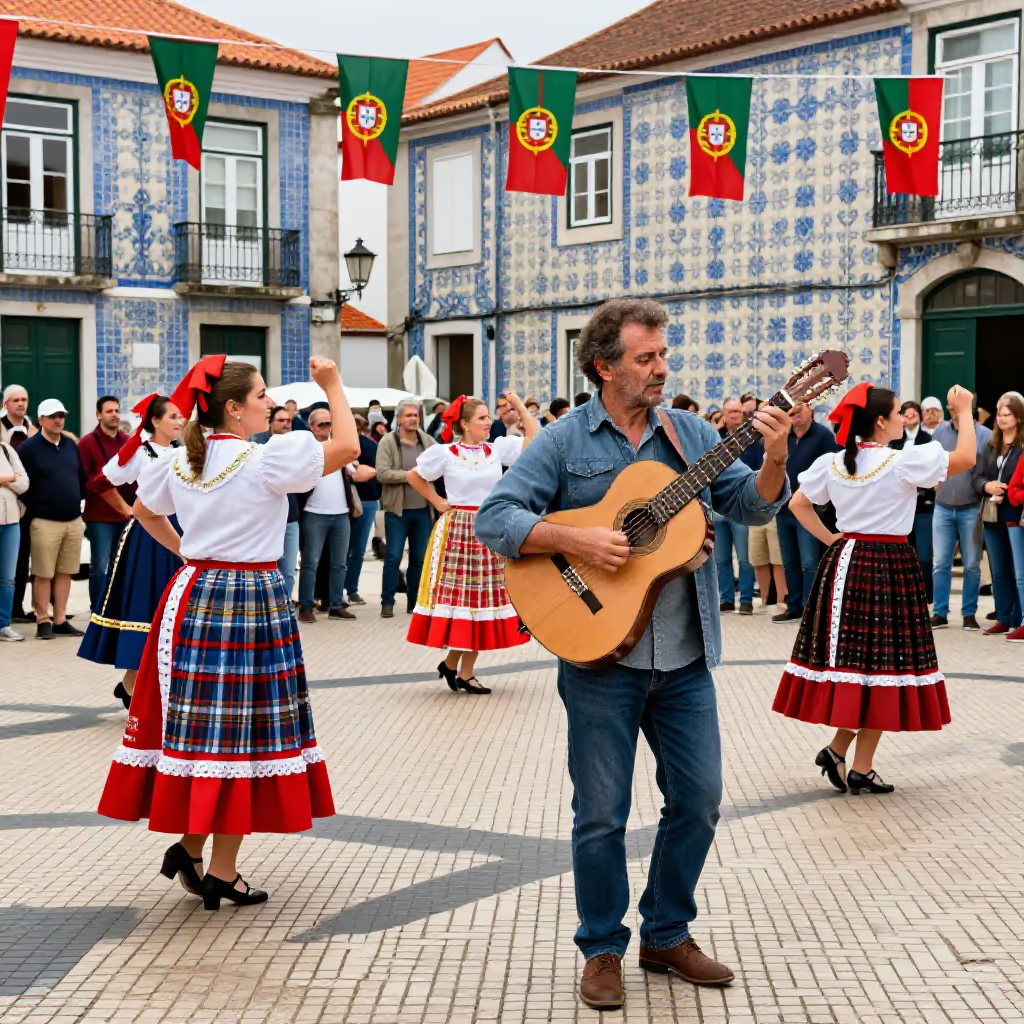
portugiesisch
Portuguese
Relating to Portugal, its inhabitants, its culture, or the Portuguese language.
EXAMPLE
Wir haben in einem kleinen portugiesischen Restaurant zu Abend gegessen.
We had dinner in a small Portuguese restaurant.
Portuguese
Loading your saved state.
Portuguese
Relating to Portugal, its inhabitants, its culture, or the Portuguese language.
Wir haben in einem kleinen portugiesischen Restaurant zu Abend gegessen.
We had dinner in a small Portuguese restaurant.
The adjective is derived from the country name 'Portugal'. The ending '-isch' (-ese / -ish) is a very common way to form adjectives from country names or regions.
Die portugiesische Flagge ist rot und grün.
The Portuguese flag is red and green.
As an adjective before a noun, 'portugiesisch' (Portuguese) is written in lowercase. When it refers to the language as an independent noun, it is capitalized: 'Portugiesisch' (Portuguese).
Der portugiesische Wein ist weltberühmt.
Portuguese wine is world-famous.
The adjective is typically combined with nouns that refer to the country. Common examples are 'die portugiesische Küste' (the Portuguese coast), 'portugiesisches Essen' (Portuguese food), or 'die portugiesische Nationalmannschaft' (the Portuguese national team).
Im Urlaub haben wir viele portugiesische Spezialitäten probiert.
On vacation, we tried many Portuguese specialties.
Brazilian
Portugiesisch refers to the language that is also spoken in Brazil. Brasilianisch, on the other hand, refers to Brazil and can identify the Brazilian variety or pronunciation of this language. portugiesisch is therefore appropriate for the name of the language, while brasilianisch is appropriate for its Brazilian character.
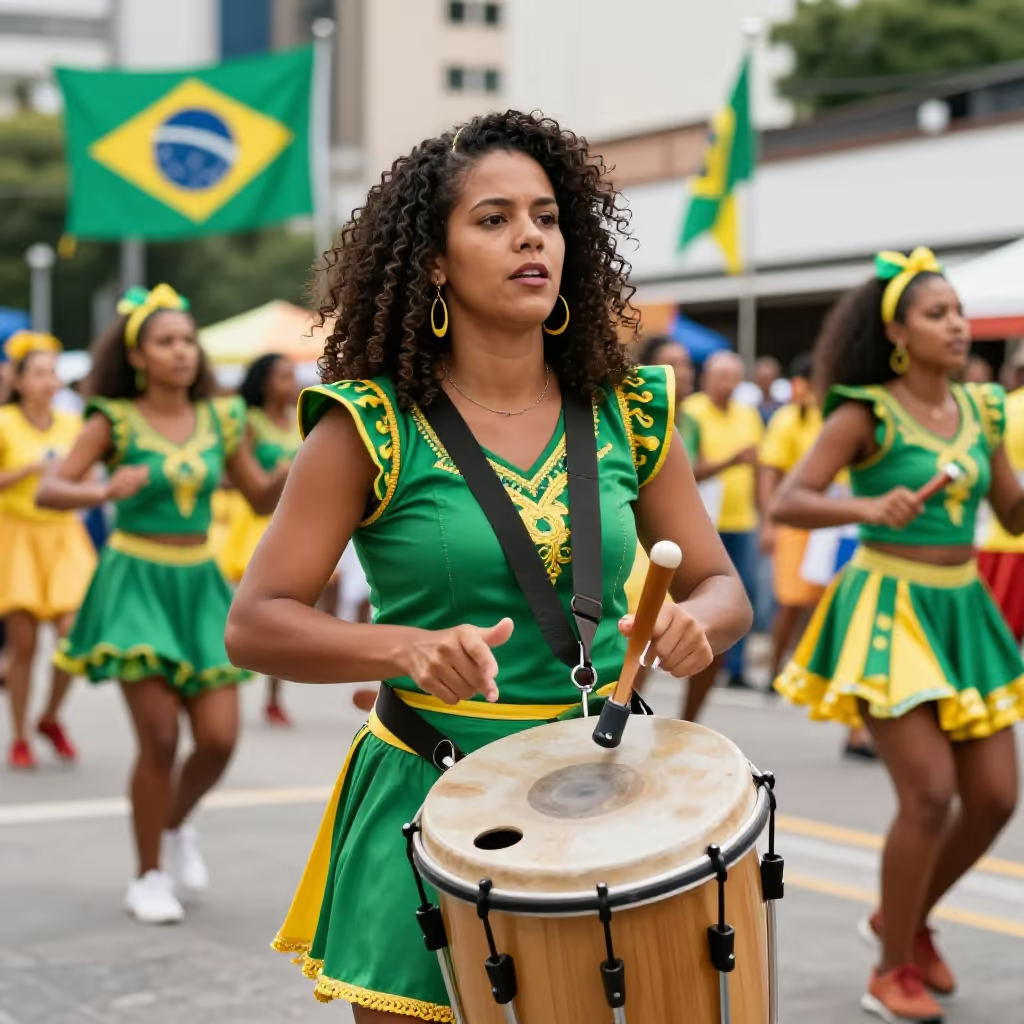
Die Lehrerin erklärt, dass man in Brasilien portugiesisch spricht.
The teacher explains that Portuguese is spoken in Brazil.
Die Lehrerin erklärt die typisch brasilianische Aussprache des Portugiesischen.
The teacher explains the typically Brazilian pronunciation of Portuguese.