


der Brass
anger
A colloquial expression for great anger, annoyance, or rage.
EXAMPLE
Er hatte einen riesigen Brass auf seinen Nachbarn, weil der immer so laut war.
He was really angry at his neighbor because he was always so loud.
anger / brass
Loading your saved state.
anger
A colloquial expression for great anger, annoyance, or rage.
Er hatte einen riesigen Brass auf seinen Nachbarn, weil der immer so laut war.
He was really angry at his neighbor because he was always so loud.
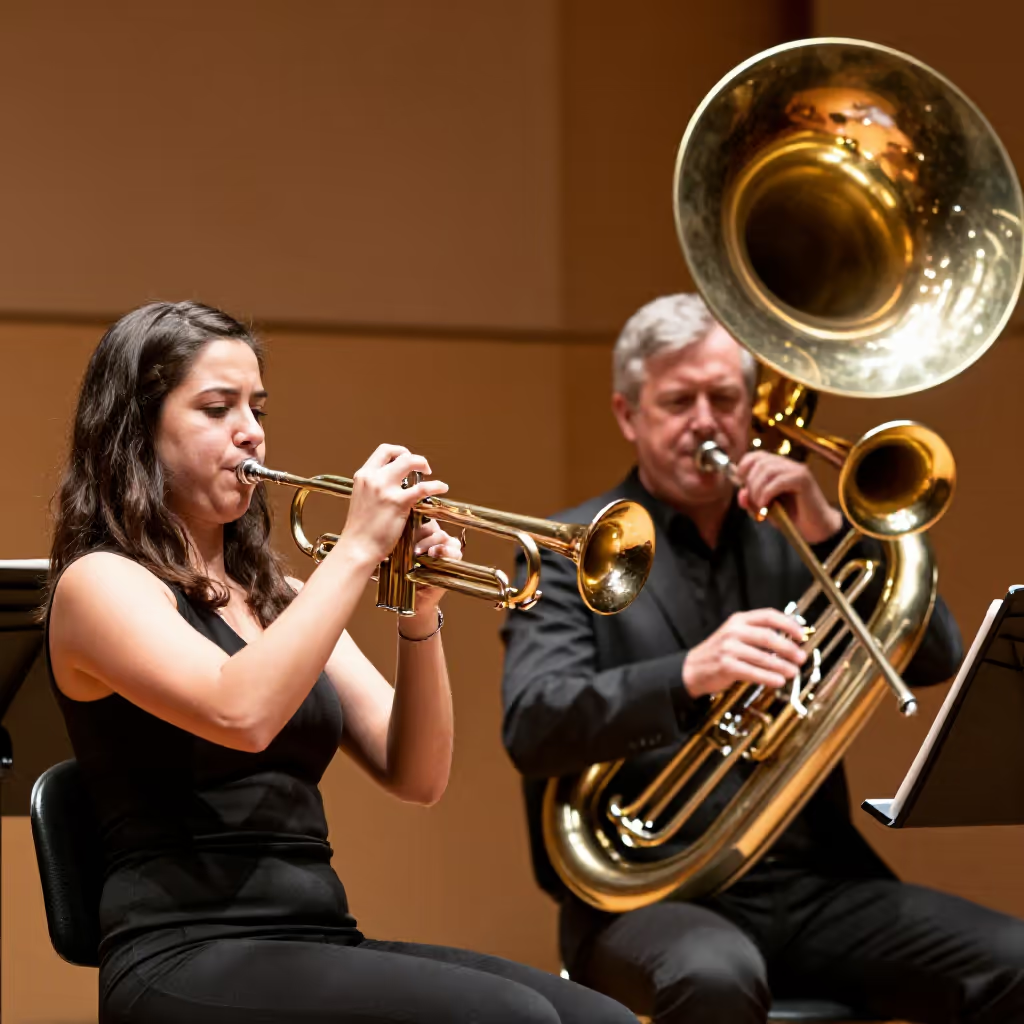
brass
In music, the group of brass instruments in an orchestra or band (e.g., trumpets, trombones). The term can also refer to a style of music dominated by these instruments.
Der fette Brass-Sound der Funk-Band brachte das Publikum sofort zum Tanzen.
The fat brass sound of the funk band immediately got the audience dancing.
You can often recognize the meaning 'Wut' (anger) from the fixed expression 'einen Brass auf jemanden haben' (to be angry at someone). The musical meaning, by contrast, appears in the context of instruments, bands, or musical styles.
Ich habe einen Brass, weil mein Zug schon wieder Verspätung hat.
I'm angry because my train is delayed again.
The colloquial meaning 'Wut' (anger) is almost always used in the fixed expression 'einen Brass auf jemanden/etwas haben' (to be angry at someone/something). The person one is angry at is in the accusative.
Sie hat einen riesigen Brass auf ihren Chef.
She is really angry at her boss.
The expression 'einen Brass haben' (to be angry) is purely colloquial. It is not used in formal or written contexts.
Komm, beruhige dich, es lohnt sich nicht, deswegen so einen Brass zu haben.
Come on, calm down, it's not worth getting so angry about it.
In a musical context, 'Brass' is often part of compounds such as 'Brass-Band' (a band consisting only of brass players), 'Brass-Sektion' (the brass section in an orchestra), or 'Brass-Sound' (brass sound).
Mir gefällt der typische Brass-Sound aus New Orleans.
I like the typical brass sound from New Orleans.
annoyance / trouble
Ärger and Brass both refer to a feeling of anger or dissatisfaction. Ärger is the broader, neutral term, while Brass is colloquial and expresses particularly strong anger. Ärger fits ordinary displeasure, while Brass is better for intense anger in an informal conversation.

Nach der dritten Verspätung hatte sie einen gewaltigen Brass.
After the third delay, she was absolutely furious.
Ihr Ärger über die erneute Verspätung war deutlich zu merken.
Her annoyance at the repeated delay was clearly noticeable.