

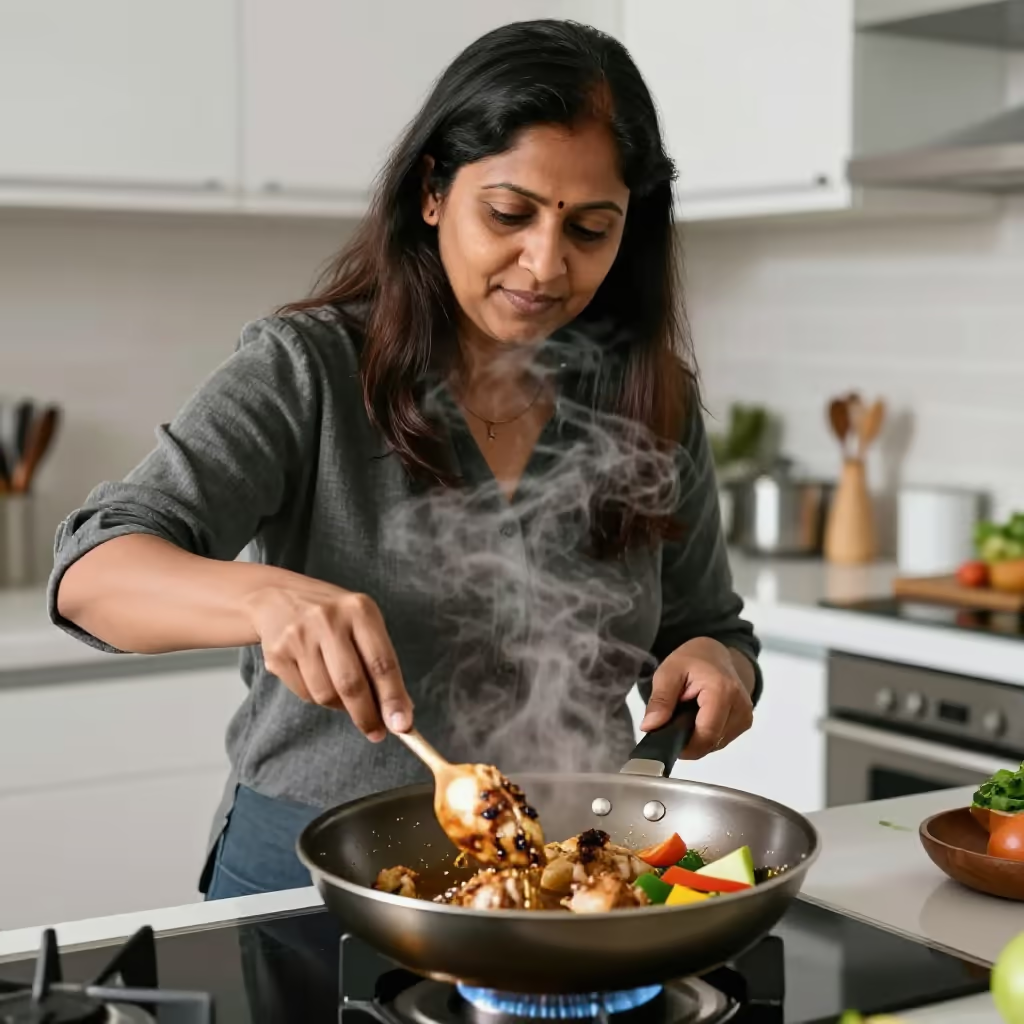
braten
to fry / roast
To cook food, especially meat, fish, or vegetables, in hot fat in a pan or in the oven until it is browned and cooked through.
Ich brate mir gerade ein Spiegelei zum Frühstück.
I'm just frying myself a fried egg for breakfast.


to fry / roast
Loading your saved state.
to fry / roast
To cook food, especially meat, fish, or vegetables, in hot fat in a pan or in the oven until it is browned and cooked through.
Ich brate mir gerade ein Spiegelei zum Frühstück.
I'm just frying myself a fried egg for breakfast.
'Braten' (to fry/roast) is a strong verb, which means that the vowel changes in the past tense. The simple past is 'briet' and the past participle for the perfect tense is 'gebraten'.
Gestern briet sie das Gemüse in der Pfanne.
Yesterday she fried the vegetables in the pan.
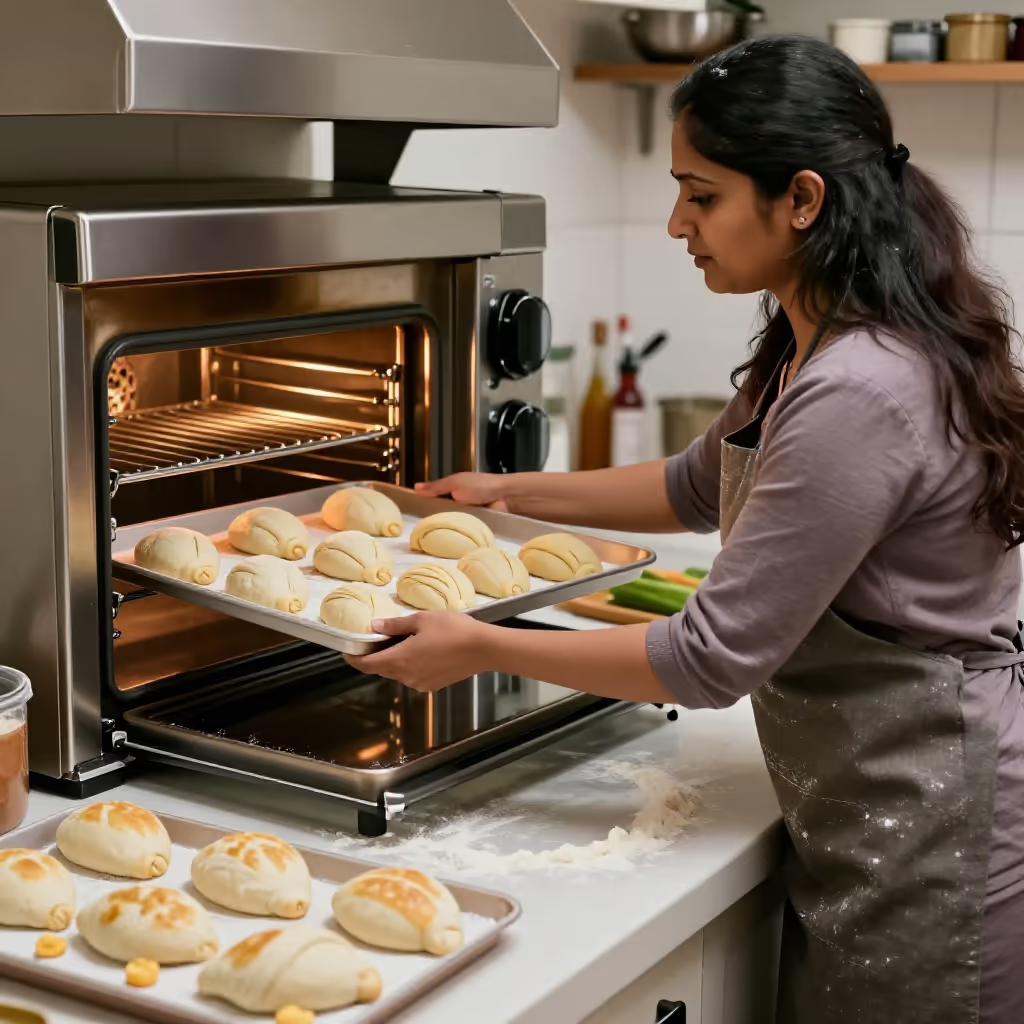
In the main meaning of cooking, 'braten' (to fry/roast) is often combined with the method of preparation. Typical phrases are 'in der Pfanne braten' (to fry in the pan) or 'im Ofen braten' (to roast in the oven).
Das Hähnchen wird im Ofen knusprig gebraten.
The chicken is roasted until crispy in the oven.
The phrase 'in der Sonne braten' (to bake in the sun) is colloquial. It means that someone sunbathes for a very long time and very intensely, often with a slightly exaggerated tone.
Im Urlaub haben wir jeden Tag stundenlang am Strand gebraten.
On vacation, we baked on the beach for hours every day.
The expression 'jemandem eine braten' (to smack someone) is a colloquial fixed expression and means to give someone a slap. The person who is hit is in the dative.
Er war so wütend, dass er ihm am liebsten eine gebraten hätte.
He was so angry that he would have loved to smack him.
to hit / beat
'schlagen' and 'jemandem eine braten' can both refer to physical violence against a person. 'schlagen' is more neutral and general: it can be a single hit or several hits. 'jemandem eine braten' is colloquial and usually means a slap or a hard hit to the face. In serious or formal situations, you are more likely to use 'schlagen'.

Wenn du so weiterredest, brät dir Max noch eine.
If you keep talking like that, Max will end up smacking you.
Nach dem Streit schlug der Mann gegen die Tür.
After the argument, the man hit the door.