

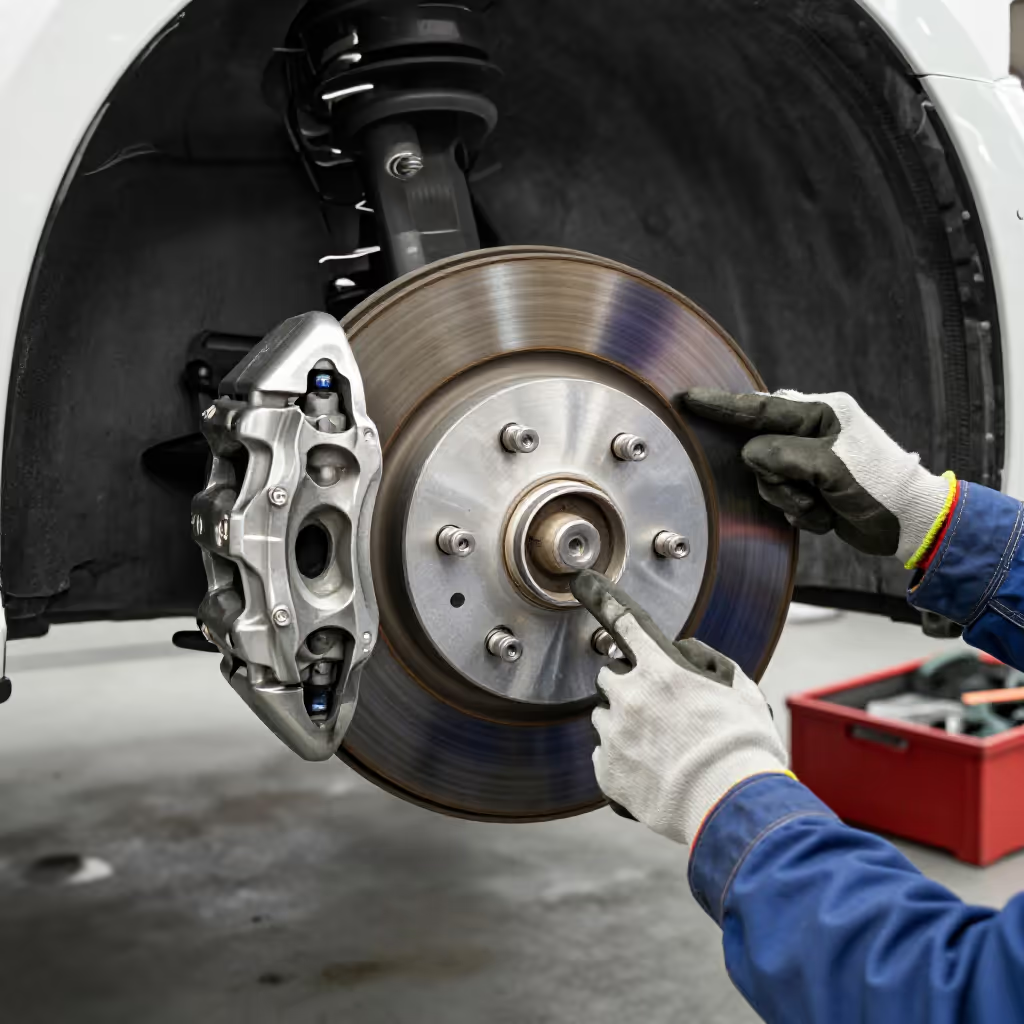
die Bremse
brake
A technical device on a vehicle or machine used to reduce speed or bring it to a stop.
EXAMPLE
Vor der Kurve musste der Fahrer stark auf die Bremse treten.
Before the curve, the driver had to step hard on the brake.
brake / horsefly
Loading your saved state.
brake
A technical device on a vehicle or machine used to reduce speed or bring it to a stop.
Vor der Kurve musste der Fahrer stark auf die Bremse treten.
Before the curve, the driver had to step hard on the brake.
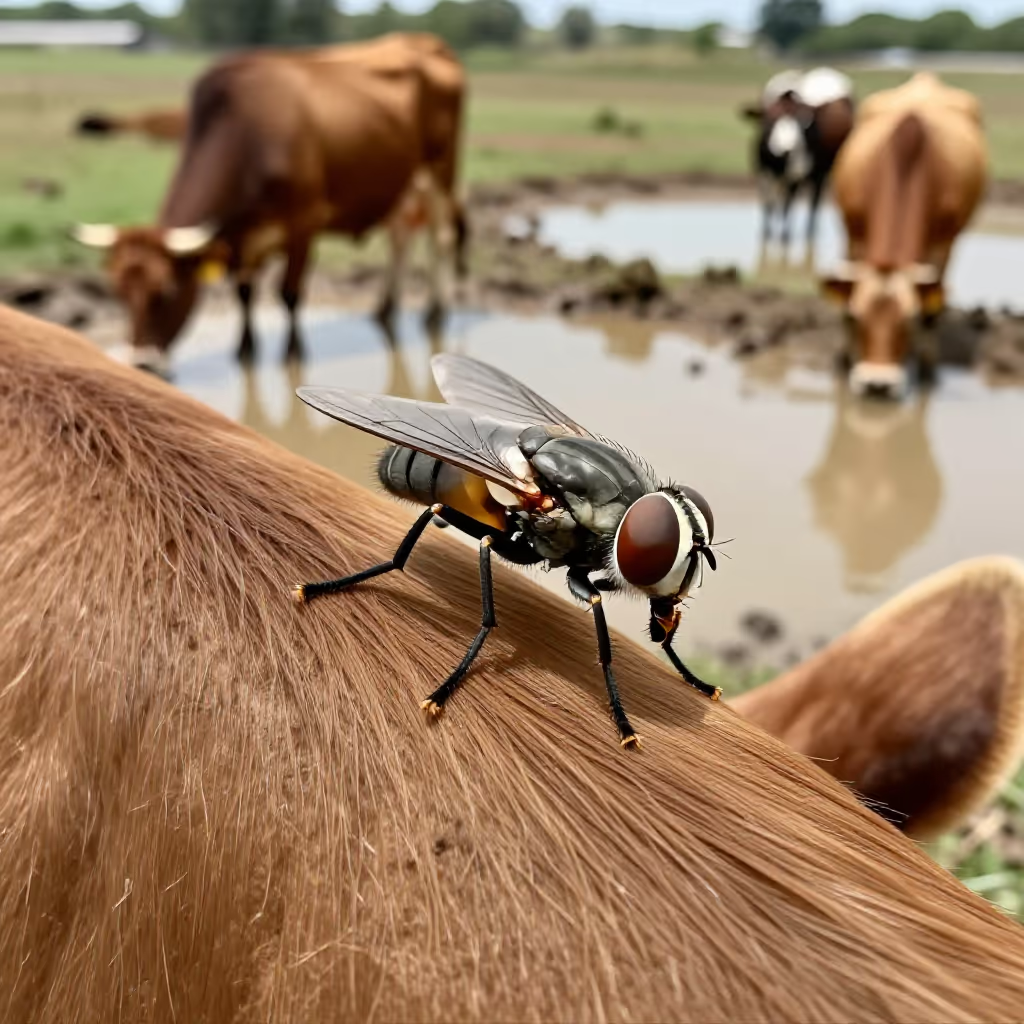
horsefly
A large biting insect that is especially common near livestock or bodies of water.
Am Seeufer wurden wir ständig von Bremsen umschwirrt.
At the lakeshore, we were constantly surrounded by horseflies.

brake
Figuratively: a person or circumstance that slows down or hinders a development or progress.
Die übermäßige Bürokratie ist eine echte Bremse für das Wirtschaftswachstum.
Excessive bureaucracy is a real brake on economic growth.
'Die Bremse' belongs to the word family of the verb 'bremsen' (to brake). The noun refers to the device, while the verb describes the action of reducing speed.
Du musst stärker bremsen, die Ampel ist rot!
You need to brake harder; the traffic light is red!
The three meanings can be distinguished well from context. If people are talking about vehicles or machines, the technical device is meant. In the context of nature and insects, the animal is meant. In discussions about economics or politics, the figurative meaning is meant.
Die Bremsen an meinem Fahrrad funktionieren nicht mehr richtig.
The brakes on my bicycle don't work properly anymore.
When talking about the brake in a car, the most common and natural phrasing is 'auf die Bremse treten' (to step on the brake). Here you use the verb 'treten' (to step), not 'drücken' (to press) or 'schieben' (to push).
Als ein Kind auf die Straße lief, trat der Fahrer sofort auf die Bremse.
When a child ran into the street, the driver immediately stepped on the brake.
In the figurative meaning, 'Bremse' is often used with the verbs 'sein' (to be) or 'wirken' (to act/function). Typical phrases are 'eine Bremse für etwas sein' (to be a brake on something) or 'als Bremse wirken' (to act as a brake).
Seine pessimistische Haltung war eine echte Bremse für das ganze Team.
His pessimistic attitude was a real brake on the whole team.
obstacle
Hindernis generally refers to a difficulty that must be overcome. Bremse is appropriate when something mainly slows progress without necessarily stopping it. When something blocks progress, Hindernis is therefore generally more suitable; when it causes a delay, Bremse is more appropriate.

Die langsame Abstimmung im Team ist eine Bremse für den Fortschritt des Projekts.
The team's slow coordination is a brake on the project's progress.
Der fehlende Zugang zu den Daten ist ein Hindernis für den Abschluss des Projekts.
The lack of access to the data is an obstacle to completing the project.