

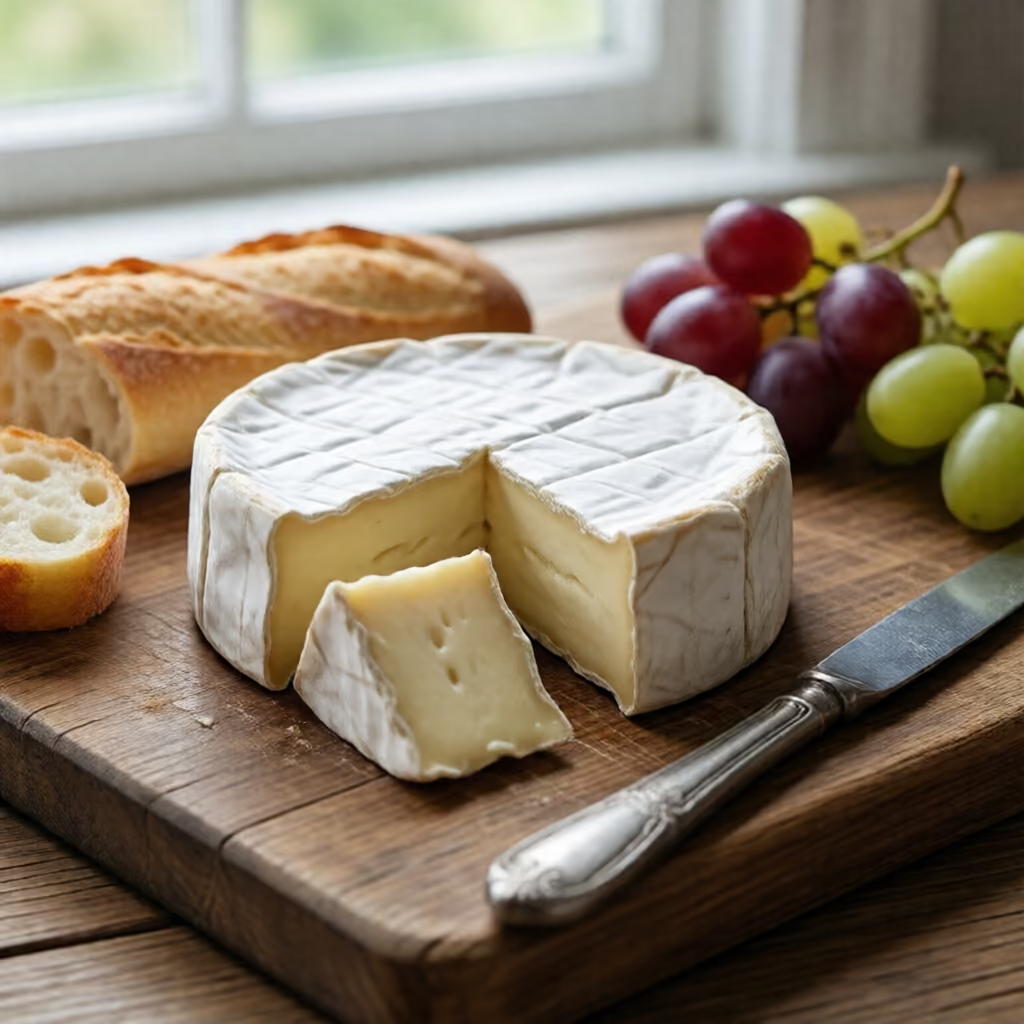
der Brie
brie
A soft French cheese with a white mold rind.
EXAMPLE
Zum Frühstück esse ich gern Brie mit frischem Baguette.
I like eating brie with fresh baguette for breakfast.
brie
der Brie, die Bries
Loading your saved state.
brie
A soft French cheese with a white mold rind.
Zum Frühstück esse ich gern Brie mit frischem Baguette.
I like eating brie with fresh baguette for breakfast.
| gender | masculine der |
|---|---|
| plural | die Bries |
| genitive | des Brie |
| singular | plural | |
|---|---|---|
| nominative | der Brie | die Bries |
| accusative | den Brie | die Bries |
| dative | dem Brie | den Bries |
| genitive | des Brie des Bries | der Bries |
The article changes with the case; it is shown in colour.
'Brie' is often used without an article when referring to food after an indication of quantity. Typical expressions include 'ein Stück Brie' (a piece of brie), '100 Gramm Brie' (100 grams of brie), and 'etwas Brie' (some brie).
Für die Käseplatte kaufe ich 250 Gramm Brie.
I’m buying 250 grams of brie for the cheese platter.
With the definite article, 'der Brie' usually refers to a specific brie, for example a particular cheese on the table or a particular package.
Der Brie auf der Käseplatte ist besonders cremig.
The brie on the cheese platter is especially creamy.
Common combinations include 'Brie mit Baguette' (brie with baguette), 'Brie mit Trauben' (brie with grapes), and 'Brie servieren' (to serve brie). These combinations are especially common at breakfast, with cheese platters, and with light meals.
Wir servieren den Brie mit frischem Baguette und süßen Trauben.
We’re serving the brie with fresh baguette and sweet grapes.