

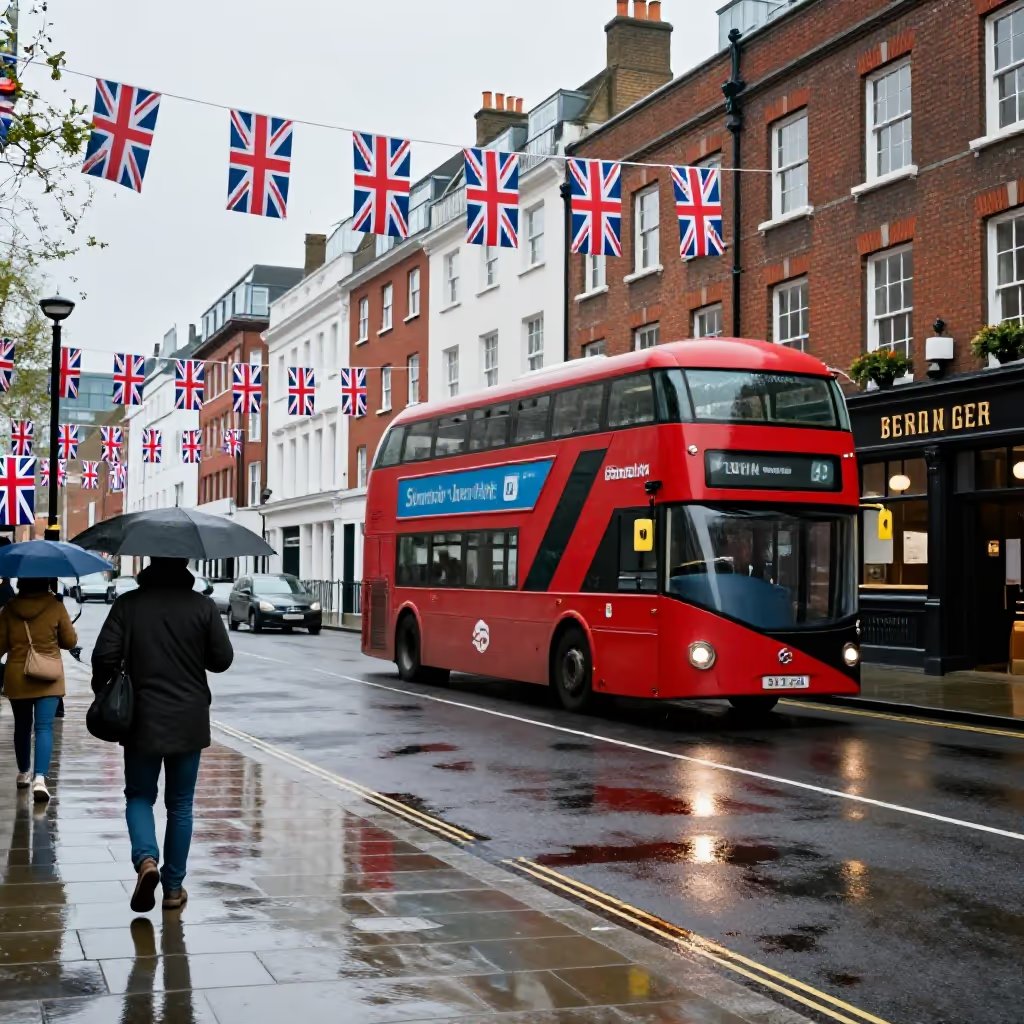
britisch
British
Relating to Great Britain, its inhabitants, its culture, or its language.
EXAMPLE
Der britische Humor ist für seine Ironie bekannt.
British humor is known for its irony.
British
Loading your saved state.
British
Relating to Great Britain, its inhabitants, its culture, or its language.
Der britische Humor ist für seine Ironie bekannt.
British humor is known for its irony.
The ending '-isch' is often used in German to form an adjective from a country or region. In this way, 'Brite' (Briton) or 'Großbritannien' (Great Britain) becomes the adjective 'britisch' (British).
Ich trinke gerne italienischen Wein.
I like drinking Italian wine.
Adjectives derived from geographical names and ending in '-isch' are written in lowercase in German. This also applies when they are used as part of a name.
Das Britische Museum befindet sich in London.
The British Museum is located in London.
The adjective 'britisch' (British) refers to the entire United Kingdom, that is, to England, Scotland, Wales, and Northern Ireland. It is a more comprehensive term.
Die Queen war das Oberhaupt der britischen Monarchie.
The Queen was the head of the British monarchy.
Common combinations are 'britisches Königshaus' (British royal family), 'britisches Pfund' (British pound, the currency), 'britisches Englisch' (British English, the language variety), and 'britische Inseln' (British Isles).
In der Schule lernen wir britisches Englisch.
At school, we learn British English.
English
Both words can describe a person or thing from the United Kingdom. Englisch refers more specifically to England, while britisch refers to Great Britain or the United Kingdom as a whole. Use englisch for a clear connection to England and britisch for belonging to the country as a whole.

Die britische Sängerin vertritt das Vereinigte Königreich bei einem Konzert.
The British singer is representing the United Kingdom at a concert.
Die englische Sängerin kommt aus Manchester.
The English singer is from Manchester.