

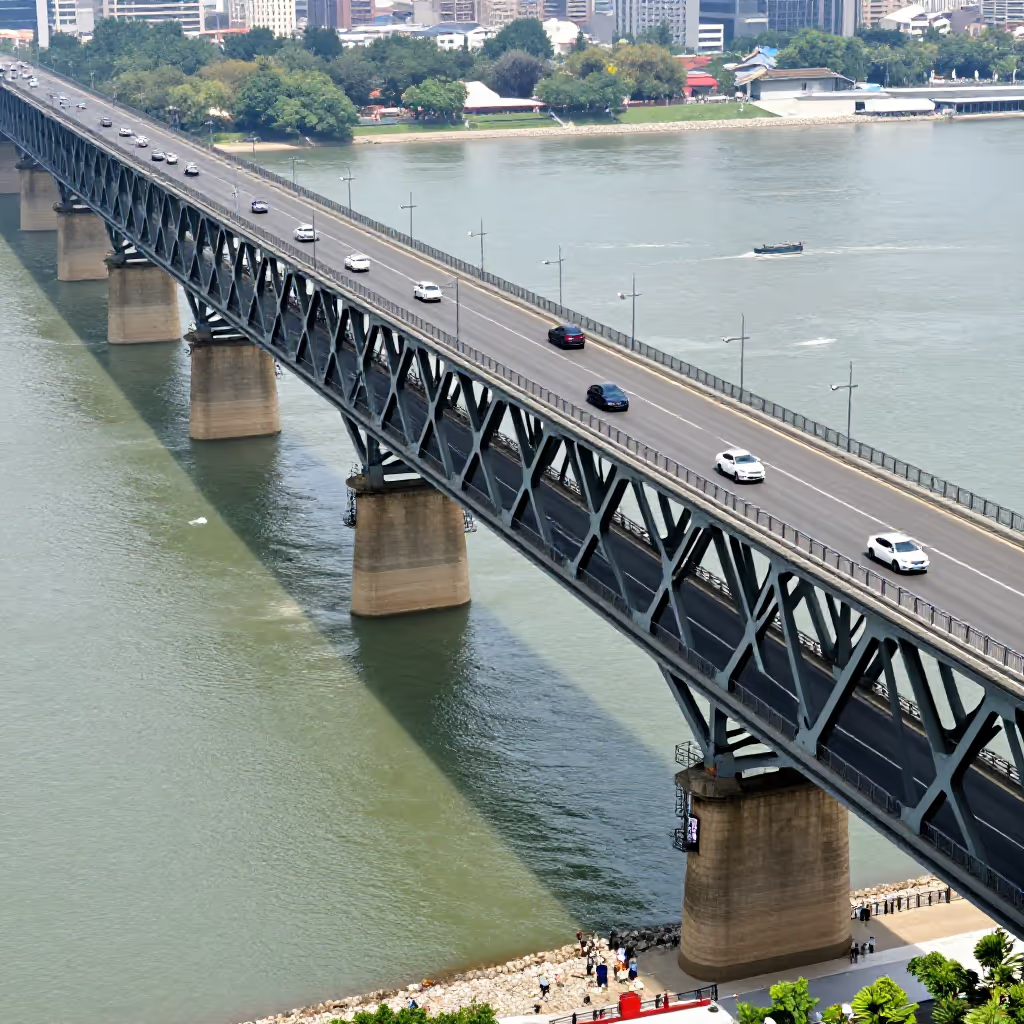
die Brücke
bridge
A structure built to cross an obstacle such as a river, valley, or road.
EXAMPLE
Die neue Brücke über den Fluss verkürzt die Fahrzeit um 20 Minuten.
The new bridge over the river shortens the driving time by 20 minutes.
bridge
Loading your saved state.
bridge
A structure built to cross an obstacle such as a river, valley, or road.
Die neue Brücke über den Fluss verkürzt die Fahrzeit um 20 Minuten.
The new bridge over the river shortens the driving time by 20 minutes.

bridge
A metaphorical connection between two different things, ideas, groups, or points in time.
Übersetzer bauen eine Brücke zwischen verschiedenen Kulturen.
Translators build a bridge between different cultures.

bridge
The command station on a ship from which the ship is steered and navigated.
Der Kapitän stand auf der Brücke und gab seine Befehle.
The captain stood on the bridge and gave his orders.

bridge day
A single workday that falls between a public holiday and the weekend and that people take off in order to have a long weekend. Usually referred to as 'Brückentag'.
Da der Feiertag auf einen Donnerstag fällt, nehmen sich viele für den Freitag eine Brücke.
Since the public holiday falls on a Thursday, many people take Friday as a bridge day.

dental bridge
A fixed dental prosthesis that closes one or more gaps between teeth by being attached to the neighboring teeth.
Der Zahnarzt riet mir, die Zahnlücke mit einer Brücke zu versorgen.
The dentist advised me to treat the gap with a dental bridge.
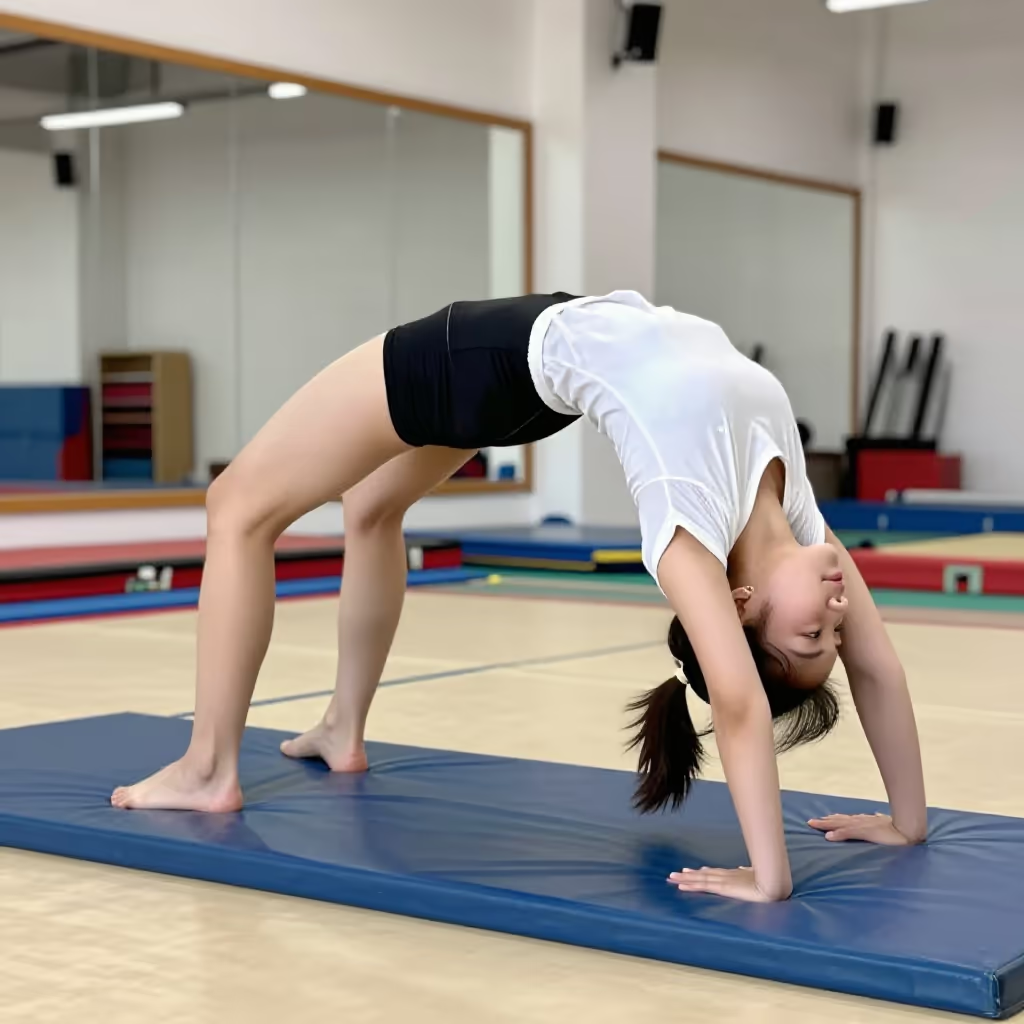
bridge
A gymnastics exercise in which you arch backward on your hands and feet so that your body forms a curve.
Im Turnunterricht haben wir gelernt, eine Brücke zu machen.
In gymnastics class, we learned how to do a bridge.
With a real bridge, the preposition is important. You drive or walk 'über die Brücke' (across the bridge; direction, accusative). Something is located 'unter der Brücke' (under the bridge; location, dative).
Wir sind mit dem Fahrrad über die alte Holzbrücke gefahren.
We rode our bikes across the old wooden bridge.
In the figurative meaning, the expressions 'eine Brücke bauen' (to build a bridge) or 'eine Brücke schlagen' (to bridge a gap / establish a connection) are often used. This means creating a connection between two opposing positions, groups, or ideas.
Der Diplomat versuchte, eine Brücke zwischen den beiden verfeindeten Ländern zu bauen.
The diplomat tried to build a bridge between the two hostile countries.
When a single workday falls between a public holiday and the weekend, it is called 'der Brückentag' (bridge day). The act of taking that day off is colloquially called 'eine Brücke machen' or 'eine Brücke nehmen' (to take a bridge day).
Weil der 1. Mai ein Dienstag ist, nehme ich mir am Montag einen Brückentag.
Because May 1 is a Tuesday, I'm taking Monday as a bridge day.
In a dental context, you can recognize this meaning from words like 'Zahnarzt' (dentist), 'Zahnlücke' (gap between teeth), 'einsetzen' (to insert/fit), or 'bekommen' (to get). Here, a 'Brücke' (bridge) is a fixed dental prosthesis.
Der Zahnarzt hat mir empfohlen, die Lücke mit einer Brücke zu schließen.
The dentist recommended closing the gap with a dental bridge.
The gymnastics exercise is almost always used in the fixed expression 'eine Brücke machen' (to do a bridge). The verb describes performing the exercise.
Im Sportunterricht üben die Kinder, eine Brücke zu machen.
In PE class, the children practice doing a bridge.
The many meanings of 'Brücke' (bridge) are usually clear from context. Watch for signal words: 'Fluss' (river) or 'Straße' (road) for the structure, 'Kulturen' (cultures) for the metaphor, 'Kapitän' (captain) for a ship, 'Zahnarzt' (dentist) for teeth, or 'Turnen' (gymnastics) for the exercise.
Der Kapitän stand auf der Brücke und blickte auf das Meer.
The captain stood on the bridge and looked out at the sea.
connection / association
Verbindung refers here to an existing social relationship between groups. Brücke is more figurative and emphasizes that a separation is actively overcome or that new contact is made possible. Verbindung fits the relationship itself; Brücke is often more apt for an action that serves as a bridge between people or groups.

Das gemeinsame Fest baut eine Brücke zwischen den beiden Vereinen.
The joint festival is building a bridge between the two clubs.
Zwischen den beiden Vereinen besteht seit Jahren eine enge Verbindung.
There has been a close connection between the two clubs for years.