

brüten
to incubate
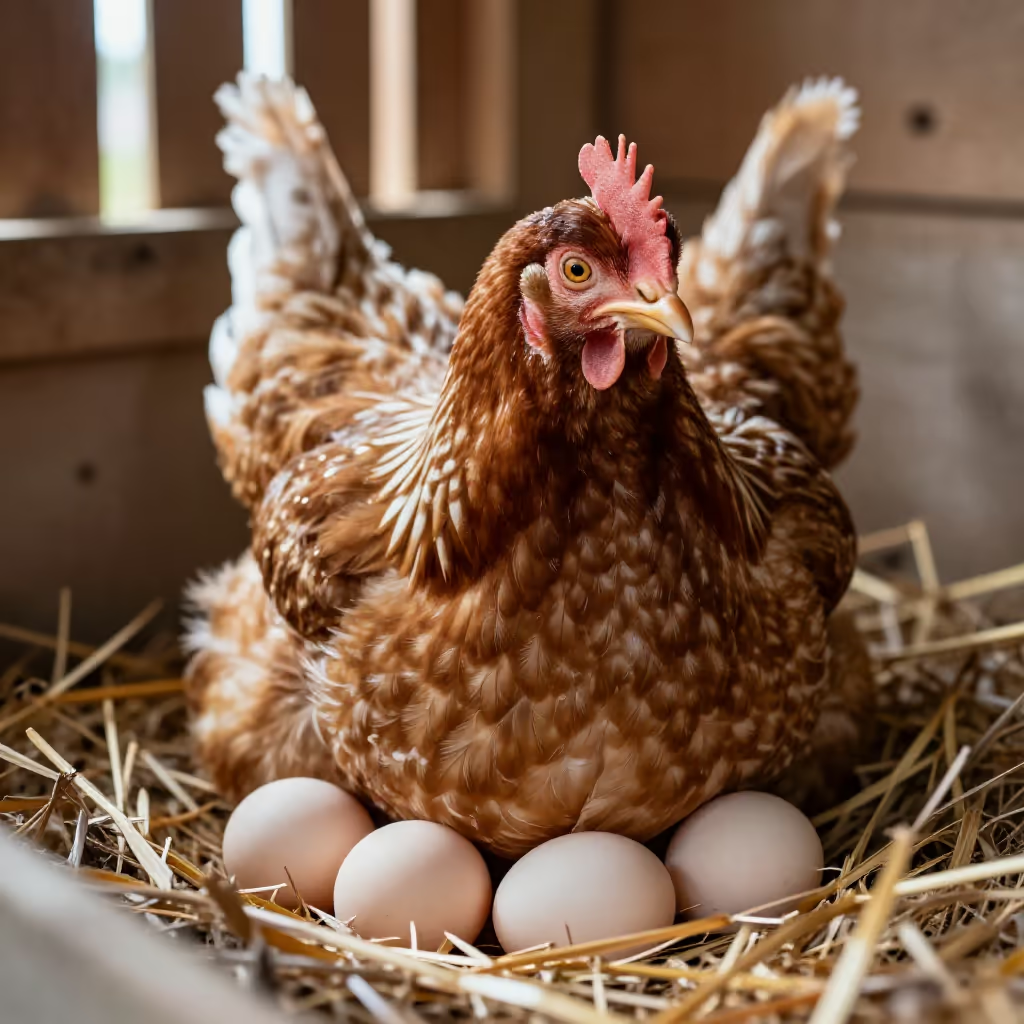
A bird sitting on eggs to keep them warm so that the young can hatch.
EXAMPLE
Die Henne brütet seit drei Wochen auf ihren Eiern.
The hen has been incubating her eggs for three weeks.
to brood / incubate
Loading your saved state.
to incubate
A bird sitting on eggs to keep them warm so that the young can hatch.
Die Henne brütet seit drei Wochen auf ihren Eiern.
The hen has been incubating her eggs for three weeks.

to brood over
To think about a problem, task, or plan for a long time and very intensely.
Er brütet schon seit Tagen über seiner Abschlussarbeit.
He has been brooding over his thesis for days.

to beat down
Describes oppressive, humid heat in which the air is still.
Die Sonne brütet vom Himmel und es ist unerträglich heiß.
The sun is beating down from the sky, and it is unbearably hot.
The verb 'brüten' (to brood/incubate) is related to the noun 'die Brut' (brood), which refers to the offspring of animals. So the basic idea is the development or hatching of something new.
Der Vogel kümmert sich um seine Brut.
The bird takes care of its brood.
In the figurative meaning 'nachdenken' (to think), 'brüten' (to brood) is always used with the preposition 'über' and the accusative. You brood over a problem, a plan, or a task.
Die Studenten brüten über einer schwierigen Matheaufgabe.
The students are brooding over a difficult math problem.
When it is about heat, the subject of 'brüten' (to beat down) is usually impersonal, for example 'die Sonne' (the sun) or 'die Hitze' (the heat). It describes heavy, oppressive warmth.
Im Sommer brütet die Hitze über der Stadt.
In summer, the heat broods over the city.
In the literal meaning, 'brüten' (to incubate) is often used in connection with birds and the preposition 'auf' plus dative, for example 'auf Eiern brüten' (to sit on eggs/incubate eggs).
Ein Storch brütet auf dem Dach des alten Kirchturms.
A stork is nesting on the roof of the old church tower.
to consider
„Überlegen“ is neutral and can also refer to briefly considering different options. „Brüten über“ usually describes thinking about a problem or plan for a long time and very intensely. Use „überlegen“ for ordinary consideration and „brüten über“ when sustained concentration is the focus.

Seit Stunden brütet sie über dem schwierigen Plan für das neue Projekt.
She has been working intensely on the difficult plan for the new project for hours.
Ich überlege, ob ich den Termin auf nächste Woche verschieben soll.
I’m considering whether I should postpone the appointment until next week.