

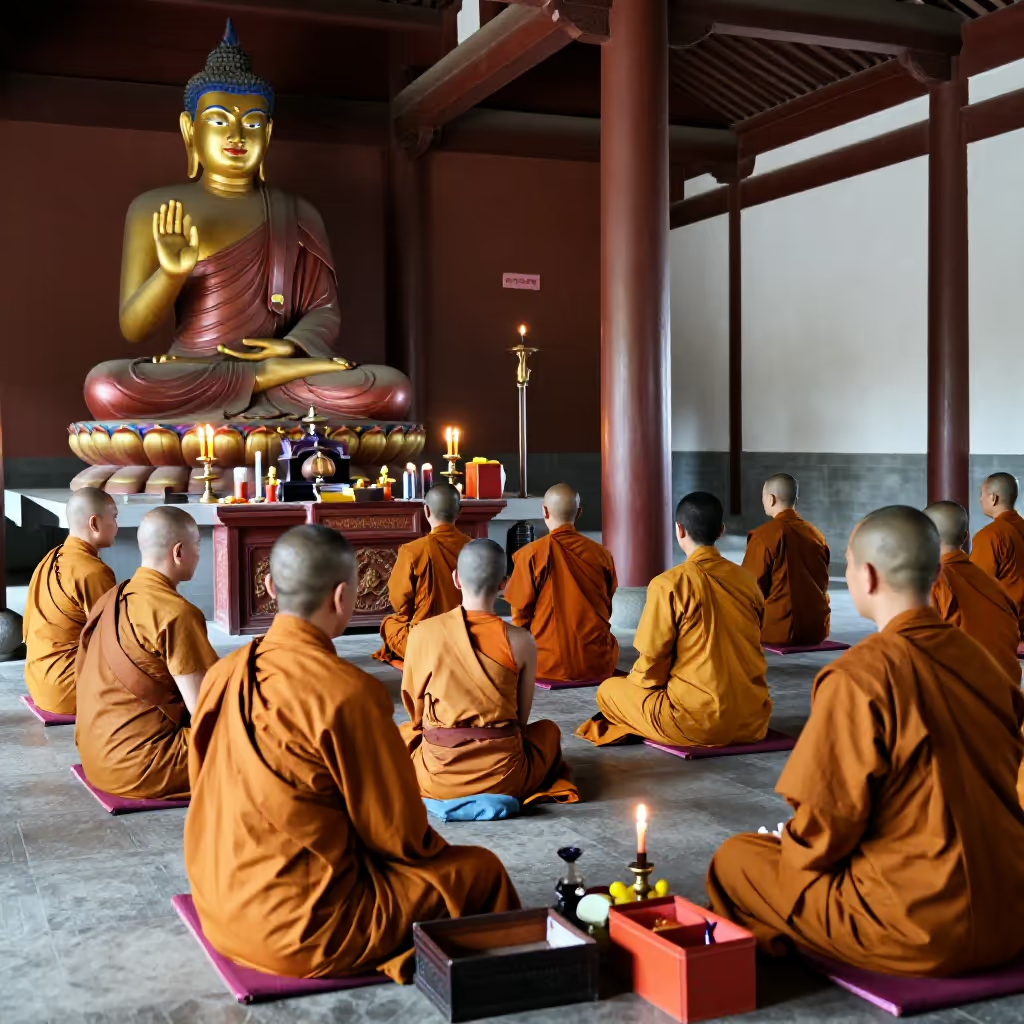
A world religion and philosophy based on the teachings of Siddhartha Gautama (the Buddha), whose central goals are overcoming suffering and attaining enlightenment (nirvana).
example
Meditation ist eine zentrale Praxis im Buddhismus.
Meditation is a central practice in Buddhism.
Usage tips
Ending '-ismus'
The ending '-ismus' (-ism) often refers to a worldview, a doctrine, or a movement. So 'Buddhismus' (Buddhism) is the teaching that goes back to Buddha.
EXAMPLE
Der Hinduismus und der Buddhismus haben gemeinsame Wurzeln in Indien.
Hinduism and Buddhism have shared roots in India.
Word family
Other important words are derived from 'Buddhismus' (Buddhism): a person who belongs to the religion is 'der Buddhist' (the male Buddhist) or 'die Buddhistin' (the female Buddhist), and the corresponding adjective is 'buddhistisch' (Buddhist).
EXAMPLE
Er lebt nach buddhistischen Prinzipien.
He lives according to Buddhist principles.
Use of the article
When speaking generally about the teaching or, for example, studying it, no article is often used. When speaking about Buddhism as a specific system, the definite article 'der' is used.
EXAMPLE
Sie interessiert sich sehr für Buddhismus.
She is very interested in Buddhism.
Compare with
confusable
Buddhismus vs Buddhist
Buddhist
'der Buddhismus' and 'der Buddhist' belong to the same topic, but they do not mean the same thing. 'Buddhismus' is the religion and philosophy itself. 'Buddhist' is a person who follows this religion or teaching. Learners may confuse the words because they look similar and both have to do with Buddha. A simple guide is: a religion is called 'der Buddhismus' (Buddhism), a person is called 'der Buddhist' (Buddhist).
Buddhismus
Im Religionsunterricht sprechen wir heute über den Buddhismus.
In religious education class, we are talking about Buddhism today.
Buddhist
Herr Klein ist Buddhist und meditiert jeden Morgen.
Mr. Klein is a Buddhist and meditates every morning.