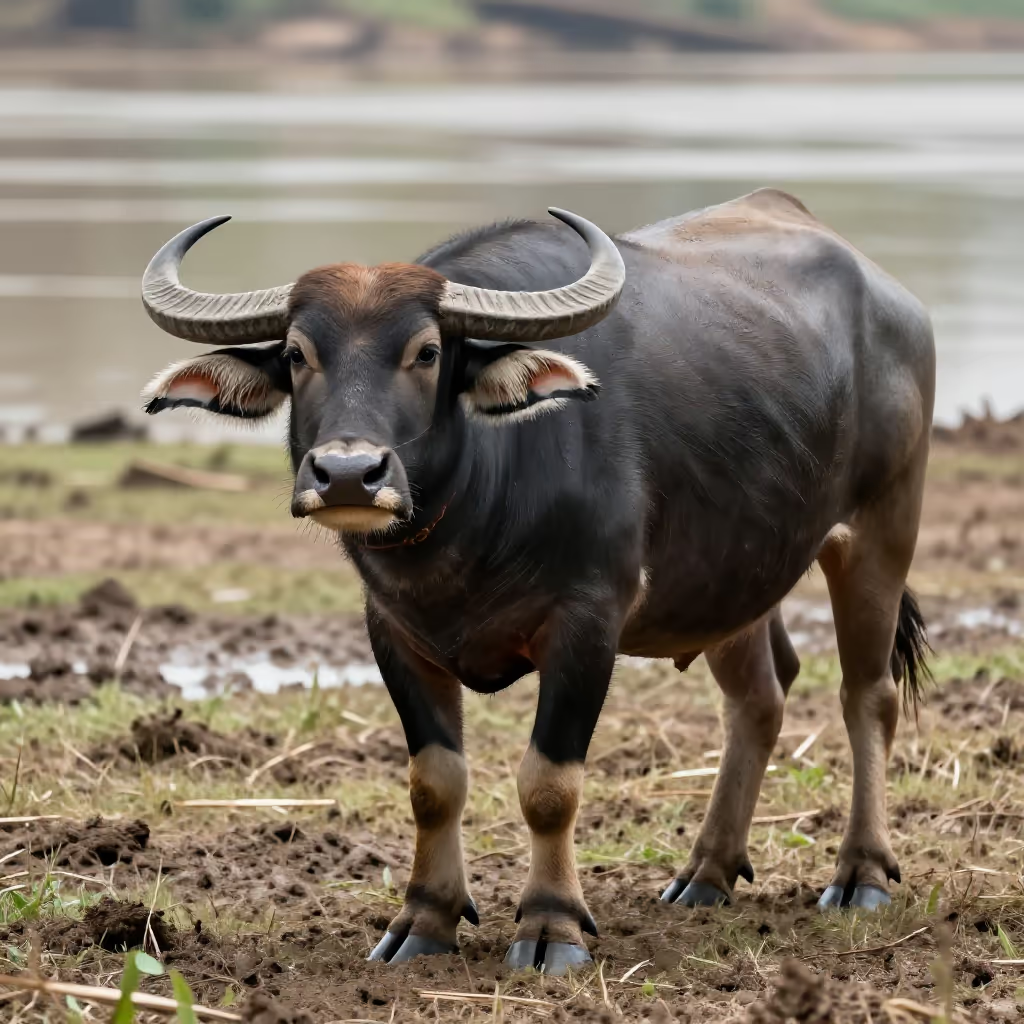
A type of large, powerful bovine with curved horns, found mainly in Asia and Africa. A distinction is made, for example, between water buffalo and African buffalo.
example
In Asien wird der Wasserbüffel oft als Arbeitstier in der Landwirtschaft eingesetzt.
In Asia, the water buffalo is often used as a working animal in agriculture.

Usage tips
Context clue
The context tells you whether 'Büffel' (buffalo/brute/crammer) means a rude person or a diligent learner. If it is about social behavior, it is an insult. If it is about school, university, or work, it describes someone who works hard.
EXAMPLE
Schubsen Sie nicht so, Sie Büffel!
Don't shove like that, you brute!
Typical collocations
In its zoological meaning, 'Büffel' (buffalo) is often used with geographical or biological additions to specify the species. Common compounds are 'Wasserbüffel' (water buffalo) or 'afrikanischer Büffel' (African buffalo).
EXAMPLE
Die Safari-Tour führte uns zu einer Herde afrikanischer Büffel.
The safari tour took us to a herd of African buffalo.
Colloquial insult
As a term for a person, 'Büffel' (brute) is colloquial and usually meant negatively or derogatorily. It describes someone who behaves roughly, inconsiderately, and without tact.
EXAMPLE
Er hat sich einfach vorgedrängelt, so ein Büffel!
He just pushed his way to the front, what a brute!
From verb to noun
This colloquial meaning derives directly from the verb 'büffeln' (to cram). 'Büffeln' means to study very intensively and often mechanically for an exam. A 'Büffel' (crammer) is therefore a person who is currently cramming.
EXAMPLE
Mein Bruder ist ein totaler Büffel, er lernt jeden Tag sechs Stunden für sein Examen.
My brother is a total crammer; he studies six hours every day for his final exam.
Compare with
confusable
Büffel vs Rind
cattle / beef
'Rind' and 'Büffel' both refer to large animals from the same animal group and can look similar. However, 'Rind' is the general term for the farm animal group that includes cows, bulls, and oxen. 'Büffel' refers to a particular type of large bovine, for example water buffalo or African buffalo. The words can be confused because buffalo are also bovine animals. In everyday language, 'Rind' usually means the normal domestic animal on a farm, while 'Büffel' more often means a specific, powerful animal with curved horns.
Büffel
Im Tierpark beobachtet das Kind einen Büffel mit großen Hörnern.
At the animal park, the child watches a buffalo with large horns.
Rind
Auf dem Bauernhof steht ein Rind auf der Weide.
On the farm, a head of cattle is standing in the pasture.