

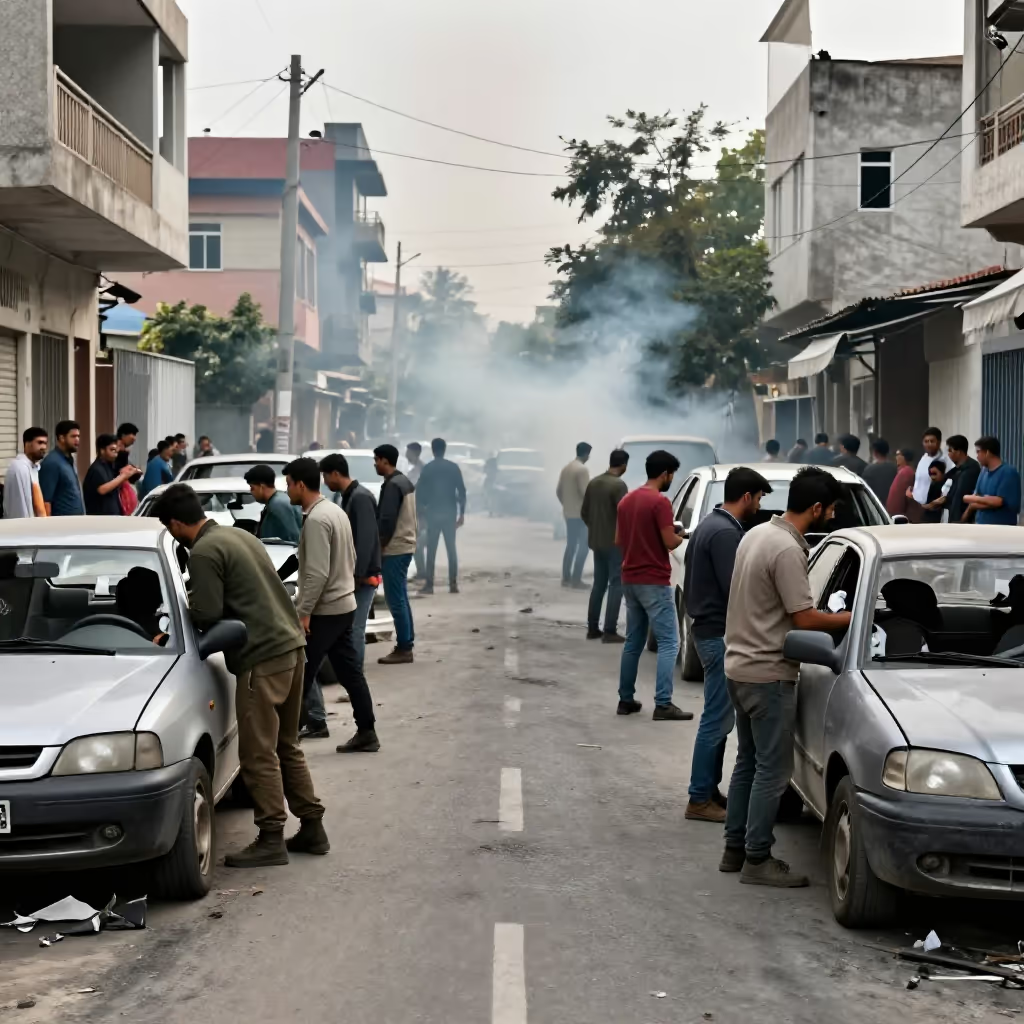
An armed conflict fought between different groups of people within the same state or country. The fighting parties are not foreign armies, but citizens of the same country.
example
Der syrische Bürgerkrieg hat zu einer humanitären Katastrophe geführt.
The Syrian civil war has led to a humanitarian catastrophe.
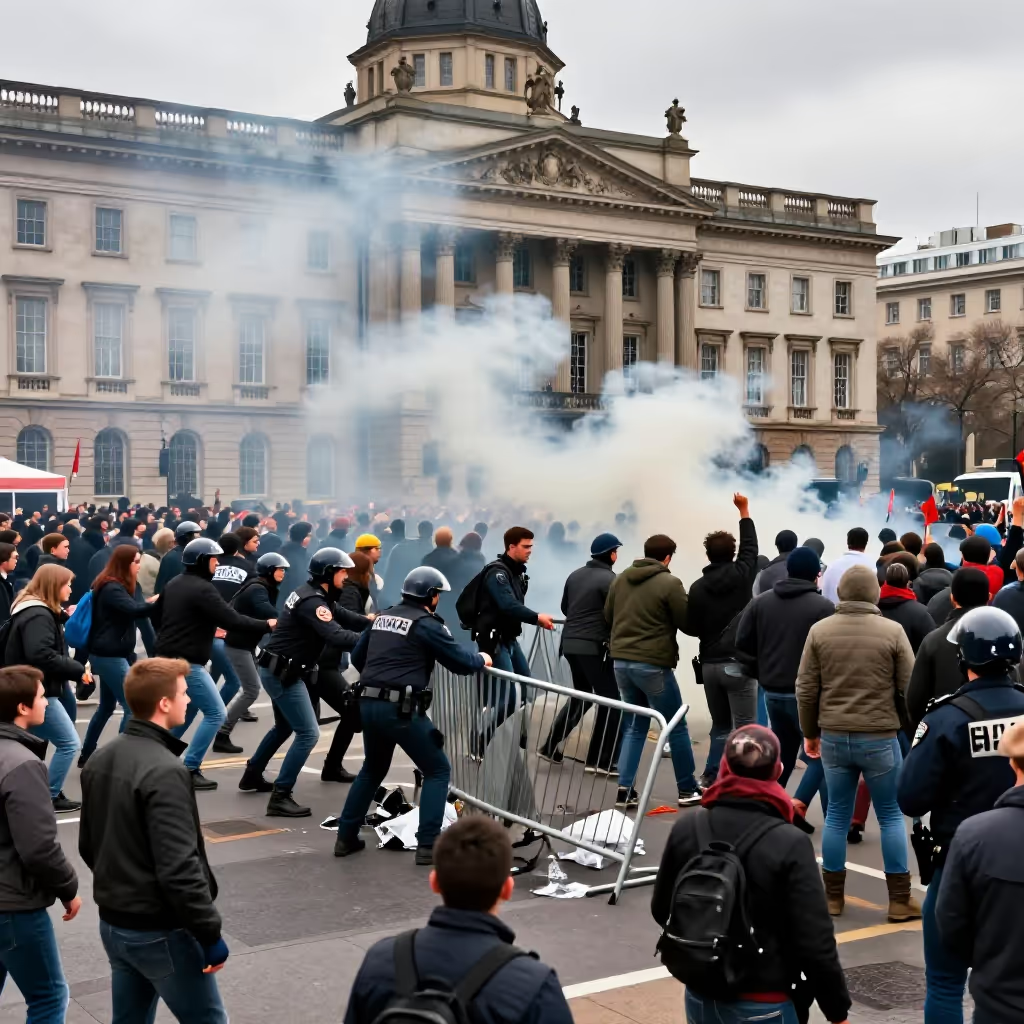
Usage tips
Compound structure
This word is a compound made from 'der Bürger' (the citizen) and 'der Krieg' (the war). So it literally describes a 'war of citizens' within a country.
EXAMPLE
Der lange Bürgerkrieg hat das Land tief gespalten.
The long civil war deeply divided the country.
Typical verbs
Certain verbs are often used in connection with 'Bürgerkrieg' (civil war). A civil war can 'ausbrechen' (break out), and one can 'führen' (wage) or 'beenden' (end) it.
EXAMPLE
Niemand wusste, wann der Bürgerkrieg endlich enden würde.
No one knew when the civil war would finally end.
Use with 'in'
The preposition 'in' is often used with 'Bürgerkrieg' (civil war). 'Im Bürgerkrieg' (in the civil war, dative) describes a state, while 'in einen Bürgerkrieg' (into a civil war, accusative) expresses a development or movement.
EXAMPLE
Viele Soldaten sind im Bürgerkrieg gestorben.
Many soldiers died in the civil war.
Compare with
near_synonym · confusable
Bürgerkrieg vs Krieg
war
'der Krieg' and 'der Bürgerkrieg' both mean armed conflicts. 'Krieg' is the more general word and can take place between states, peoples, or organized groups. 'Bürgerkrieg' is more specific: the fighting groups belong to the same country. Learners may confuse the words because every civil war is also a kind of war. If you are only speaking generally about armed conflict, 'Krieg' fits. If the conflict takes place within one country, 'Bürgerkrieg' is more precise.
Bürgerkrieg
Viele Familien verließen das Land während des Bürgerkriegs.
Many families left the country during the civil war.
Krieg
Der Krieg zwischen den beiden Staaten dauerte mehrere Jahre.
The war between the two states lasted several years.