

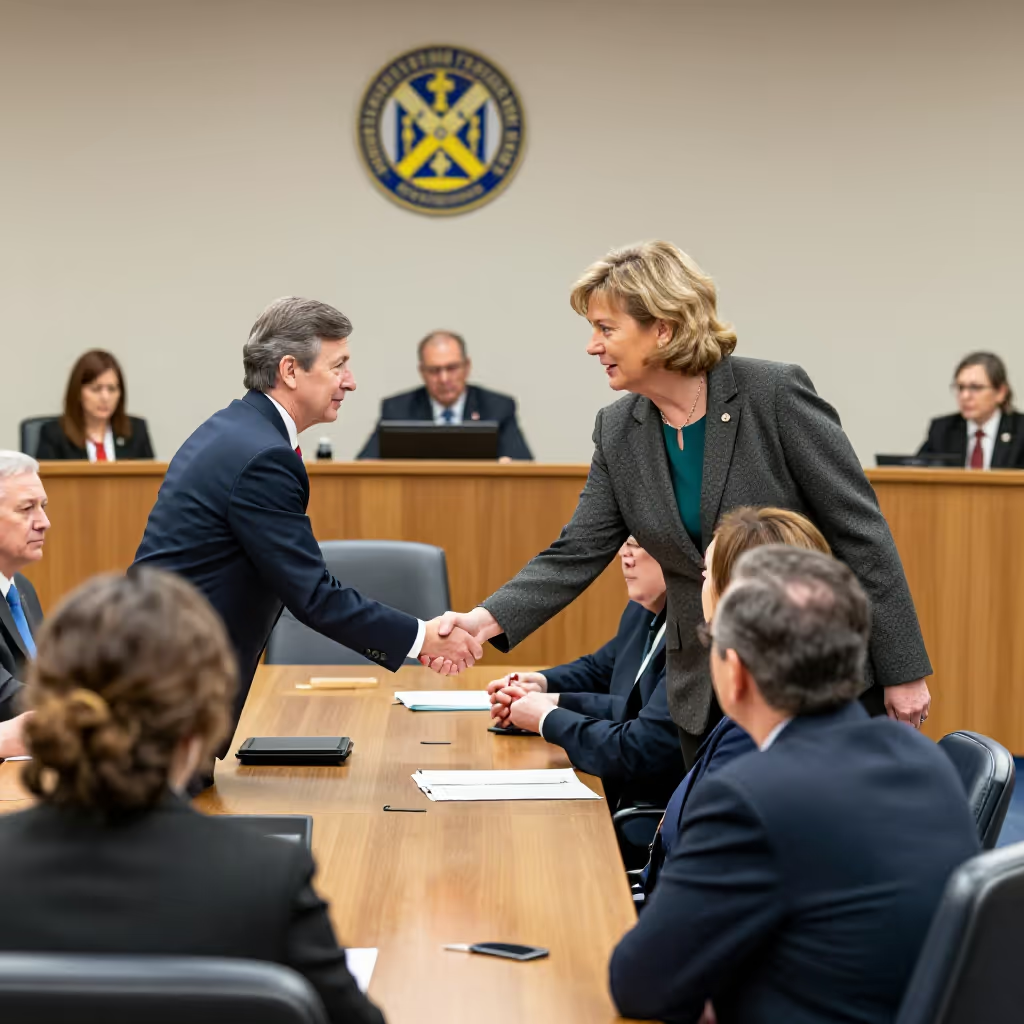
The female head of the administration of a city, town, or municipality. She represents the municipality externally and leads the administration.
example
Die Bürgermeisterin eröffnete das neue Stadtfest.
The mayor opened the new town festival.
Usage tips
Word structure
The word is based on 'Bürger' (citizen) and 'Meister' (master). So it literally describes a 'Meisterin der Bürger' (female master of the citizens). The ending '-in' is the typical German ending for female job titles and personal designations.
EXAMPLE
Die neue Bürgermeisterin ist bei den Bürgern sehr beliebt.
The new mayor is very popular with the citizens.
Use with places
To say which city, town, or municipality someone is the mayor of, you use the preposition 'von' followed by the name of the place. Alternatively, the genitive can also be used.
EXAMPLE
Sie ist die Bürgermeisterin von einer kleinen Gemeinde im Süden.
She is the mayor of a small municipality in the south.
Typical verbs
Since a mayor has many public duties, the word is often combined with verbs such as 'eröffnen' (to open), 'einweihen' (to inaugurate), 'begrüßen' (to welcome), or 'wird gewählt' (is elected).
EXAMPLE
Die Bürgermeisterin weihte die neue Brücke feierlich ein.
The mayor ceremonially inaugurated the new bridge.
Compare with
confusable
Bürgermeisterin vs Bürgermeister
mayor
'der Bürgermeister' and 'die Bürgermeisterin' refer to the same role in a city, town, or municipality. The difference is the gender of the person. 'Bürgermeister' is used for a man, or sometimes generally for the position. 'Bürgermeisterin' is used when the person is a woman. The words can be confused because the job is the same. So what matters is not the office, but which person is meant.
Bürgermeisterin
Die Bürgermeisterin spricht heute mit den Eltern über den neuen Kindergarten.
The mayor is speaking with the parents today about the new kindergarten.
Bürgermeister
Der Bürgermeister begrüßt die Gäste vor dem Rathaus.
The mayor welcomes the guests in front of city hall.