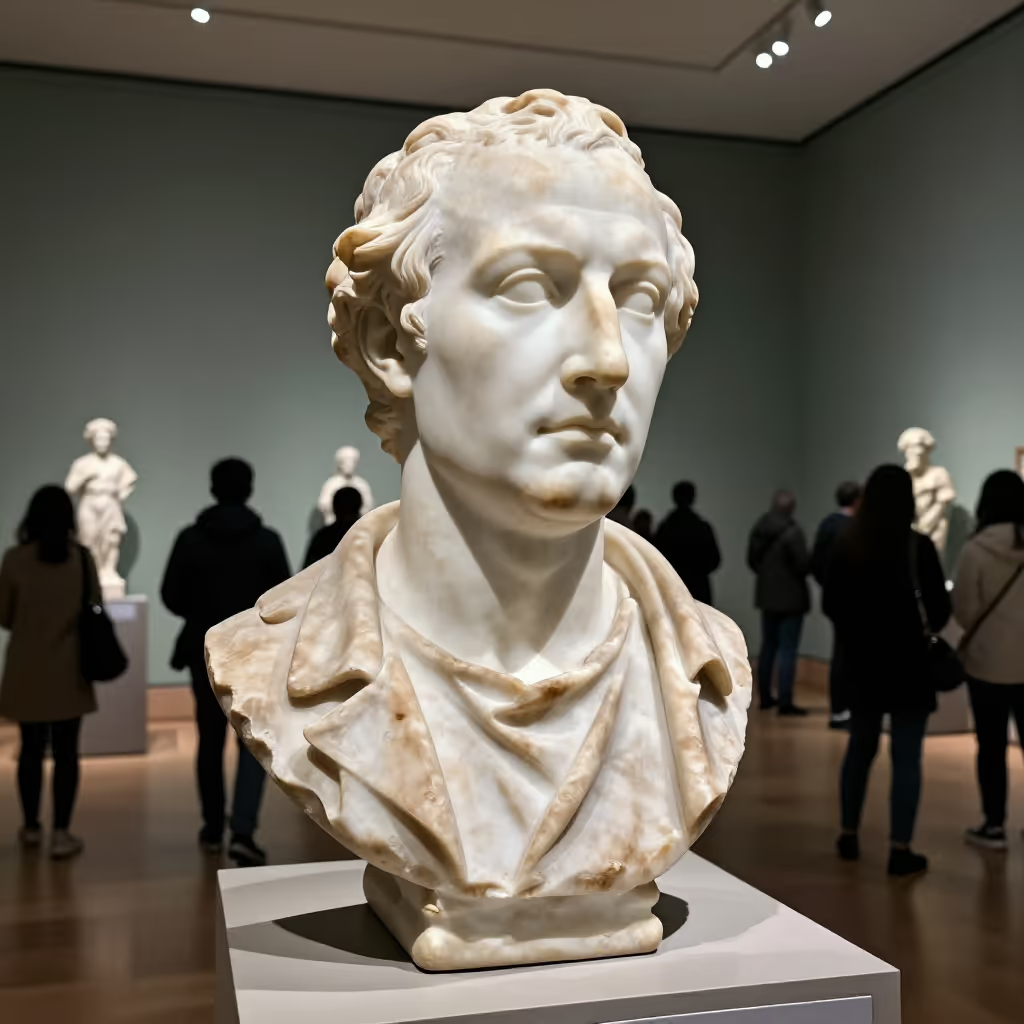
A three-dimensional representation of a person's head and upper body, usually as a sculpture made of stone, bronze, or another material.
example
Im Foyer des Theaters steht eine Büste des Gründers.
There is a bust of the founder in the theater foyer.

Usage tips
False friend
The German word 'Büste' (bust) refers only to a sculpture or the upper body. In English, 'bust' also has colloquial meanings such as 'bankrupt' or 'police raid', which do not exist in German.
EXAMPLE
Im Museum steht eine Büste von Schiller.
There is a bust of Schiller in the museum.
Context clue
You can recognize the meaning from context: if it is about a work of art made from material such as stone or bronze, the sculpture is meant. If the word refers to a garment or the body, it means the female chest.
EXAMPLE
Er schuf eine Büste aus Marmor.
He created a bust out of marble.
Typical collocations
In connection with the sculpture, the verb 'enthüllen' (to unveil) is often used. People also say that a bust 'von' (of) a particular person is made.
EXAMPLE
Der Bürgermeister enthüllte feierlich die Büste des berühmten Komponisten.
The mayor ceremoniously unveiled the bust of the famous composer.
Register and style
In the meaning 'weiblicher Brustkorb' (female chest), 'Büste' (bust) is a rather formal or technical term. It is often found in tailoring, art history, or medical descriptions.
EXAMPLE
Für das Kostüm musste die Büste der Schauspielerin genau vermessen werden.
For the costume, the actress's bust had to be measured precisely.
Compare with
near_synonym · confusable
Büste vs Brust
chest / breast
'Brust' and 'Büste' can both refer to the upper front part of the body, especially in women. 'Brust' is the normal everyday word for the body part or the breasts. 'Büste' sounds more specialized and is often used in art, tailoring, or anatomy; in addition, 'Büste' can also mean a sculpture of a person's head and upper body. Learners may confuse the words because of their similar form and the similar body area. In everyday language, people almost always say 'Brust'; 'Büste' fits better with clothing, measurements, art, or sculptures.
Büste
Im Museum steht eine Büste aus weißem Stein.
There is a bust made of white stone in the museum.
Brust
Nach dem Lauf spürt Paul ein leichtes Ziehen in der Brust.
After the run, Paul feels a slight pulling sensation in his chest.