


die Brust
chest
The upper front part of the human body between the neck and the abdomen; the rib cage.
EXAMPLE
Beim Atmen heben und senken sich Brust und Bauch.
When breathing, the chest and abdomen rise and fall.
chest / breast
Loading your saved state.
chest
The upper front part of the human body between the neck and the abdomen; the rib cage.
Beim Atmen heben und senken sich Brust und Bauch.
When breathing, the chest and abdomen rise and fall.

breast
The female mammary gland, which is developed in women and female mammals.
Die Mutter gibt ihrem Baby die Brust.
The mother gives her baby the breast.

breast meat
The meat from the breast area of poultry, used as food.
Ich esse am liebsten die knusprige Haut von der Gänsebrust.
My favorite part is the crispy skin from the goose breast.

to puff oneself up
To adopt a posture that expresses pride, arrogance, or showing off.
Nachdem er das Tor geschossen hatte, warf er sich vor den Fans in die Brust.
After he scored the goal, he puffed himself up in front of the fans.
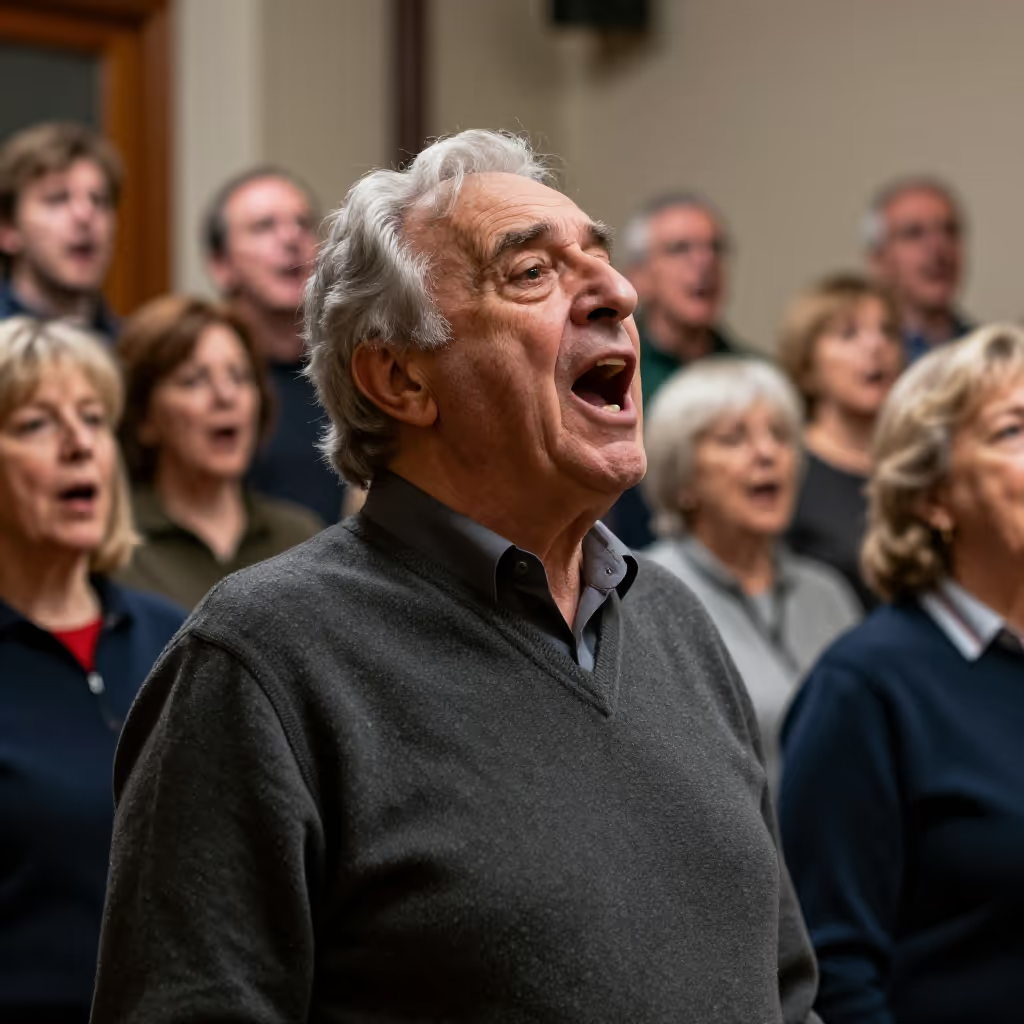
at the top of one's lungs
To sing or shout with a loud voice and a lot of energy.
Die Wanderer sangen aus voller Brust ihre Lieder.
The hikers sang their songs at the top of their lungs.
The meaning of 'Brust' (chest / breast) becomes clear from the context. In a medical context or with 'atmen' (to breathe), it refers to the chest/rib cage. In connection with 'Baby' (baby) or 'stillen' (to breastfeed), it refers to the female breast. In recipes or cooking, it refers to poultry meat.
Er hat seit gestern Schmerzen in der linken Brust.
He has had pain in his left chest since yesterday.
When 'Brust' (breast) refers to food, it almost always appears in a compound word. This lets you recognize the meaning immediately. Typical examples are 'Hähnchenbrust' (chicken breast), 'Putenbrust' (turkey breast), or 'Entenbrust' (duck breast).
Im Supermarkt kaufe ich oft geräucherte Putenbrust für das Frühstück.
At the supermarket, I often buy smoked turkey breast for breakfast.
The idiom 'sich in die Brust werfen' (to puff oneself up) is reflexive and means to present oneself proudly or arrogantly. The structure is fixed: the subject throws 'sich' (oneself; accusative) into the chest.
Nach seinem Sieg warf sich der Athlet vor dem Publikum in die Brust.
After his victory, the athlete puffed himself up in front of the audience.
The phrase 'aus voller Brust' (at the top of one's lungs) is a fixed expression meaning that someone sings, laughs, or shouts very loudly and with a lot of energy. It functions like an adverb.
Die Fans im Stadion sangen aus voller Brust die Hymne ihres Vereins.
The fans in the stadium sang their club's anthem at the top of their lungs.
In a medical context, 'Brust' (chest) is often connected with 'Schmerzen in der Brust' (chest pain) or 'einem Druck auf der Brust' (pressure on the chest). These phrases describe typical symptoms.
Bei einem Druck auf der Brust sollten Sie einen Arzt aufsuchen.
If you feel pressure on your chest, you should see a doctor.
breast / bosom / gulf
Brust and Busen can refer to the female breast area. Brust is the usual, more matter-of-fact term and can also refer to a single breast; Busen usually refers to both breasts together and often sounds more euphemistic. In neutral statements, Brust is usually the better choice.

Nach der Untersuchung verspürte sie nur an der linken Brust noch leichte Schmerzen.
After the examination, she felt only mild pain in her left breast.
Das Kleid bedeckte ihren Busen vollständig.
The dress completely covered her breasts.