


der Bulle
cop
A colloquial and often derogatory term for a police officer.
EXAMPLE
Kaum hatten sie die Musik lauter gedreht, standen auch schon die Bullen vor der Tür.
No sooner had they turned up the music than the cops were already at the door.
cop / bull
Loading your saved state.
cop
A colloquial and often derogatory term for a police officer.
Kaum hatten sie die Musik lauter gedreht, standen auch schon die Bullen vor der Tür.
No sooner had they turned up the music than the cops were already at the door.
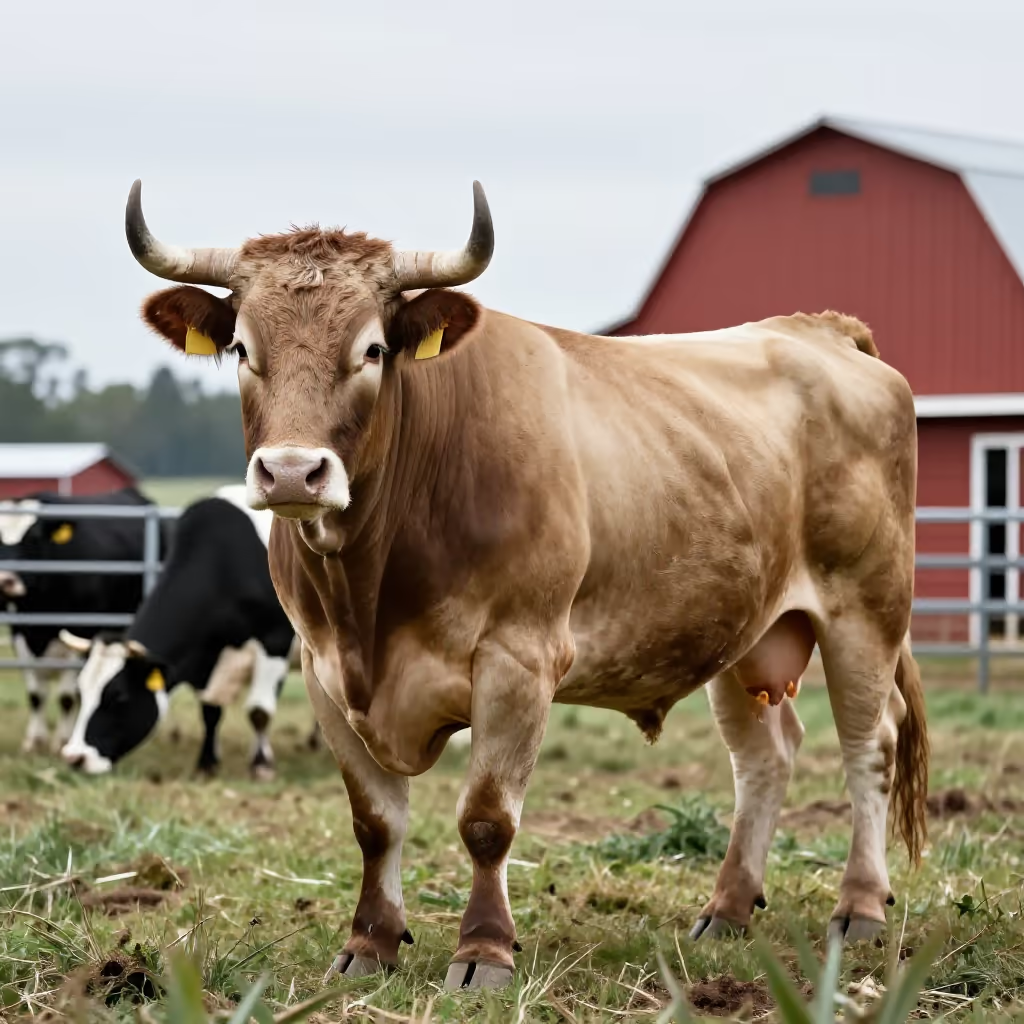
bull
A sexually mature male bovine.
Der Bauer führte den Bullen über die Weide zu den Kühen.
The farmer led the bull across the pasture to the cows.

bull
In the stock market, an investor or market phase characterized by the expectation of rising prices.
Nach wochenlanger Unsicherheit haben an der Börse nun wieder die Bullen das Sagen.
After weeks of uncertainty, the bulls now have the upper hand again on the stock market.
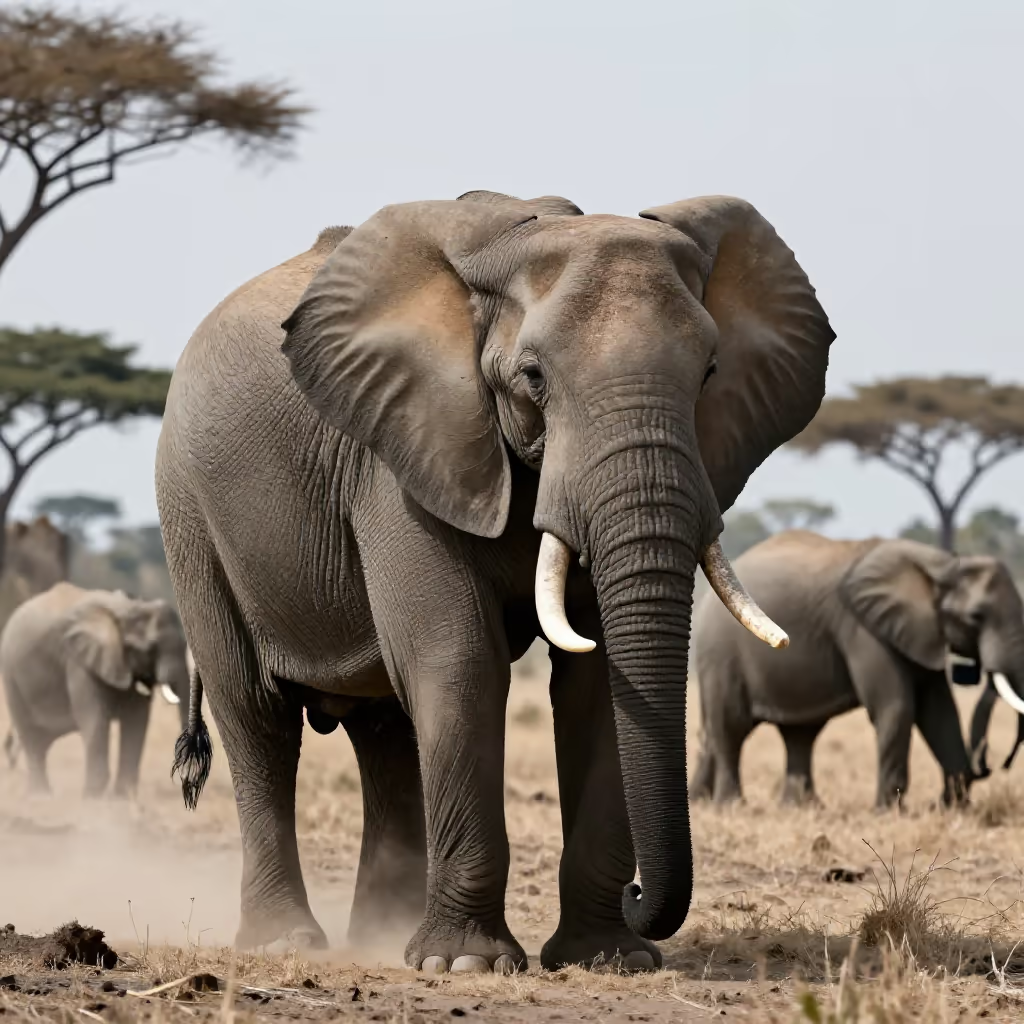
bull
The male of large mammals such as elephants, whales, or seals.
Ein riesiger Elefantenbulle schützte seine Herde.
A huge bull elephant protected his herd.
The word 'Bulle' (cop) for a police officer is colloquial and is often perceived as derogatory or disrespectful. In formal situations or when speaking with the police themselves, you should definitely avoid it.
Pass auf, da vorne stehen die Bullen und kontrollieren.
Watch out, the cops are up ahead doing checks.
The plural form 'die Bullen' (the cops) is very common and almost always refers to the police as a group. It is used more often than the singular form.
Wegen des Lärms haben die Nachbarn die Bullen gerufen.
Because of the noise, the neighbors called the cops.
In the financial world, 'der Bulle' (bull) is a technical term. It symbolizes an optimistic investor or a market phase with rising stock prices. You can recognize this meaning from the context of the stock market, shares, or finance.
An der Wall Street dominieren zurzeit die Bullen.
The bulls are currently dominating on Wall Street.
The word 'Bulle' (bull) is also used to refer to the males of other large animal species. It is then used as the second part of a compound noun, for example 'der Elefantenbulle' (bull elephant) or 'der Walbulle' (bull whale).
Im Zoo kann man einen beeindruckenden See-Elefantenbullen sehen.
At the zoo you can see an impressive male elephant seal.
bear
Der Bär can figuratively refer to a large, strong, and often very hairy man. In the meanings given here, der Bulle refers instead to a male bovine, not to such a man. Therefore, der Bär is the appropriate word for the figurative description of the person.

Der große, kräftige Bulle steht auf der Weide bei den Kühen.
The large, strong bull is standing in the pasture with the cows.
Der große, kräftige und stark behaarte Mann ist ein echter Bär.
The large, strong, very hairy man is a real bear of a man.