

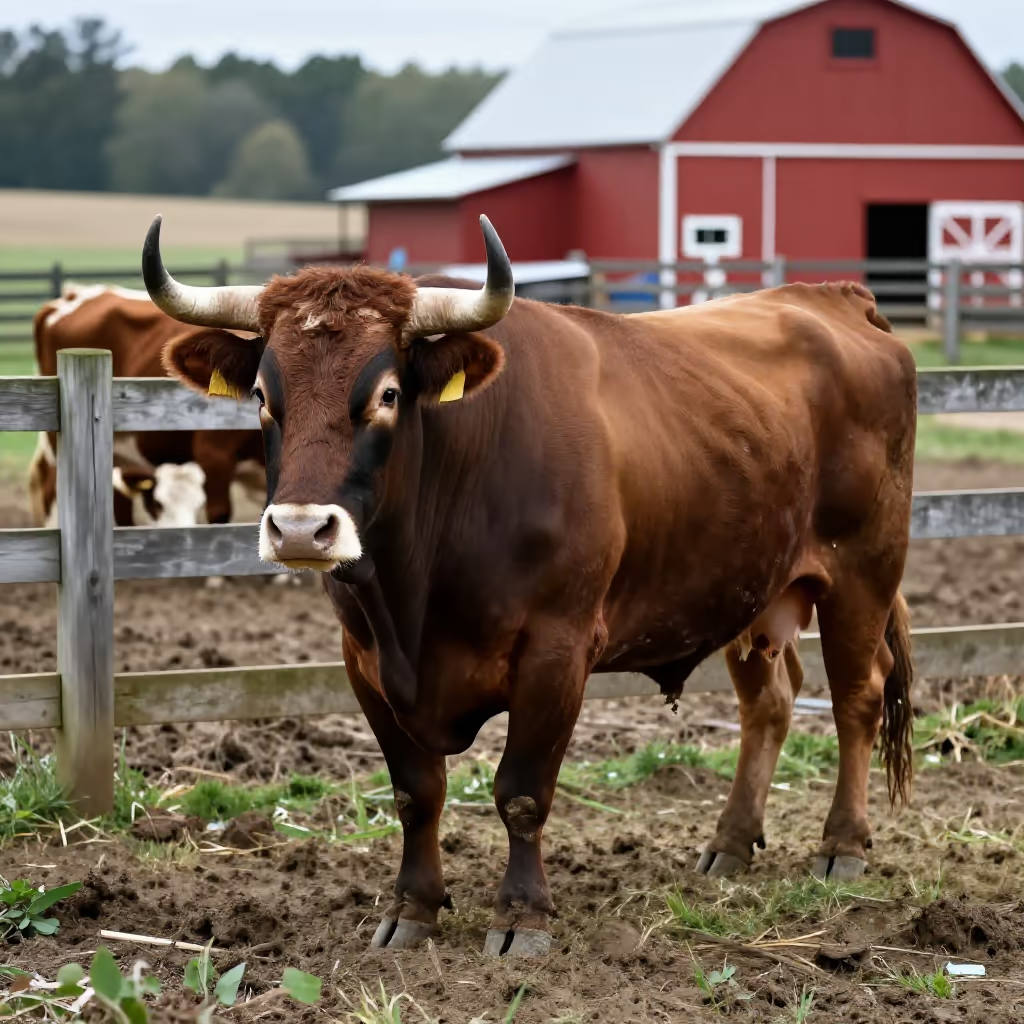
der Stier
bull
An adult male bovine animal.
EXAMPLE
Der Bauer führte den kräftigen Stier auf die Weide.
The farmer led the powerful bull out to the pasture.
bull / Taurus
Loading your saved state.
bull
An adult male bovine animal.
Der Bauer führte den kräftigen Stier auf die Weide.
The farmer led the powerful bull out to the pasture.

Taurus
The second sign of the zodiac in a horoscope, or the corresponding constellation in the sky.
Mein Bruder ist im Mai geboren, sein Sternzeichen ist Stier.
My brother was born in May; his zodiac sign is Taurus.

to take the bull by the horns
An idiom meaning to tackle a difficult task or problem bravely and decisively.
Wir müssen das Problem jetzt endlich angehen und den Stier bei den Hörnern packen.
We finally need to address the problem now and take the bull by the horns.
You can tell from the context whether the animal or the zodiac sign is meant. Words like 'Horoskop' (horoscope), 'Sternzeichen' (zodiac sign), or 'geboren sein' (to be born) clearly point to the astrological meaning. In agricultural or biological contexts, the animal is meant.
Auf dem Bauernhof nebenan gibt es Kühe und einen großen Stier.
On the farm next door, there are cows and a large bull.
'Stier' (bull) is the base word for other terms related to the animal. A well-known example is 'Stierkampf' (bullfight), the fight between a person and a bull.
In Spanien sind Stierkämpfe eine umstrittene Tradition.
In Spain, bullfighting is a controversial tradition.
The idiom 'den Stier bei den Hörnern packen' (to take the bull by the horns) is a fixed unit. It is used to express that someone accepts a challenge bravely and directly instead of hesitating.
Statt uns weiter zu beschweren, sollten wir den Stier bei den Hörnern packen und eine Lösung finden.
Instead of continuing to complain, we should take the bull by the horns and find a solution.
cop / bull
Bulle and Stier both refer to an adult male bovine. Bulle is the generally common term, while Stier is especially common in southern Germany, Austria, and Switzerland. The choice is therefore often regional rather than based on a factual difference.
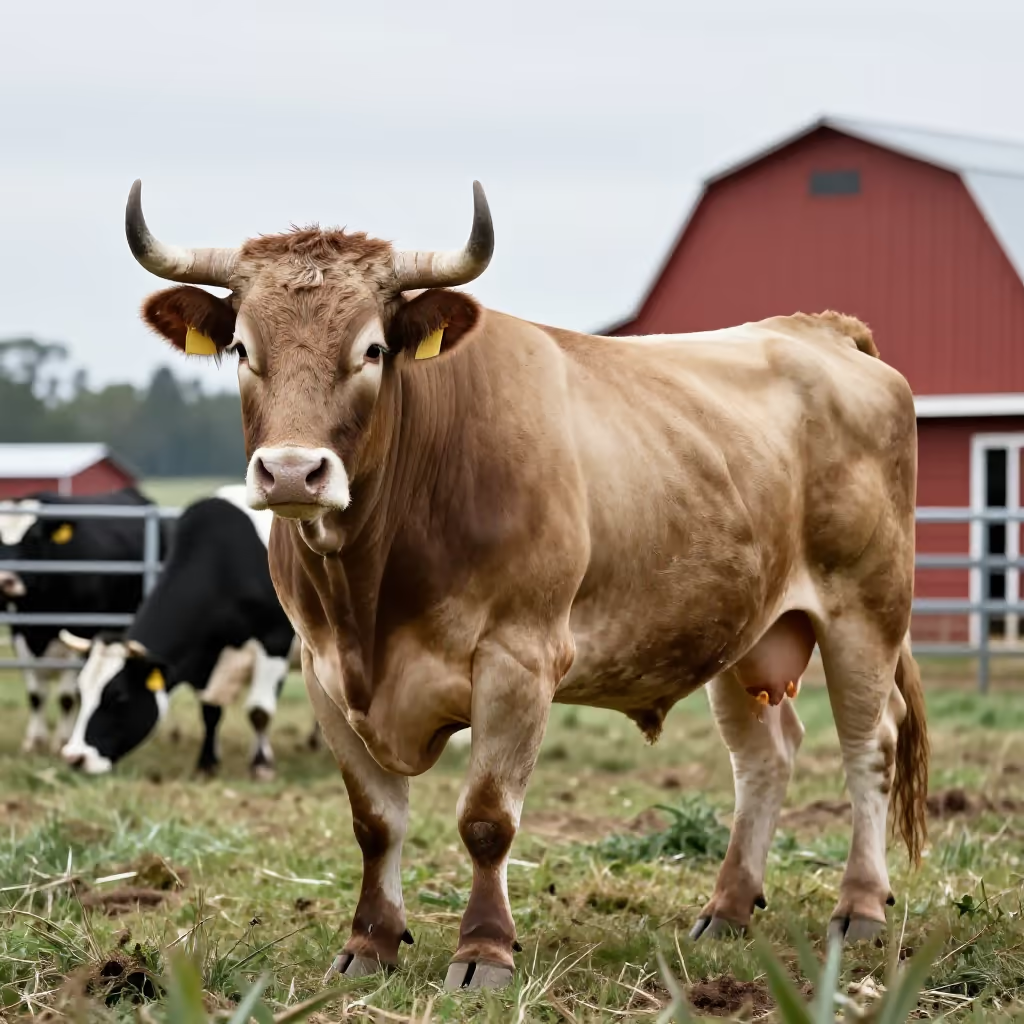
Auf dem österreichischen Hof steht ein kräftiger Stier auf der Weide.
A powerful bull is grazing in the pasture on the farm in Austria.
Auf dem norddeutschen Hof steht ein kräftiger Bulle auf der Weide.
A powerful bull is grazing in the pasture on the farm in northern Germany.