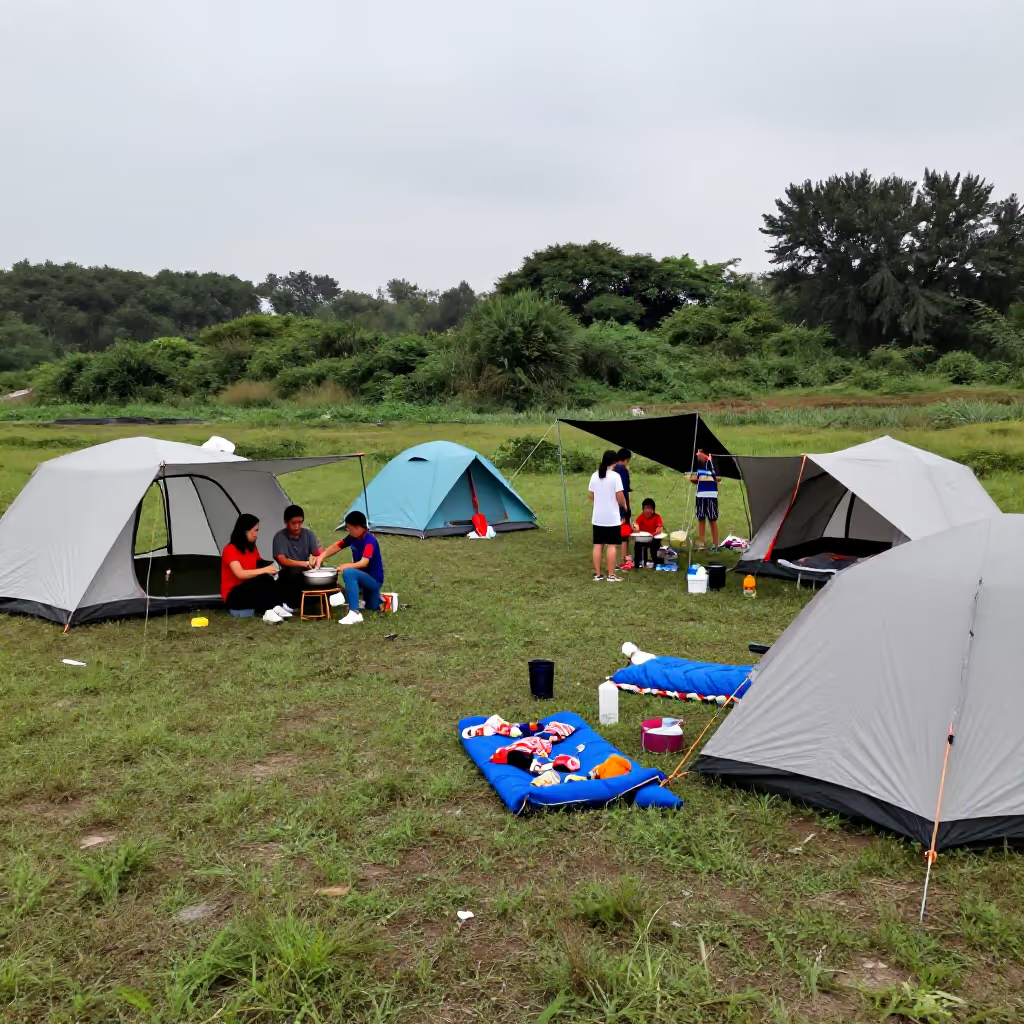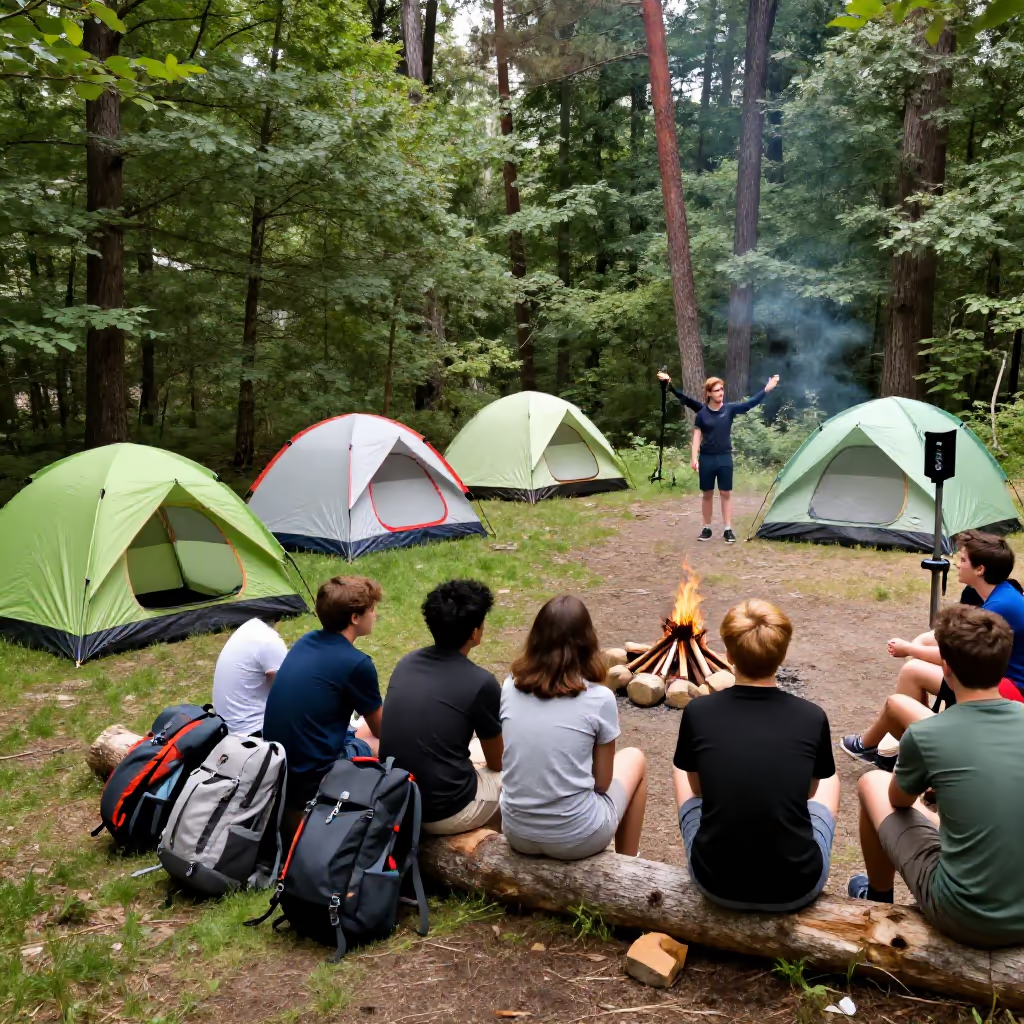
A campsite or temporary accommodation, often outdoors with tents, for example for vacations, sports, or as emergency shelter.
example
Die Kinder freuen sich schon das ganze Jahr auf das Sommer-Camp am See.
The children have been looking forward to the summer camp by the lake all year.
Usage tips
Typical collocations
For a physical camp, fixed verbs are often used. You can 'ein Camp aufschlagen' or 'ein Camp errichten' (to set up a camp) and 'darin übernachten' (spend the night there) or 'darin wohnen' (live/stay there).
EXAMPLE
Die Wanderer schlugen ihr Camp für die Nacht am Flussufer auf.
The hikers set up their camp for the night on the riverbank.
Important prepositions
Pay attention to the difference between 'im Camp' (dative) for a location and 'ins Camp' (accusative) for a direction. This distinction is essential for correct usage.
EXAMPLE
Die Kinder spielen im Camp Verstecken.
The children are playing hide-and-seek in the camp.
Context clue: metaphor
This meaning is metaphorical and describes a group with a shared opinion. You can recognize it from words related to politics, debate, or ideology.
EXAMPLE
In der Diskussion bildeten sich schnell zwei politische Camps.
In the discussion, two political camps quickly formed.
Typical collocations
In the figurative sense, 'Camp' (camp) is often combined with adjectives like 'politisch' (political), 'gegnerisch' (opposing), or 'ideologisch' (ideological). You can also say 'zu einem Camp gehören' (to belong to a camp) or 'das Camp wechseln' (to switch camps).
EXAMPLE
Er gehörte zum Camp der Reformgegner.
He belonged to the camp of reform opponents.
Compare with
near_synonym · confusable
Camp vs Gruppe
group
'die Gruppe' and 'das Camp' can both refer to people with a shared interest or a shared opinion. 'Gruppe' is neutral and very general: a group can be small or large and does not have to represent a fixed opinion. 'Camp' is used in this sense more when talking about one side in a discussion, politics, or society. It often sounds as if there are different camps with different views. Learners may confuse the words because 'Camp' sometimes means a group. But 'Camp' can also mean a camp or accommodation; for ordinary people together, 'Gruppe' is usually more natural.
Camp
In der Firma gehört mein Kollege zum Camp, das mehr Homeoffice möchte.
At the company, my colleague belongs to the camp that wants more working from home.
Gruppe
Am Wochenende trifft sich die Gruppe zum Wandern am Bahnhof.
At the weekend, the group is meeting at the train station to go hiking.