

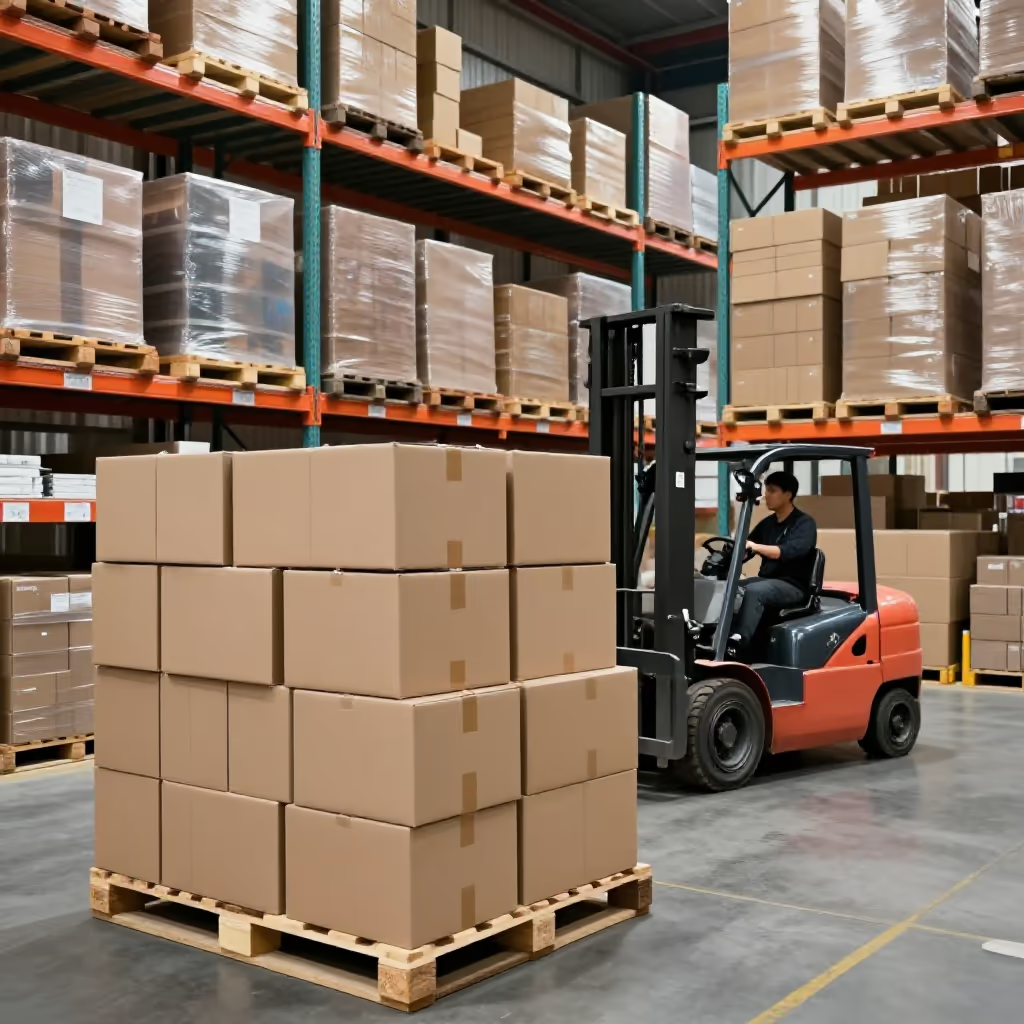
das Lager
warehouse
A place or building where goods, supplies, or materials are stored.
EXAMPLE
Die bestellten Ersatzteile sind gerade nicht im Lager verfügbar.
The ordered spare parts are currently not available in the warehouse.
warehouse / camp
Loading your saved state.
warehouse
A place or building where goods, supplies, or materials are stored.
Die bestellten Ersatzteile sind gerade nicht im Lager verfügbar.
The ordered spare parts are currently not available in the warehouse.
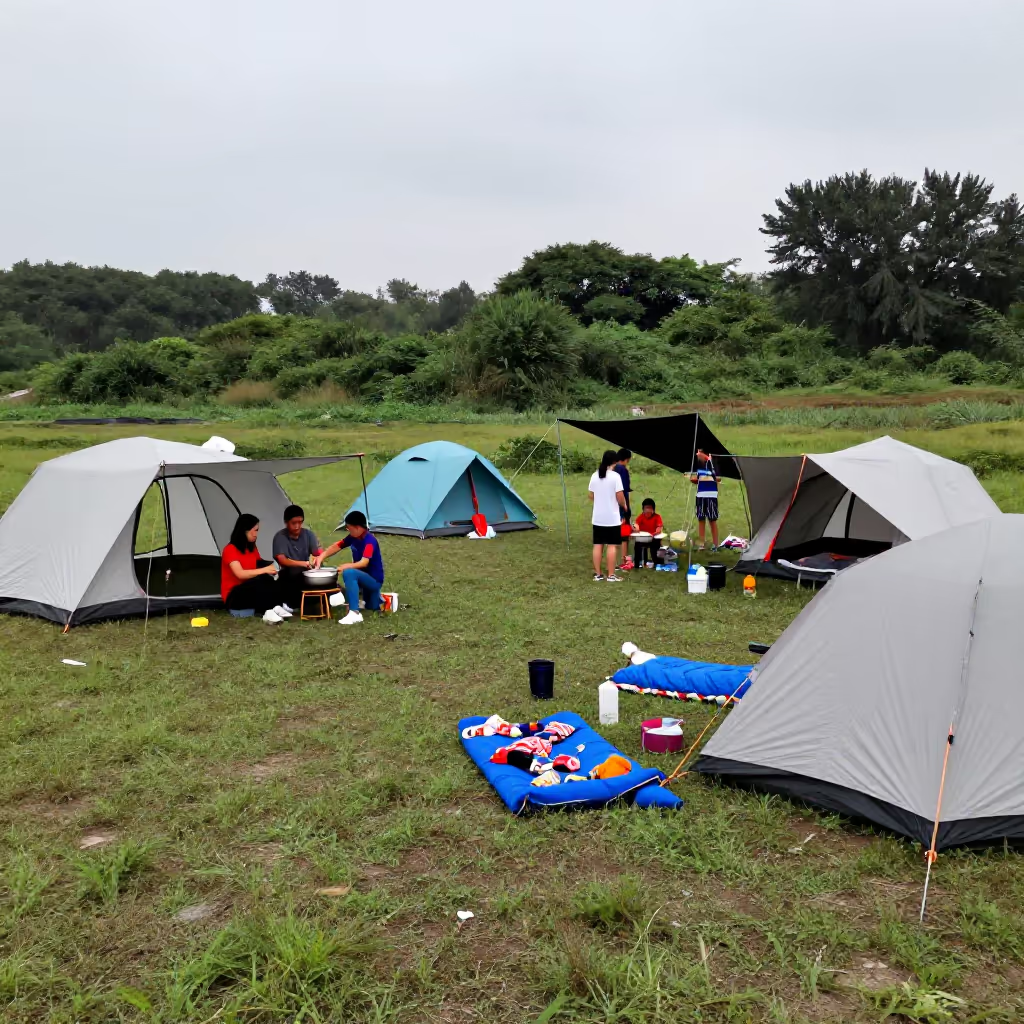
camp
A place where people live temporarily in tents or simple shelters, for example while camping or in emergencies.
Die Bergsteiger schlugen ihr Lager auf 5000 Metern Höhe auf.
The mountaineers set up their camp at an altitude of 5,000 meters.

camp
A group of people who share a common political or ideological opinion and are often opposed to another group.
In der politischen Debatte standen sich das linke und das rechte Lager unversöhnlich gegenüber.
In the political debate, the left-wing and right-wing camps were irreconcilably opposed to each other.
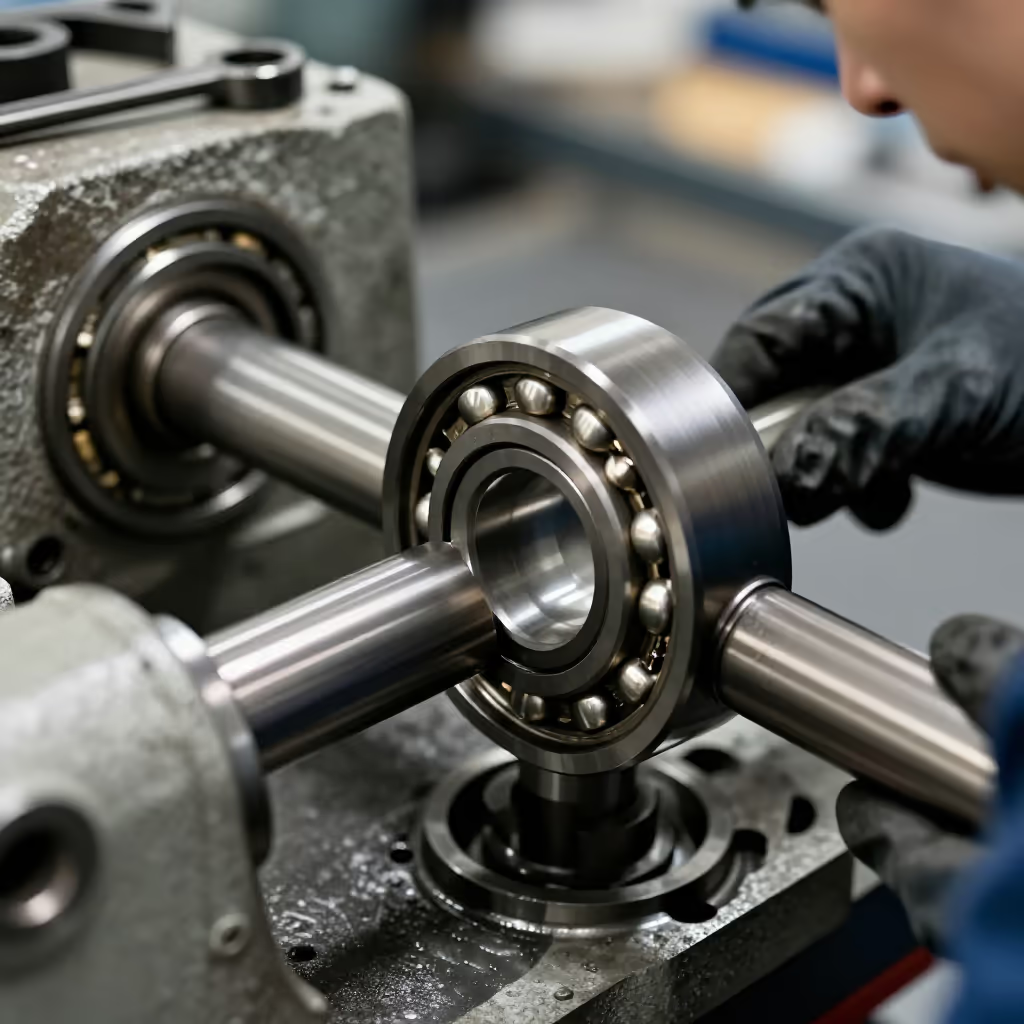
bearing
A technical component in a machine that guides and supports a shaft or axle in order to reduce friction.
Das Lager der Waschmaschine ist kaputt und macht laute Geräusche.
The washing machine's bearing is broken and is making loud noises.
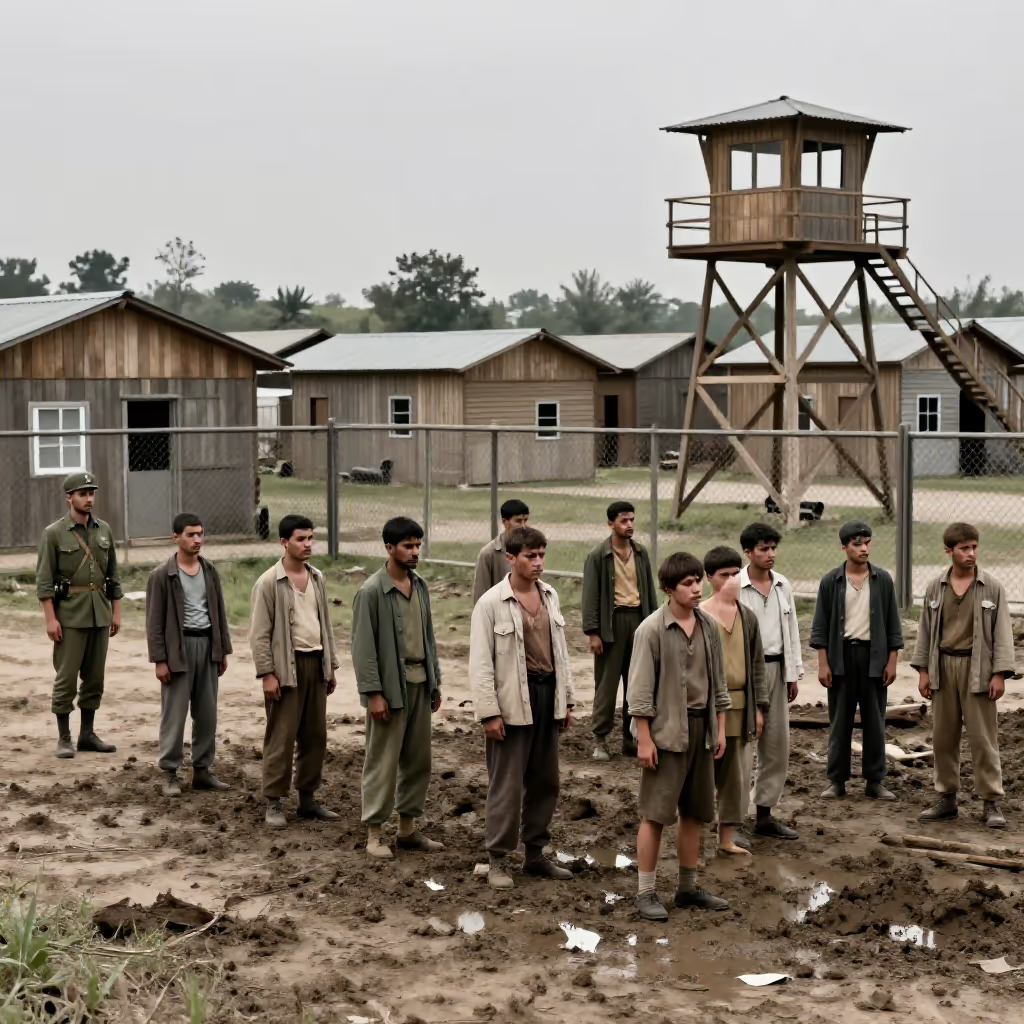
camp
An internment, labor, or concentration camp where people are detained by force.
Viele politische Gefangene wurden in das Lager deportiert.
Many political prisoners were deported to the camp.
'Lager' has many different meanings. Context is crucial: Is it about goods (m01), tents (m02), politics (m03), technology (m04), or history (m05)?
Die Firma hat ein großes Lager für ihre Produkte.
The company has a large warehouse for its products.
In the meaning of 'Warenlager' (warehouse/storage facility), the word is often used with the preposition 'auf' in the phrase 'etwas auf Lager haben' (to have something in stock).
Haben Sie dieses T-Shirt auch in Größe L auf Lager?
Do you also have this T-shirt in size L in stock?
When referring to a camp with tents, the fixed phrase 'ein Lager aufschlagen' is very common. It means to set up camp.
Nach dem langen Marsch schlugen die Wanderer ihr Lager auf.
After the long march, the hikers set up their camp.
In a political context, people often speak of 'das linke/rechte/bürgerliche Lager' (the left-wing/right-wing/civic camp). The phrase 'ins andere Lager wechseln' means to switch political sides.
Die Abstimmung zeigte die Spaltung in zwei politische Lager.
The vote showed the division into two political camps.
In historical contexts, especially in connection with National Socialism, 'Lager' often refers to a concentration or internment camp. This meaning carries very serious weight.
Er überlebte die Gefangenschaft in mehreren Lagern.
He survived imprisonment in several camps.
page / side
Both Seite and Lager can refer to a group in a political opposition. Seite mainly describes which position someone belongs to, while Lager emphasizes a cohesive political or ideological bloc. Use Seite for belonging to a side and Lager for the unified group.

In der Debatte kritisierte das konservative Lager den Plan geschlossen.
During the debate, the conservative camp criticized the plan as a united group.
In der Debatte stellte sich die Abgeordnete auf die Seite der Gegner des Plans.
During the debate, the representative sided with the opponents of the plan.