

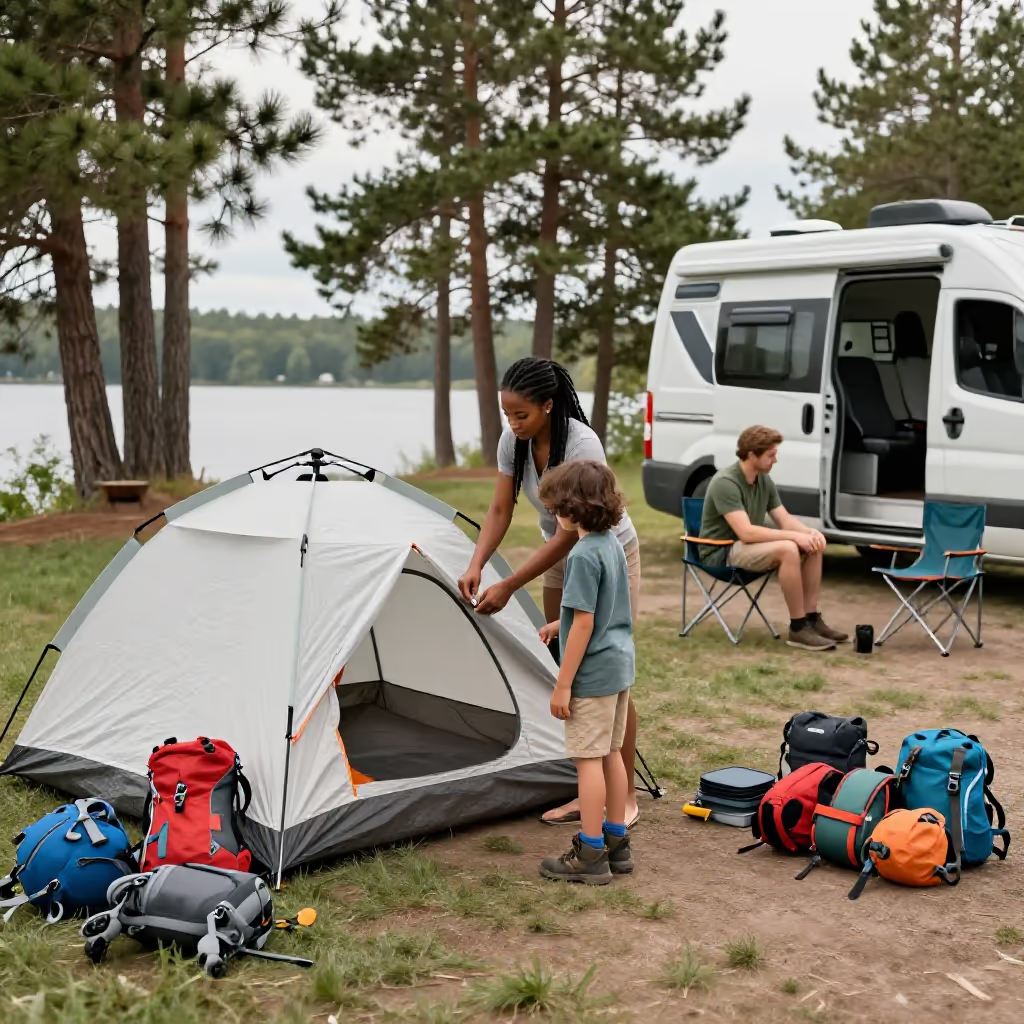
campen
to camp
To spend a vacation or free time in a tent, caravan, or camper van, usually in nature or at a campsite.
Im Sommer fahren wir immer nach Italien, um dort am Meer zu campen.
In the summer, we always go to Italy to camp by the sea.
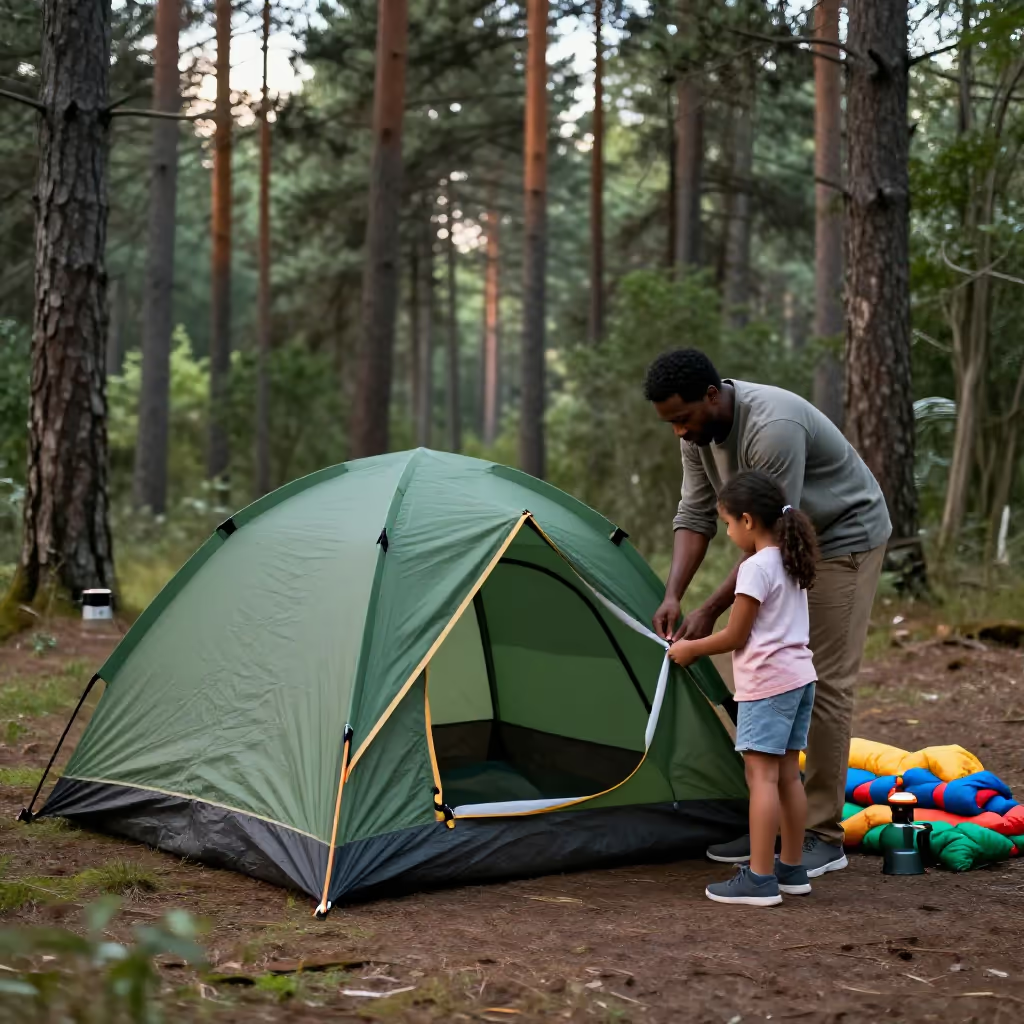
to camp
Loading your saved state.

to camp
To spend a vacation or free time in a tent, caravan, or camper van, usually in nature or at a campsite.
Im Sommer fahren wir immer nach Italien, um dort am Meer zu campen.
In the summer, we always go to Italy to camp by the sea.
'Campen' is a loanword from English ('to camp'). It has been fully integrated into the German verb system and is conjugated like a regular German verb.
Wir haben letztes Jahr zum ersten Mal gecampt.
We camped for the first time last year.
The verb is often combined with places or the type of accommodation. Typical phrases are 'am See campen' (to camp by the lake), 'in den Bergen campen' (to camp in the mountains), 'im Zelt campen' (to camp in a tent), or 'auf einem Campingplatz campen' (to camp at a campsite).
Viele Leute campen lieber wild in der Natur als auf einem vollen Campingplatz.
Many people prefer wild camping in nature to camping at a crowded campsite.
'Campen' (to camp) is often used in the construction 'campen gehen' (to go camping) to describe the start of the activity. The perfect tense is formed with 'haben': 'haben gecampt' (have camped).
Am Wochenende gehen wir im Wald campen.
This weekend we are going camping in the forest.
to camp
Zelten explicitly means spending the night in a tent. Campen is broader and can also refer to staying in a caravan or camper van. When spending the night in a tent, both verbs are possible; with other camping accommodations, only campen is appropriate.

Im Urlaub campen wir eine Woche lang mit dem Wohnmobil an einem See.
We’re spending a week camping in our camper van by a lake during our vacation.
Im Urlaub zelten wir eine Woche lang an einem See.
We’re spending a week camping in a tent by a lake during our vacation.