

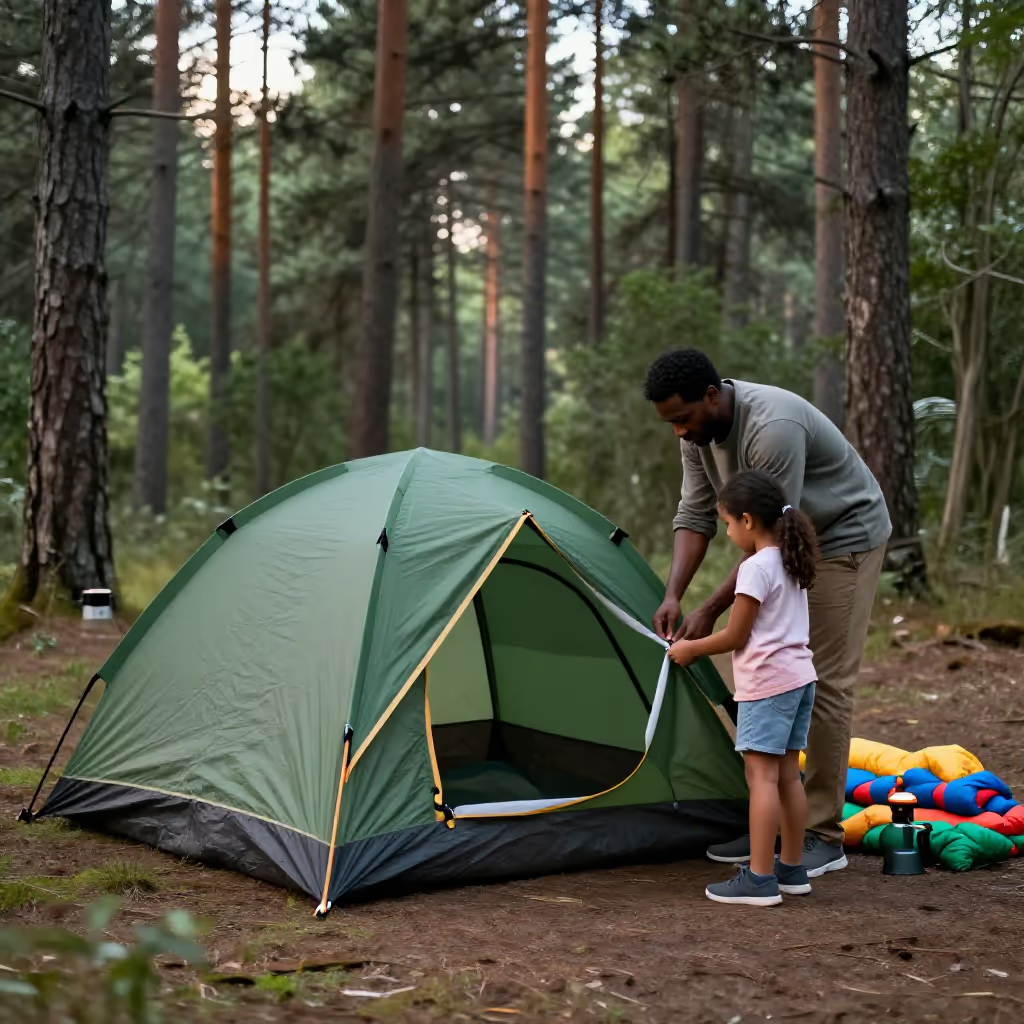
zelten
to camp
To spend the night in a tent, usually as a leisure activity in nature.
EXAMPLE
Im Sommer fahren wir oft an den See, um dort zu zelten.
In summer, we often go to the lake to camp there.
to camp
Loading your saved state.
to camp
To spend the night in a tent, usually as a leisure activity in nature.
Im Sommer fahren wir oft an den See, um dort zu zelten.
In summer, we often go to the lake to camp there.
The verb 'zelten' (to camp) is derived directly from the noun 'das Zelt' (the tent). It describes the activity you do with a tent: sleeping in it.
Wir brauchen ein größeres Zelt, wenn wir zu viert zelten wollen.
We need a bigger tent if the four of us want to camp.
You can say 'wir zelten' (we camp) or 'wir gehen zelten' (we go camping). The form 'zelten gehen' emphasizes the beginning or the plan to do the activity, similar to 'schwimmen gehen' (to go swimming) or 'einkaufen gehen' (to go shopping).
Am Wochenende gehen wir im Wald zelten.
At the weekend, we're going camping in the forest.
'Zelten' is often combined with places in nature. Typical expressions are 'am See zelten' (to camp by the lake), 'in den Bergen zelten' (to camp in the mountains), 'auf dem Campingplatz zelten' (to camp at the campsite), or also 'wild zelten' (to camp outside official campsites).
Wildes Zelten ist in diesem Naturschutzgebiet streng verboten.
Wild camping is strictly forbidden in this nature reserve.
camping
Zelten explicitly means spending the night in a tent. Camping is the broader term and also includes staying overnight in a caravan or motorhome. Both words are suitable when staying in a tent, but only Camping applies to other types of camping accommodation.
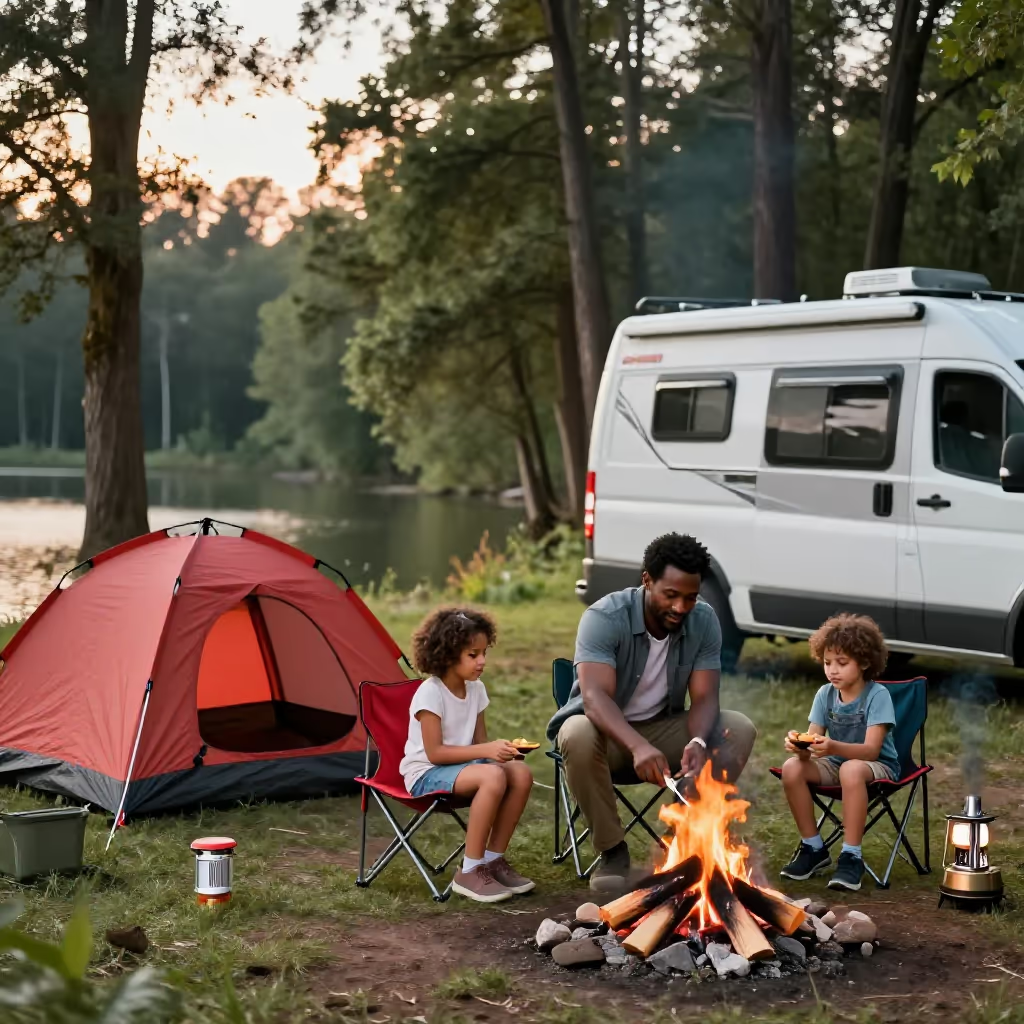
Im Sommer zelten wir eine Woche lang an einem See.
In the summer, we camp by a lake for a week.
Im Sommer verbringen wir beim Camping eine Woche im Wohnmobil an einem See.
In the summer, we spend a week camping by a lake in a motorhome.