

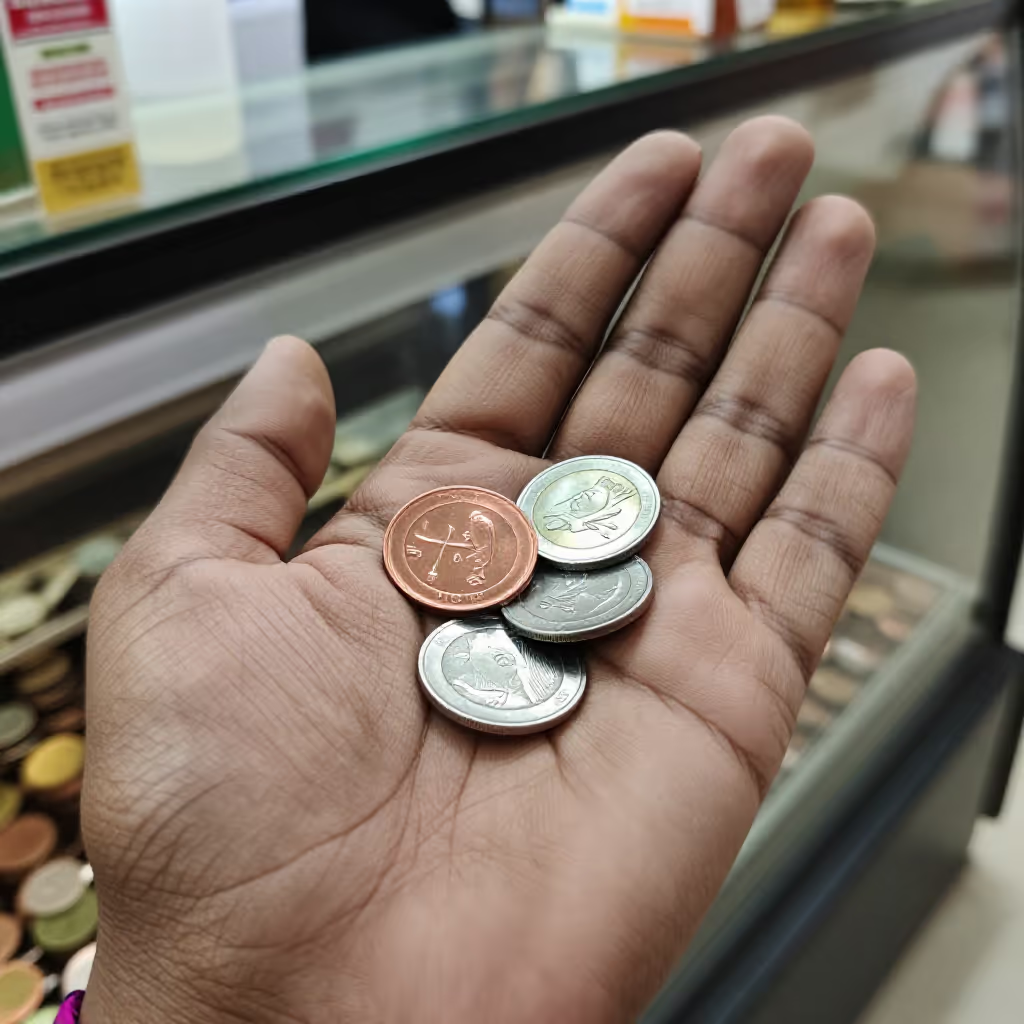
der Cent
cent
A currency unit that corresponds to one hundredth of a base unit such as the euro or dollar.
EXAMPLE
Der Kaffee kostet zwei Euro und fünfzig Cent.
The coffee costs two euros and fifty cents.
cent
Loading your saved state.
cent
A currency unit that corresponds to one hundredth of a base unit such as the euro or dollar.
Der Kaffee kostet zwei Euro und fünfzig Cent.
The coffee costs two euros and fifty cents.

not a cent
Used idiomatically to express that something is worthless or that you have no money at all.
Ich bin Ende des Monats pleite und habe keinen Cent mehr.
I'm broke at the end of the month and don't have a cent left.
After numbers from two upward, the form 'Cent' is used in the singular, not in the plural. This rule applies to many units of measurement in German.
Ein Kaugummi kostet nur fünf Cent.
A piece of chewing gum costs only five cents.
The phrase 'keinen Cent' (not a cent) is often used figuratively to express that something is worthless or that you have no money left. A typical expression is 'keinen Cent wert sein' (to not be worth a cent).
Seine Versprechen sind keinen Cent wert.
His promises aren't worth a cent.
The idiom 'jeden Cent zweimal umdrehen' (to turn every cent over twice) means that someone has to be very frugal and think carefully about what they spend their money on.
Seit er seinen Job verloren hat, muss er jeden Cent zweimal umdrehen.
Since he lost his job, he has had to turn every cent over twice.
coal
Keinen Cent haben (not have a single cent) is a set expression meaning to have no money at all, and it also works in neutral language. Kohle is a colloquial word for money and sounds much more casual. Keinen Cent fits a neutral statement; among friends, you can say keine Kohle.

Am Monatsende habe ich keinen Cent mehr auf dem Konto.
By the end of the month, I don’t have a single cent left in my account.
Am Monatsende habe ich keine Kohle mehr auf dem Konto.
By the end of the month, I don’t have any cash left in my account.