

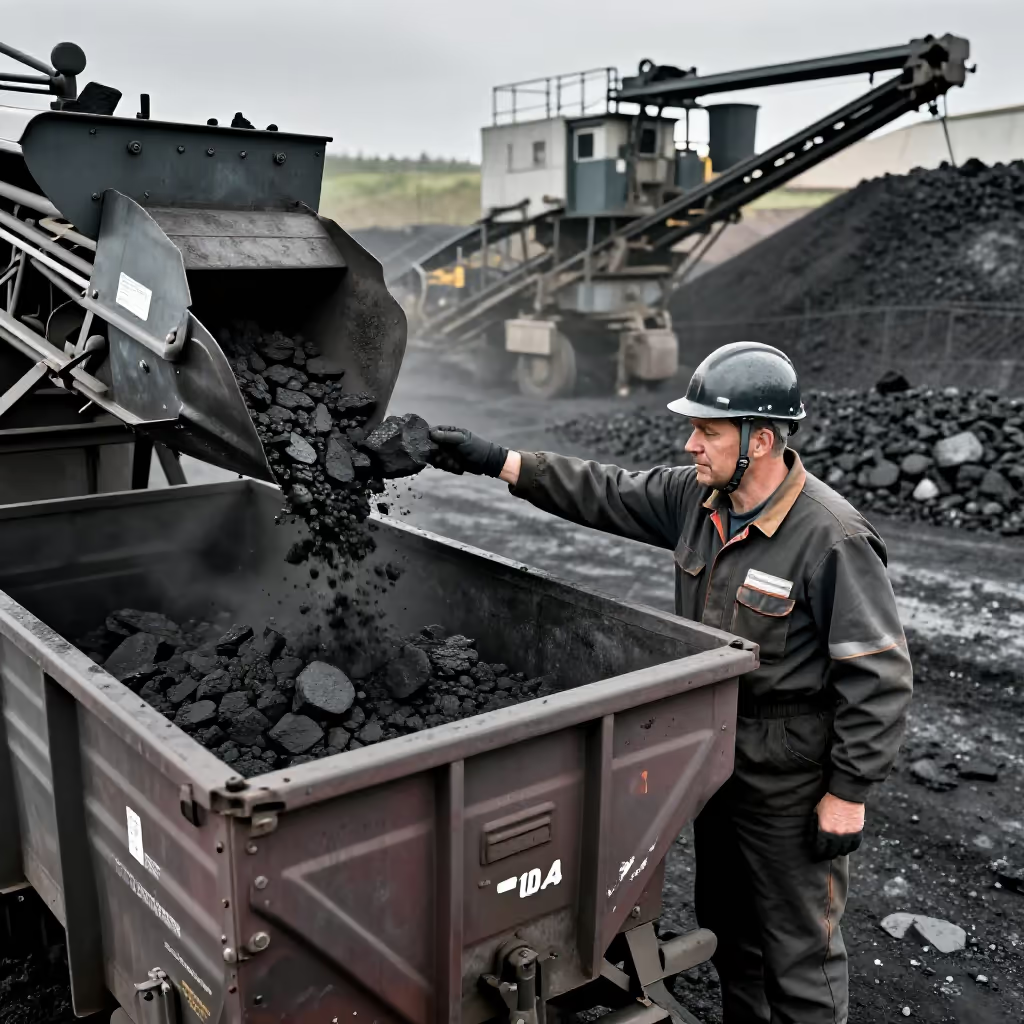
die Kohle
coal
A black or brownish-black combustible raw material used as a fossil fuel for generating energy.
EXAMPLE
Das Kraftwerk wird immer noch mit Kohle betrieben.
The power plant is still operated with coal.
coal
Loading your saved state.
coal
A black or brownish-black combustible raw material used as a fossil fuel for generating energy.
Das Kraftwerk wird immer noch mit Kohle betrieben.
The power plant is still operated with coal.

cash
A colloquial expression for money.
Ohne die nötige Kohle können wir das Projekt nicht starten.
Without the necessary cash, we can't start the project.

charcoal
Charcoal or briquettes made specifically for grilling.
Kannst du schon mal die Kohle für den Grill anzünden?
Can you go ahead and light the charcoal for the grill?
You can easily tell which meaning is intended from the topic. If it's about energy or heating, the fuel is meant. If it's about paying or earning, money is meant. In the context of grilling, charcoal is meant.
Früher wurde in vielen Häusern mit Kohle geheizt.
In the past, many houses were heated with coal.
In the meaning of 'Geld' (money), 'Kohle' is a very common colloquial word. It is often used in informal conversations among friends or family.
Für das neue Handy brauche ich noch ein bisschen Kohle.
I still need a bit of cash for the new phone.
In colloquial use for 'Geld' (money), there are fixed expressions like 'Kohle machen' (to make money), 'flüssige Kohle haben' (to have cash available), or 'auf der Kohle sitzen' (to sit on one's money / not spend one's money).
Mit seiner neuen Geschäftsidee will er richtig Kohle machen.
With his new business idea, he wants to make some serious cash.
money
Both words can refer to financial resources, but „Geld“ is neutral and is also suitable in formal situations. „Kohle“ has the same basic meaning but sounds distinctly colloquial. Use „Geld“ in official conversations and texts; among friends, „Kohle“ can intentionally sound casual or slangy.

Beim Treffen fragte er seine Freunde, wie viel Kohle ihnen für die Reise zur Verfügung steht.
At the gathering, he asked his friends how much cash they had available for the trip.
Im Antrag müssen Sie angeben, wie viel Geld Ihnen monatlich zur Verfügung steht.
In the application, you must state how much money you have available each month.