

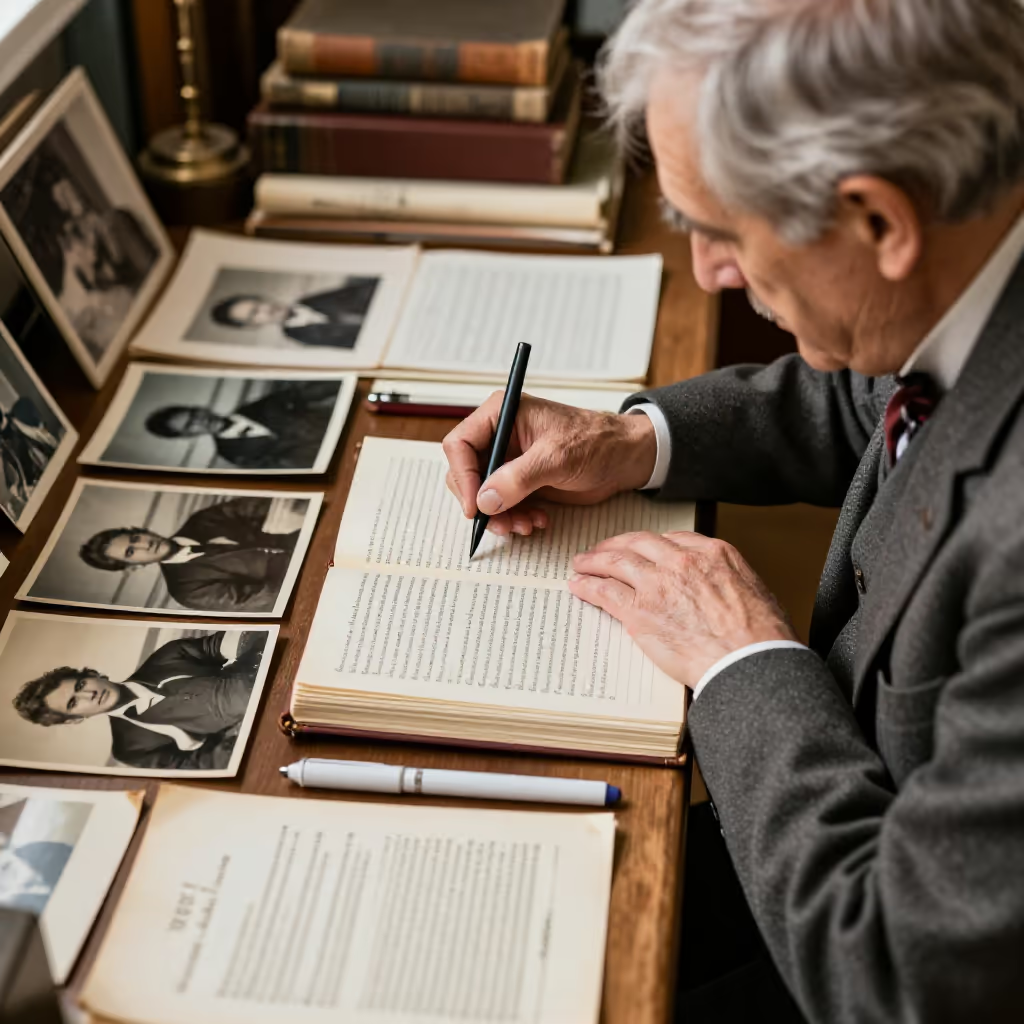
A person who records historical or contemporary events in chronological order and preserves them in a chronicle.
example
Der mittelalterliche Chronist dokumentierte sorgfältig das Leben am Hofe des Königs.
The medieval chronicler carefully documented life at the king's court.
Usage tips
Word family
The word 'Chronist' (chronicler) is closely related to 'die Chronik' (the chronicle). The ending '-ist' often refers to a person who performs a particular activity. A 'Chronist' is therefore someone who writes a chronicle.
EXAMPLE
Der Chronist des Dorfes hielt alle wichtigen Ereignisse in einem dicken Buch fest.
The village chronicler recorded all important events in a thick book.
Style and register
The term 'Chronist' (chronicler) is mainly used in historical, literary, or formal contexts. In everyday language, the word is rather rare.
EXAMPLE
In dem historischen Roman beschreibt der Chronist die Schlacht aus seiner Perspektive.
In the historical novel, the chronicler describes the battle from his perspective.
Typical verbs
A chronicler performs typical activities that are described with verbs such as 'aufzeichnen' (to record), 'dokumentieren' (to document), 'berichten' (to report), or 'festhalten' (to record/preserve).
EXAMPLE
Der Chronist hatte die Aufgabe, die Geschichte der Stadt für die Nachwelt aufzuzeichnen.
The chronicler had the task of recording the history of the city for posterity.
Compare with
near_synonym · confusable
Chronist vs Historiker
historian
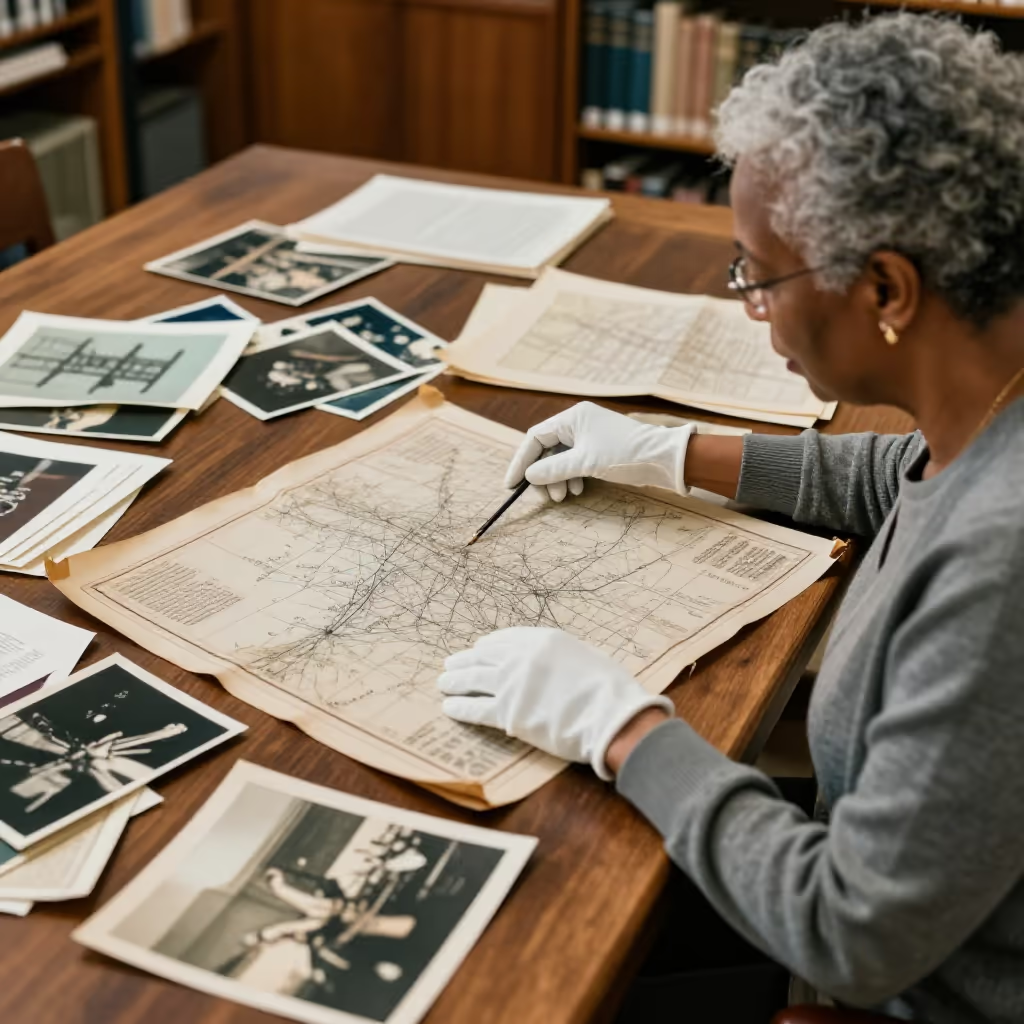
'der Historiker' and 'der Chronist' both deal with events and history. A Historiker studies history in a scholarly way, checks sources, and explains connections. A Chronist mainly records events in chronological order, often for a town, a family, or a specific period. Learners may confuse the words because both can write about the past. When it is about research and interpretation, 'Historiker' fits better. When someone collects events and writes them down in order, 'Chronist' is more precise.
Chronist
Der Chronist notierte jedes Jahr die wichtigsten Ereignisse im Dorf.
The chronicler noted down the most important events in the village each year.
Historiker
Der Historiker erklärt im Vortrag, warum die Stadt im Mittelalter wichtig war.
In the lecture, the historian explains why the city was important in the Middle Ages.