

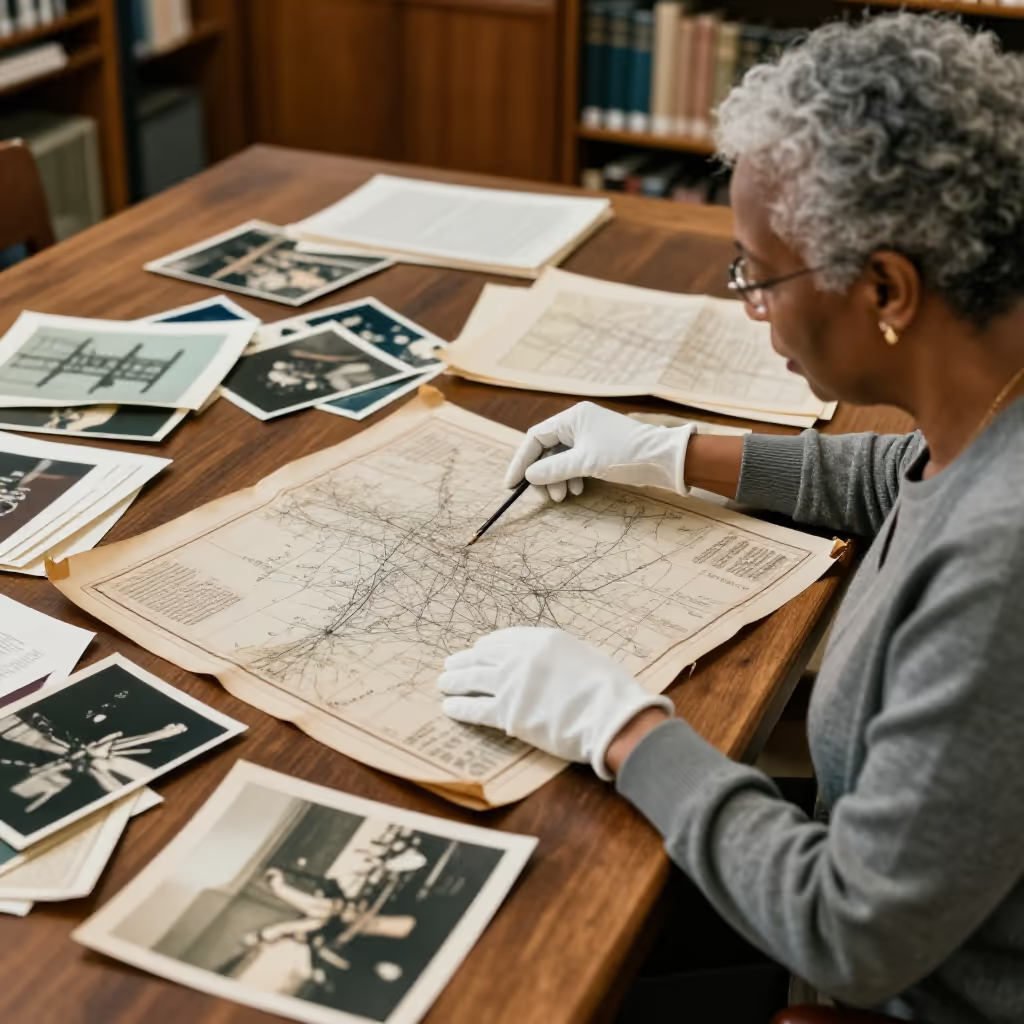
der Historiker
historian
A person who studies and presents history in a scholarly way.
EXAMPLE
Der Historiker veröffentlichte ein neues Buch über die Französische Revolution.
The historian published a new book about the French Revolution.
historian
Loading your saved state.
historian
A person who studies and presents history in a scholarly way.
Der Historiker veröffentlichte ein neues Buch über die Französische Revolution.
The historian published a new book about the French Revolution.
'Historiker' (historian) is a weak masculine noun (N-declension). This means it takes the ending '-n' in the accusative, dative, and genitive singular. This mistake is often made.
Ich habe gestern einen bekannten Historiker getroffen.
Yesterday I met a well-known historian.
The word is derived from 'die Historie' (history). The ending '-iker' often refers to a male person who is an expert in a particular field, as in 'Physiker' (physicist) or 'Informatiker' (computer scientist).
Als Historiker beschäftigt er sich hauptsächlich mit dem 20. Jahrhundert.
As a historian, he mainly deals with the 20th century.
The work of a historian is often described with verbs such as 'forschen' (to research), 'analysieren' (to analyze), or 'veröffentlichen' (to publish). A typical phrase is also 'sich mit etwas beschäftigen' (to deal with something / to work on something).
Der Historiker forscht seit Jahren über das Römische Reich.
The historian has been researching the Roman Empire for years.
chronicler
A Historiker researches and explains history in a scholarly way. A Chronist mainly records events in chronological order. Someone who examines causes and connections is therefore a Historiker; someone who documents events continuously is a Chronist.
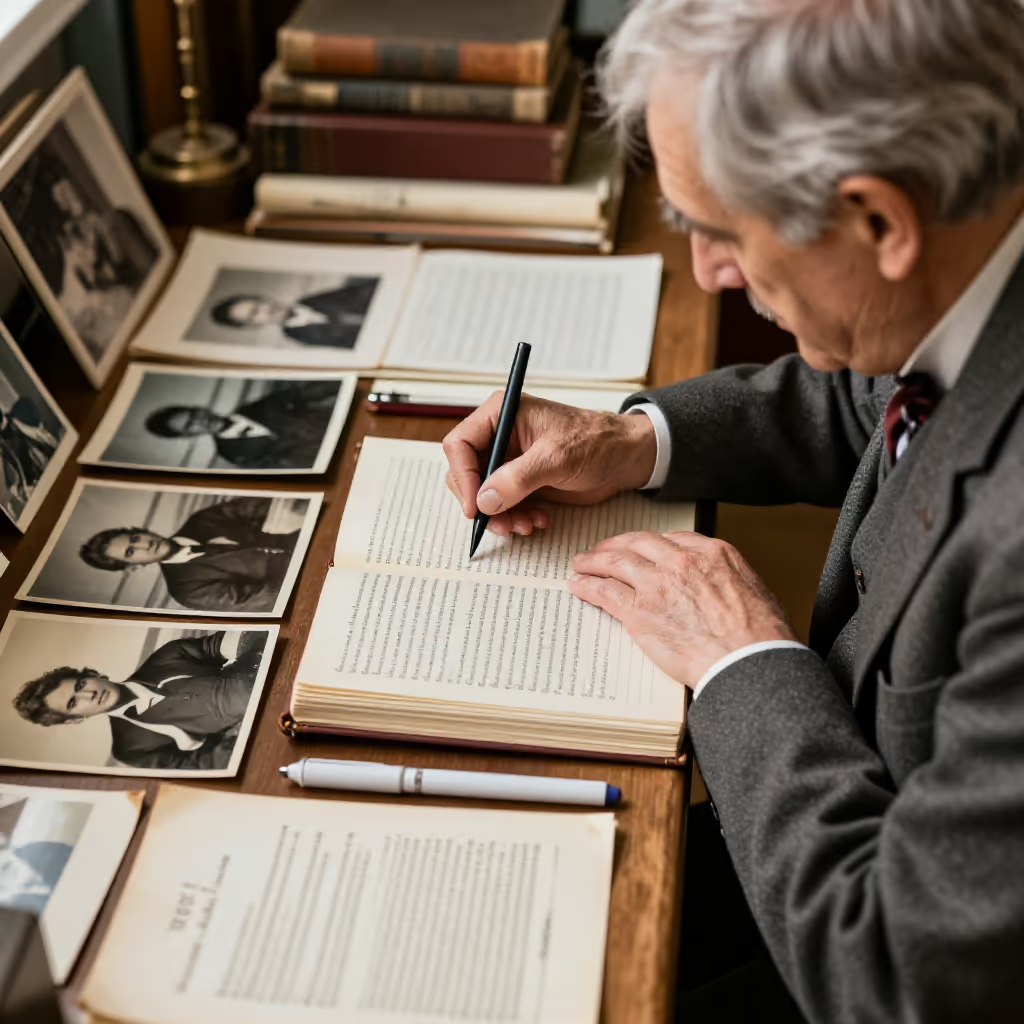
Der Historiker untersucht anhand alter Quellen, warum die Stadt damals schnell wuchs.
Using old sources, the historian investigates why the city grew so quickly back then.
Der Chronist hält Jahr für Jahr fest, wie die Stadt wächst.
Year after year, the chronicler records how the city grows.