

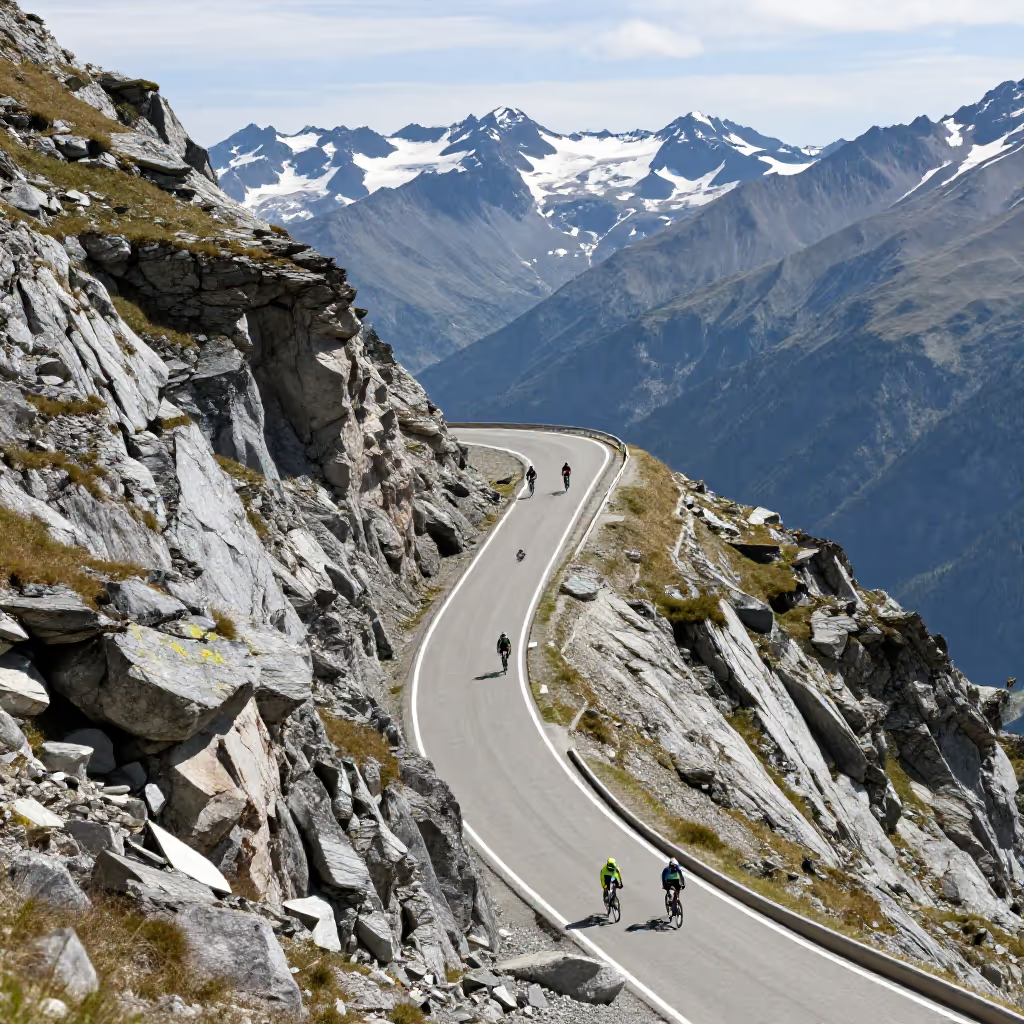
A word borrowed from French for a mountain pass, especially in the Alps or Pyrenees. The term is often used in the context of cycling or mountaineering.
example
Die Königsetappe der Tour de France führte über den berühmten Col du Tourmalet.
The queen stage of the Tour de France led over the famous Col du Tourmalet.
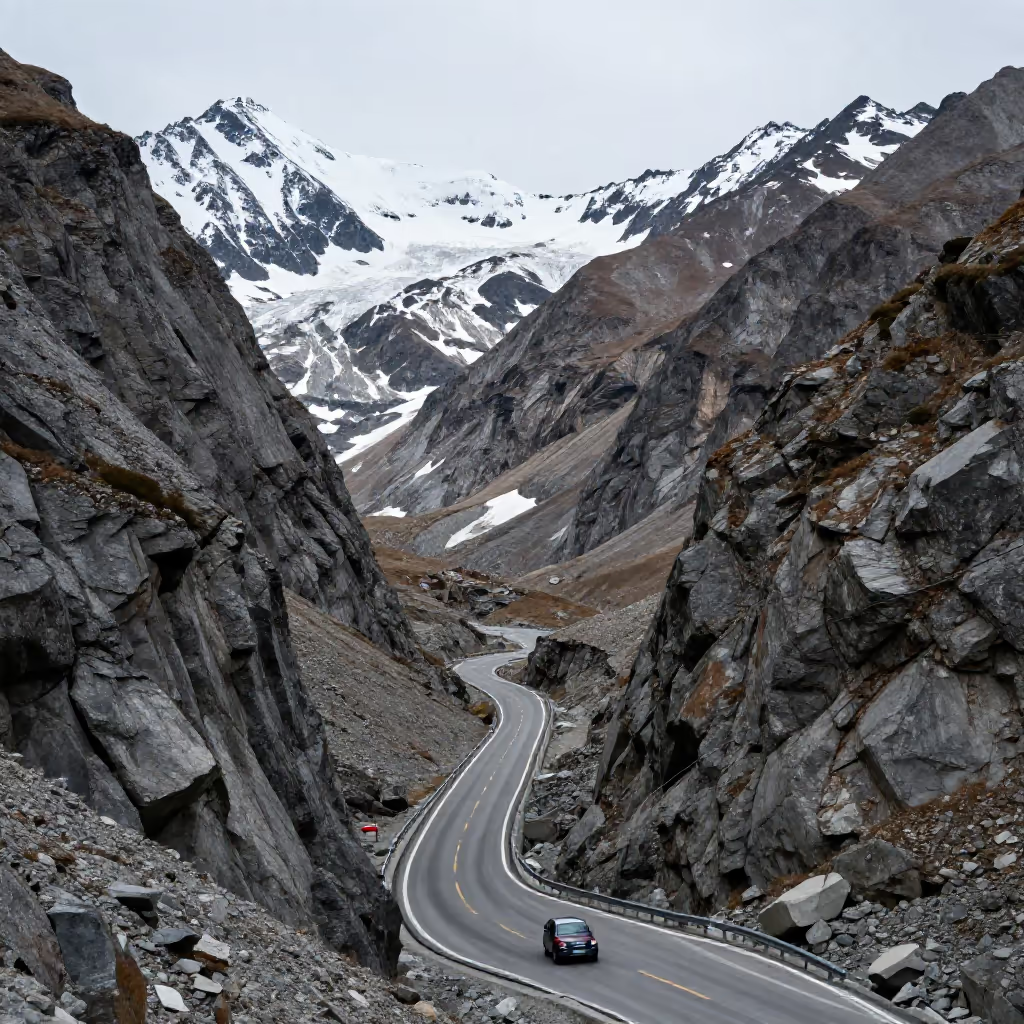
Usage tips
Origin and register
'Col' is a loanword from French and a technical term from cycling and alpinism. Outside these contexts, it is rarely used; instead, the word 'Pass' (pass) or 'Gebirgspass' (mountain pass) is used.
EXAMPLE
Der Radprofi erreichte als Erster den Col.
The professional cyclist was the first to reach the col.
Use with names
Most often, 'Col' is used together with the proper name of the pass, which is often French. The word 'Col' comes before the name.
EXAMPLE
Der Col du Galibier ist einer der höchsten Pässe der Alpen.
The Col du Galibier is one of the highest passes in the Alps.
Typical verbs
In a sports context, 'Col' is often combined with verbs of movement and overcoming. Typical phrases are 'einen Col erklimmen' (to climb a col), 'einen Col überqueren' (to cross a col), or 'einen Col befahren' (to ride/drive over a col).
EXAMPLE
Die Fahrer müssen heute drei schwere Cols überqueren.
The riders have to cross three difficult cols today.
Compare with
near_synonym · confusable
Col vs Pass
passport / pass
'der Pass' and 'der Col' can both mean a route through a mountain range. 'Pass' is the normal German word and fits in many situations: when traveling, hiking, or reading maps. 'Col' comes from French and is mainly used for certain mountain passes in the Alps or Pyrenees, often in cycling or mountaineering. The words can be confused because in this context they describe the same kind of place. If you are speaking generally about a route through the mountains, 'Pass' is usually more natural.
Col
Beim Radrennen erreicht das Team heute den Col in den Pyrenäen.
During the bike race, the team reaches the col in the Pyrenees today.
Pass
Am Morgen fahren wir über einen hohen Pass in die nächste Stadt.
In the morning, we drive over a high pass to the next town.