

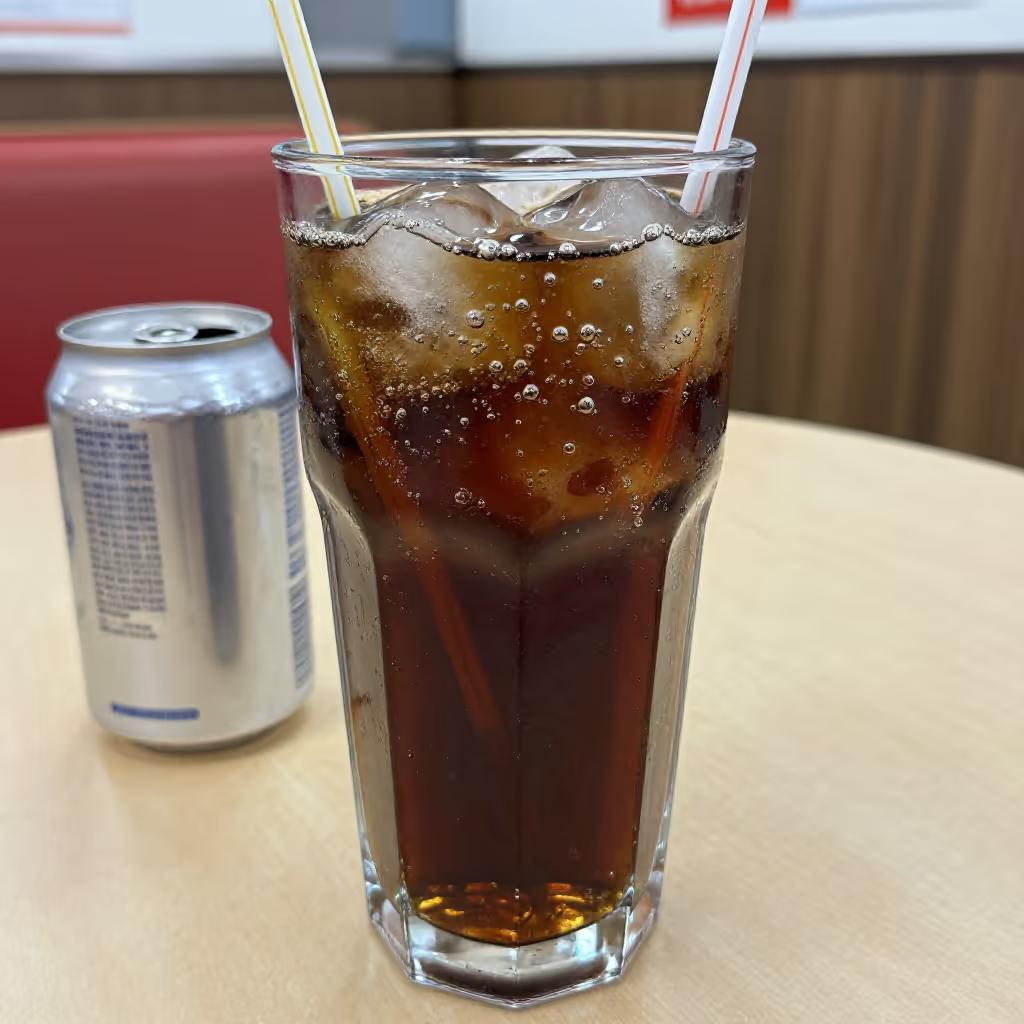
A carbonated, caffeinated soft drink with a characteristic flavor that usually has a dark, brownish color. It is known worldwide under various brand names.
example
Ich hätte gern eine Cola mit Eis und Zitrone.
I’d like a cola with ice and lemon, please.
Usage tips
Typical collocations
In everyday language, 'Cola' (cola) is often combined with verbs like 'bestellen' (to order), 'trinken' (to drink), or 'holen' (to get). You can also describe it more precisely, for example 'eine Cola mit Eis' (a cola with ice) or 'eine Cola ohne Zucker' (a sugar-free cola).
EXAMPLE
Für mich bitte eine Cola ohne Eis.
For me, a cola without ice, please.
Quantities
To indicate an amount, you use containers or units of measurement before the word 'Cola' (cola). Typical phrases are 'ein Glas Cola' (a glass of cola), 'eine Flasche Cola' (a bottle of cola), or 'eine Dose Cola' (a can of cola).
EXAMPLE
Kannst du mir bitte eine Flasche Cola aus dem Supermarkt mitbringen?
Could you please bring me a bottle of cola from the supermarket?
General term
'Cola' (cola) is often used as a general term for any cola soft drink, regardless of the specific brand.
EXAMPLE
Welche Art von Cola habt ihr im Angebot?
What kind of cola do you have available?
Compare with
near_synonym · confusable
Cola vs Limo
soda / lemonade
'die Cola' and 'die Limo' are both sweet soft drinks, often carbonated. But 'die Cola' is a specific dark drink with a typical cola flavor and usually caffeine. 'die Limo' is the short form of 'Limonade' and usually means a sweet fruit-flavored soft drink, for example lemon or orange. The words can be confused because both drinks are consumed in similar situations and often appear together on menus. If you specifically mean cola, say 'Cola'. If you generally mean a sweet soda or lemonade, 'Limo' sounds more natural.