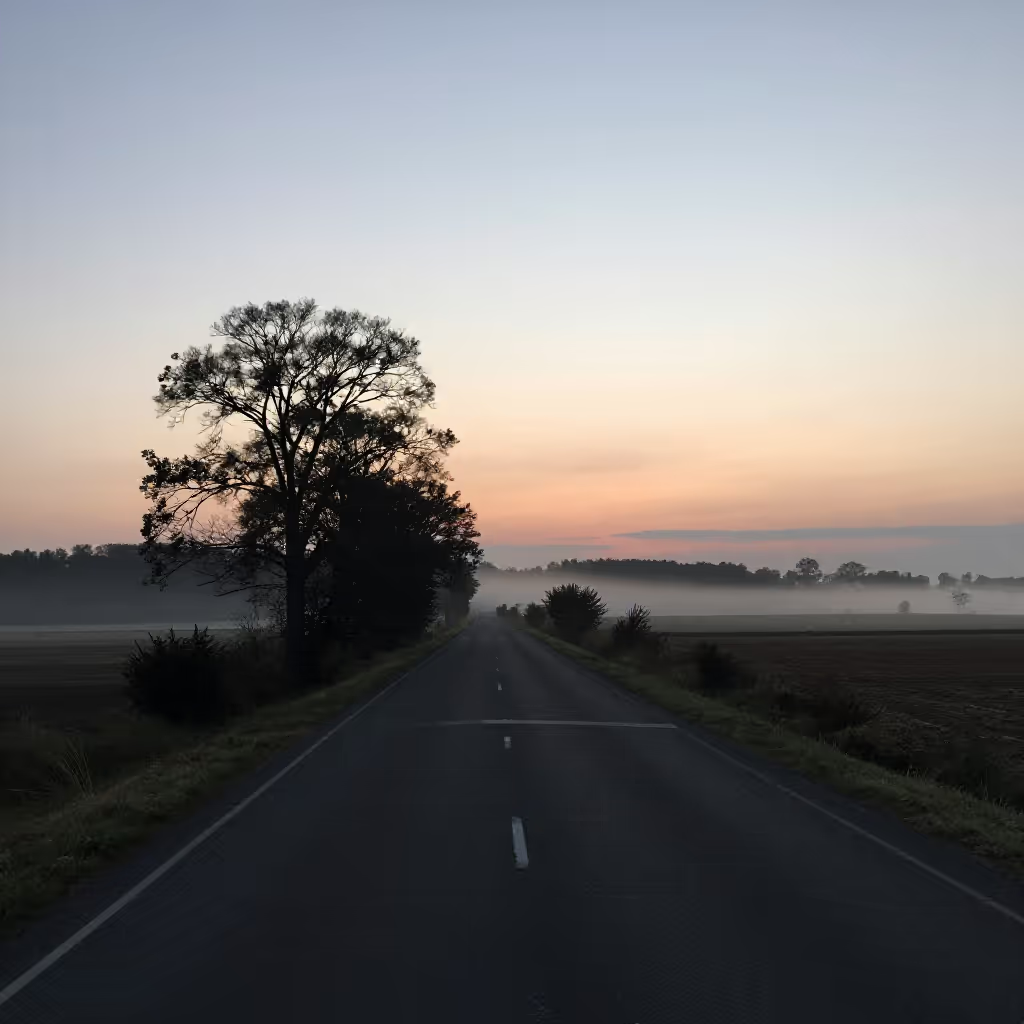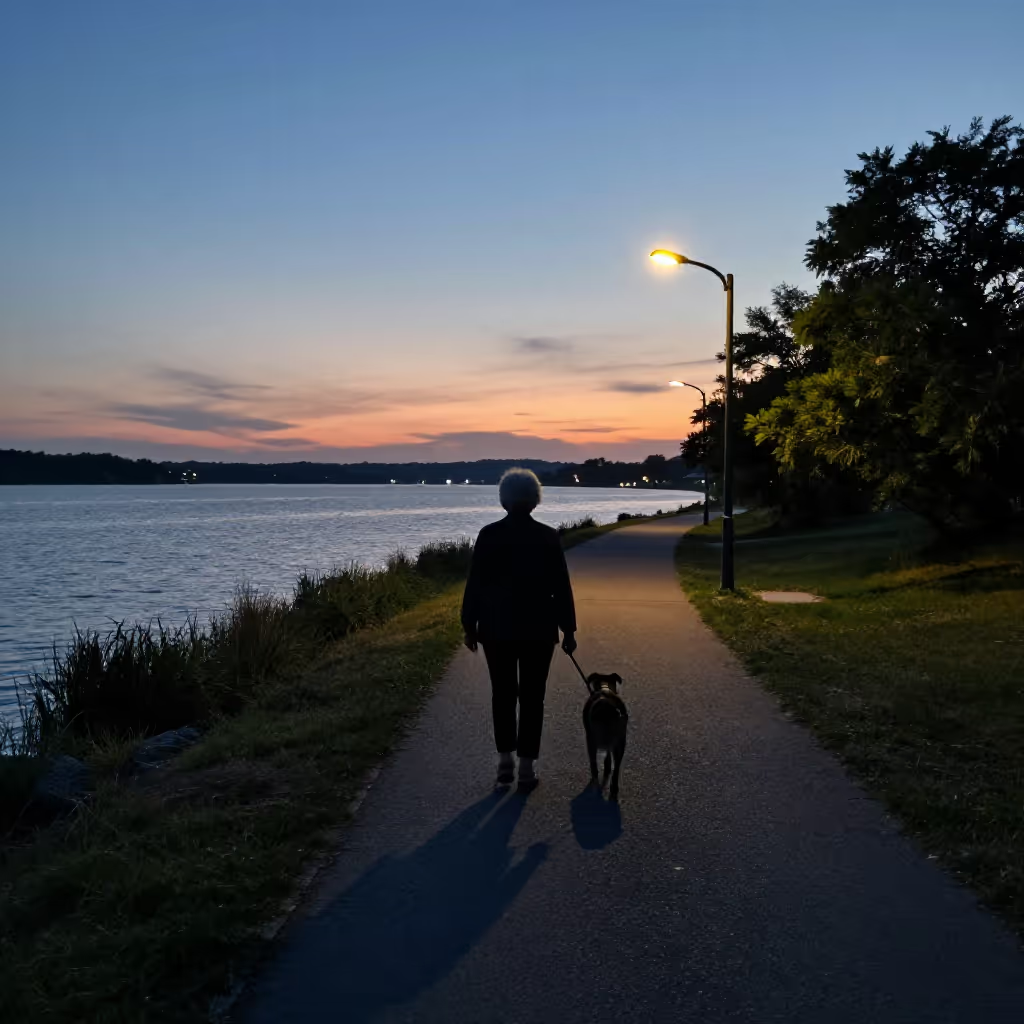
The time of transition between night and day (dawn) or between day and night (dusk), when it is no longer completely dark but not yet completely light either.
example
Wir machten uns in der Dämmerung auf den Weg, um den Sonnenaufgang auf dem Berg zu sehen.
We set off at dawn to see the sunrise on the mountain.
Usage tips
Word family
'Die Dämmerung' (twilight/dawn) is the noun related to the verb 'dämmern' (to dawn/to grow light or dark). This verb means that it is slowly becoming light or dark.
EXAMPLE
Am Horizont dämmerte bereits der Morgen.
Morning was already dawning on the horizon.
Context clue
The meaning becomes clear from the context. If people are talking about time of day, light, and nature, the literal meaning is intended. If they are talking about abstract things like 'Zeitalter' (age), 'Epoche' (epoch/era), or 'Kultur' (culture), the figurative meaning is intended.
EXAMPLE
In der Dämmerung werden die Straßenlaternen eingeschaltet.
The streetlights are turned on at twilight.
Morning or evening?
'Dämmerung' (twilight/dawn) can refer to both the time in the morning and the time in the evening. To be more precise, the compound words 'Morgendämmerung' (dawn, before sunrise) and 'Abenddämmerung' (dusk, after sunset) are used.
EXAMPLE
Die Vögel beginnen in der Morgendämmerung zu singen.
The birds begin to sing at dawn.
Typical preposition
To describe the time of an action, 'Dämmerung' (twilight/dawn) is very frequently used with the preposition 'in': 'in der Dämmerung' (at twilight/at dawn).
EXAMPLE
Es ist nicht sicher, in der Dämmerung allein durch den Park zu gehen.
It is not safe to walk through the park alone at twilight.
Literary style
The figurative meaning of 'Dämmerung' (dawn/twilight) for the beginning or end of an era is typical of a poetic or literary style.
EXAMPLE
Mit dem Fall der Mauer erlebte Europa die Dämmerung einer neuen Ära.
With the fall of the Wall, Europe experienced the dawn of a new era.
Compare with
confusable
Dämmerung vs Nacht
night
'die Nacht' (night) and 'die Dämmerung' (twilight / dawn) can easily be confused because both have to do with low light. 'die Nacht' is the dark time between sunset and sunrise. 'die Dämmerung' is only the transition: in the morning between night and day, or in the evening between day and night. During 'Dämmerung', it is not completely light, but it is not completely dark yet either. If you mean the whole dark period, use 'Nacht'. If you mean the short transition in the morning or evening, use 'Dämmerung'.
Dämmerung
In der Dämmerung fährt Eva besonders vorsichtig durch die Nachbarschaft.
At twilight, Eva drives through the neighborhood especially carefully.
Nacht
Meine Schwester arbeitet diese Woche in der Nacht.