

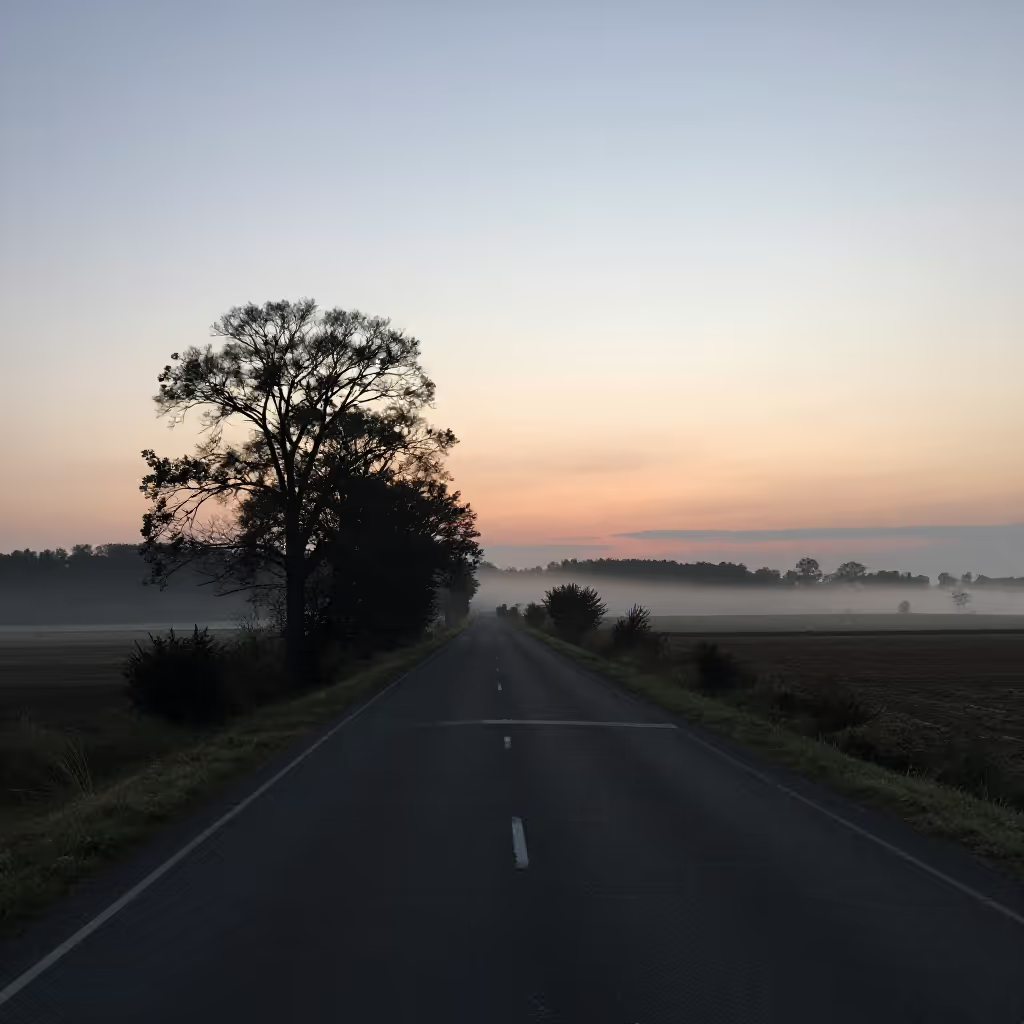
das Morgengrauen
dawn
The time very early in the morning, shortly before the sun rises and the sky slowly becomes light.
EXAMPLE
Im Morgengrauen brachen die Wanderer zu ihrer Tour auf.
At dawn, the hikers set off on their tour.
dawn
Loading your saved state.
dawn
The time very early in the morning, shortly before the sun rises and the sky slowly becomes light.
Im Morgengrauen brachen die Wanderer zu ihrer Tour auf.
At dawn, the hikers set off on their tour.
The word consists of 'Morgen' (morning) and 'Grauen'. Here, 'Grauen' does not refer to horror, but to the color 'grau' (gray). It describes the gray, dim light in the early morning.
Das erste graue Licht des Tages nennt man Morgengrauen.
The first gray light of the day is called 'Morgengrauen' (dawn).
This word is almost always used with the preposition 'im' to indicate a point in time. The fixed expression is 'im Morgengrauen' (at dawn).
Die Vögel beginnen im Morgengrauen zu singen.
The birds begin to sing at dawn.
'Morgengrauen' (dawn) has a somewhat poetic or literary effect. In everyday spoken language, people would often simply say 'sehr früh am Morgen' (very early in the morning).
Der Roman begann mit einer Beschreibung der Landschaft im Morgengrauen.
The novel began with a description of the landscape at dawn.
twilight / dawn
Dämmerung and Morgengrauen both refer to the time when it slowly becomes lighter between night and day. Dämmerung is broader and can also refer to the transition in the evening, while Morgengrauen refers only to the very early morning. For a specific time in the morning, Morgengrauen is therefore more appropriate.
Im Morgengrauen begann der Markt auf dem Dorfplatz langsam aufzubauen.
At dawn, the market in the village square slowly began setting up.
In der Dämmerung vor Sonnenaufgang konnte man den Weg nur noch schwach erkennen.
In the twilight before sunrise, we could barely make out the path.