

dämpfen
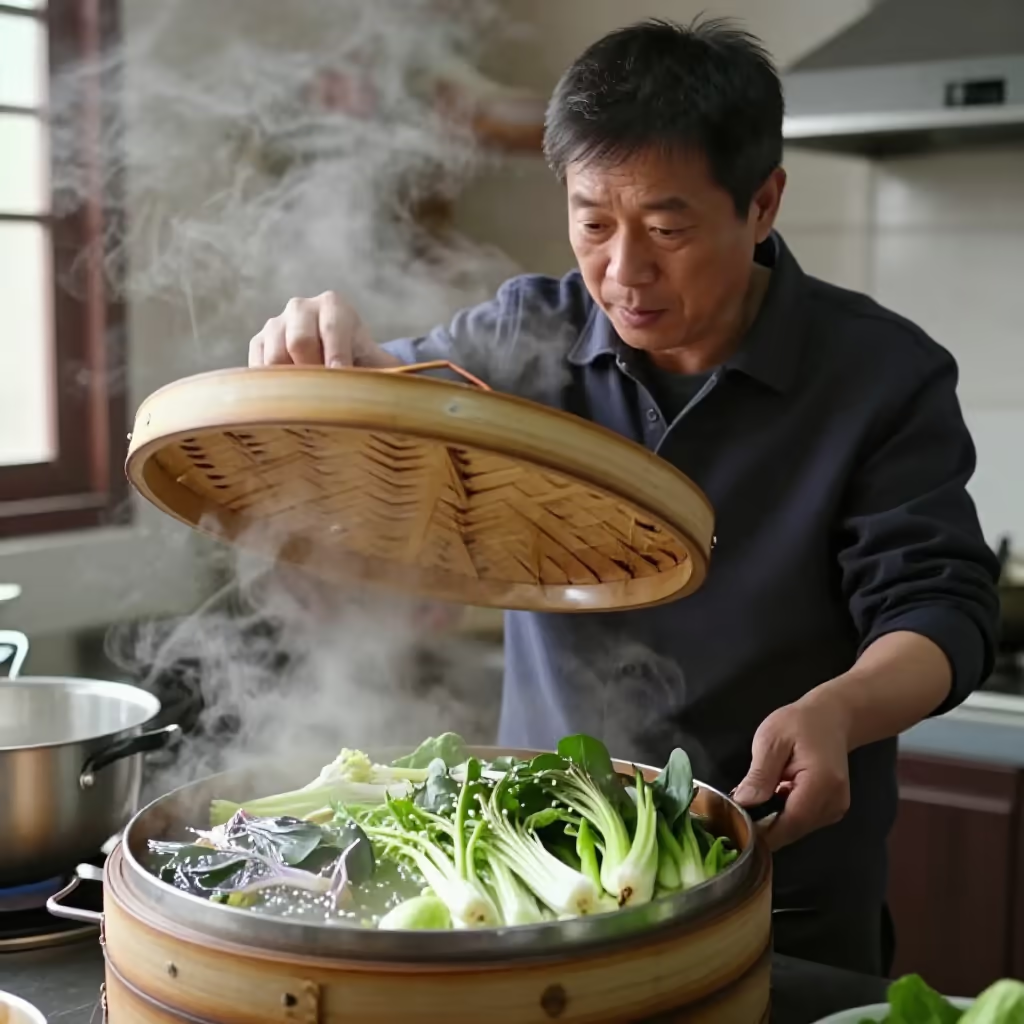
to steam
To cook food in hot steam without it coming into direct contact with the water.
EXAMPLE
Für eine gesunde Mahlzeit dämpfe ich das Gemüse oft nur kurz.
For a healthy meal, I often just steam the vegetables briefly.
to steam / to dampen
Loading your saved state.
to steam
To cook food in hot steam without it coming into direct contact with the water.
Für eine gesunde Mahlzeit dämpfe ich das Gemüse oft nur kurz.
For a healthy meal, I often just steam the vegetables briefly.
to dampen
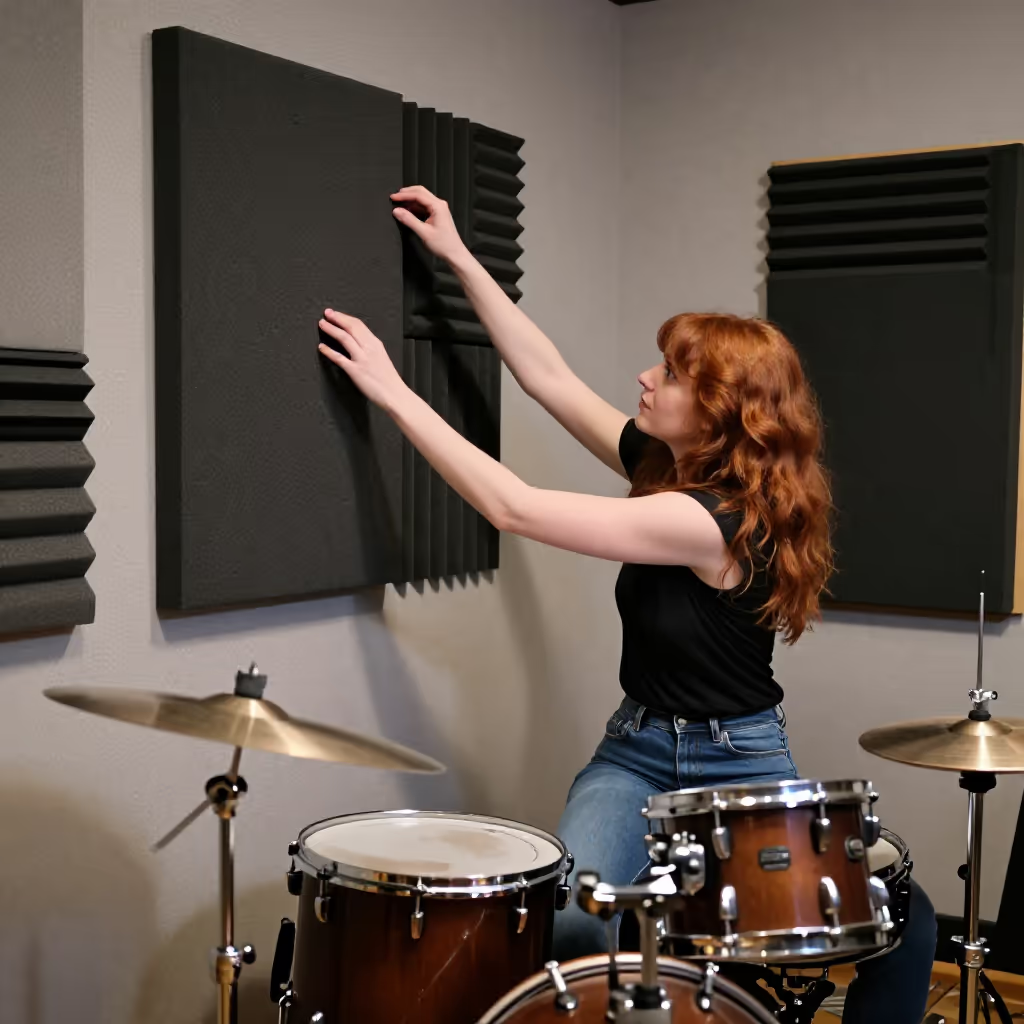
To reduce or weaken the intensity or effect of something, for example sound, light, a movement, or a feeling.
Dicke Vorhänge dämpfen das Licht und den Lärm von der Straße.
Thick curtains dampen the light and the noise from the street.

to dampen
In a figurative sense, to reduce expectations, hopes, or joy.
Der Trainer dämpfte die überzogenen Erwartungen der Fans vor dem wichtigen Spiel.
The coach dampened the fans' exaggerated expectations before the important match.
All meanings of 'dämpfen' (to steam / to dampen) are derived from 'der Dampf' (steam). The literal meaning is cooking with steam. The figurative meanings describe how something is weakened, just as steam can dampen visibility or sounds.
Der Nebel dämpfte die Geräusche des Waldes.
The fog dampened the sounds of the forest.
The context reveals the meaning: if it is about food (vegetables, fish), it means cooking. If it is about physics (light, sound, impacts), it means weakening or absorbing. If it is about feelings (joy, hope), it means reducing.
Ich dämpfe den Brokkoli nur fünf Minuten. (Garen)
I steam the broccoli for only five minutes. (Cooking)
In the context of cooking, 'dämpfen' (to steam) is typically used with foods such as 'Gemüse' (vegetables), 'Kartoffeln' (potatoes), 'Fisch' (fish), or 'Knödel' (dumplings).
Gedämpfter Fisch mit Reis ist ein leichtes und gesundes Gericht.
Steamed fish with rice is a light and healthy dish.
To weaken a physical effect, you dampen 'den Schall' (the sound), 'das Licht' (the light), 'Schritte' (footsteps), 'Schwingungen' (vibrations), or 'einen Aufprall' (an impact).
Der dicke Teppich dämpft meine Schritte in der Wohnung.
The thick carpet dampens my footsteps in the apartment.
In the figurative sense, abstract things are dampened: 'die Erwartungen' (expectations), 'die Hoffnung' (hope), 'die Freude' (joy), 'die Euphorie' (euphoria), or 'der Optimismus' (optimism).
Die hohen Kosten für das Projekt dämpften die anfängliche Euphorie.
The high costs of the project dampened the initial euphoria.
to cook / to boil
Both verbs can describe cooking food through heat. „Kochen“ often refers to cooking in boiling water, while „dämpfen“ emphasizes the specific method of using hot steam without direct contact with the water. Choose the verb according to the cooking method used.

Wir dämpfen das Gemüse über heißem Wasserdampf.
We steam the vegetables using hot steam.
Wir kochen das Gemüse in einem Topf mit siedendem Wasser.
We boil the vegetables in a pot of boiling water.